
Many of those expelled from Algeria have been reportedly abandoned at a remote location in the Sahara known as "Point Zero". There are also more official deportations of citizens of Niger, where convoys are driven straight to towns in Niger and the people handed over.
Nearly 32,000 people have been deported from Algeria to Niger so far this year, according to a statement released by NGO Alarme Phone Sahara last week (November 18). This estimate does not include the undetermined number of people that have been affected by mass deportations, added the NGO.
In 2025, the Algerian authorities deported more than 34,000 throughout the whole year, reported InfoMigrants in January 2026.
Roughly 5,000 people are thought to have been deported between September and October 2026 alone.
According to reports by the French news agency Agence France Presse (AFP), deportations vary depending on the nationality of those being deported. Most non-Nigerien nationals, including children and teenagers are deported in 'unofficial convoys' and abandoned at a place known as 'Point Zero’ in the desert.
The organization Alarme Phone Sahara describes "unofficial convoys" in Algeria as mass deportation operations carried out by Algerian security forces. Migrants, primarily non-Nigerien nationals, are transported into the Sahara Desert at the border with Niger without formal legal proceedings or coordination with receiving authorities.
At the remote desert location known as Point Zero along the Algerian-Nigerien border, the migrants must walk approximately 15 kilometers through the Sahara to reach Assamaka, a village in northern Niger where humanitarian organizations provide assistance.
The journey can prove fatal, particularly for those suffering from dehydration, injuries or exhaustion. At least 35 people died in this area last year due to those problems.
Read AlsoNiger: Nearly 15,000 migrants pushed back from Algeria so far in 2026
Unofficial and official convoys
Under a bilateral readmission agreement, "official convoys" transport Nigerien citizens directly to northern Nigerien towns where they are transferred through an organized reception and processing procedure. This is in contrast to the unofficial convoys where people are dropped off at an unmarked location in the desert known as "The Dune".
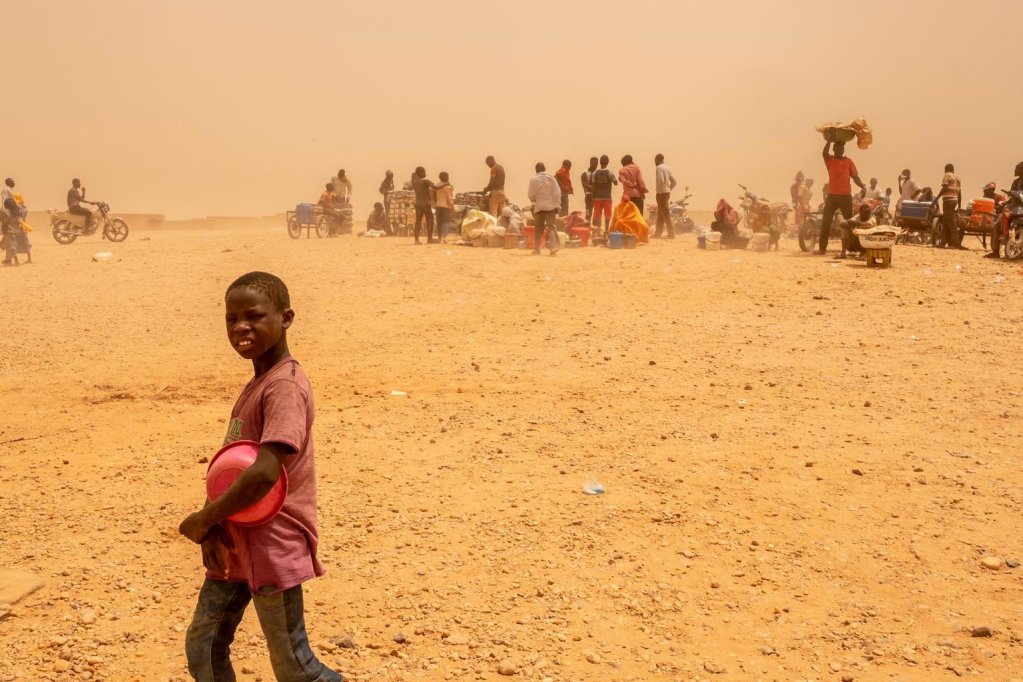
Citing reports from unnamed sources, Alarme Phone Sahara said that these "unofficial deportations" are starting to decline as the state authorities are carrying out more deportations by air.
Alarme Phone through its operations in Assamaka assists migrants by distributing water and food to migrants stuck around "Point Zero" and aiding those unable to walk the 15-kilometer distance to the border village.
However, Alarme Phone stressed that some security risks make Point Zero difficult to access.
Fluid borders
According to the United Nations Refugee Agency (UNHCR), as of March 31, Niger hosted over one million forcibly displaced persons, including more than 436,000 refugees and asylum-seekers.
Movement in the region is described as "fluid" with cross border arrivals coming in particularly from Burkina Faso and Nigeria.
The UNHCR noted that Agadez, which lies on the southern edge of the Sahara, is a strategic hub for the outgoing and incoming movements of people along the trail to the Central Mediterranean route.
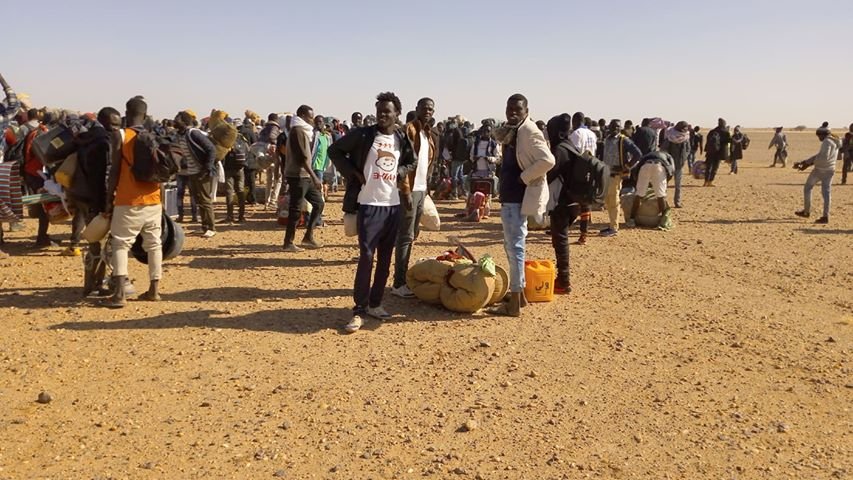
"The region continues to face high mobility driven by expulsions from Algeria, returns from Libya, and onward movements, placing pressure on reception capacities," read the UNHCR report.
In the first quarter of this year, UNHCR border monitoring recorded 48,945 individuals from Niger, Nigeria, Chad, Mali, Guinea-Conakry and Senegal crossing Niger’s borders in the Agadez region and moving towards other transit countries: Libya (15,052), Algeria (12,512) and Mali (3,086). Libya remained the primary destination, consistent with 2025 trends.
Read AlsoTorture 'systematic' along the Mediterranean route, MSF claims