
The European Court of Human Rights (ECHR) has issued a decision concerning the treatment of migrants presenting as asylum seekers on the border of Belarus with EU-members Poland, Latvia and Lithuania. The set of rulings emphasized the importance of treating such asylum seekers with dignity, and protecting their right to lodge asylum claims. At the same time, however, EU member states will maintain their right to fortify their borders against the irregular arrival of migrants en masse, the ruling also stressed.
The European Court of Human Rights (ECHR) judges in Strasbourg ruled that the governments of Poland, Latvia and Lithuania cannot use force or violence nor engage in collective pushbacks along their borders with Belarus.
"The judgements have affirmed the need for the national authorities to ensure that migrants benefit from the essential protection of Article 3 against the risk of inhuman or degrading treatment," the text of the ruling read.
The decision was in reference to three cases presented to ECHR by groups of Afghan, Iraqi and Cuban nationals, who claimed that the treatment they had received at the border along Belarus and these eastern EU states in 2021 and 2022 amounted to a violation of their human rights; these included alleged breaches of the right of protection from torture and the ban on collective expulsions without individual assessments.
At the same time, however, ECHR judges reiterated the principle that signatory states maintain their full "right to control the entry of foreign nationals into their territory" — to the extent of restricting entry, or even fully closing their borders."

Read AlsoLatvia: Guards use tear gas, fire warning shot to prevent crossing from Belarus
Two-pronged ECHR decision
In short, the ruling says that while border authorities in these EU states are allowed to prevent migrants from entering irregularly, they cannot perform pushbacks, collective expulsions or use violence to stop migrants from crossing into the EU.
Furthermore, the judgement also stresses that those who have successfully managed to enter EU members Poland, Latvia and Lithuania must be afforded the right to lodge their asylum claims.
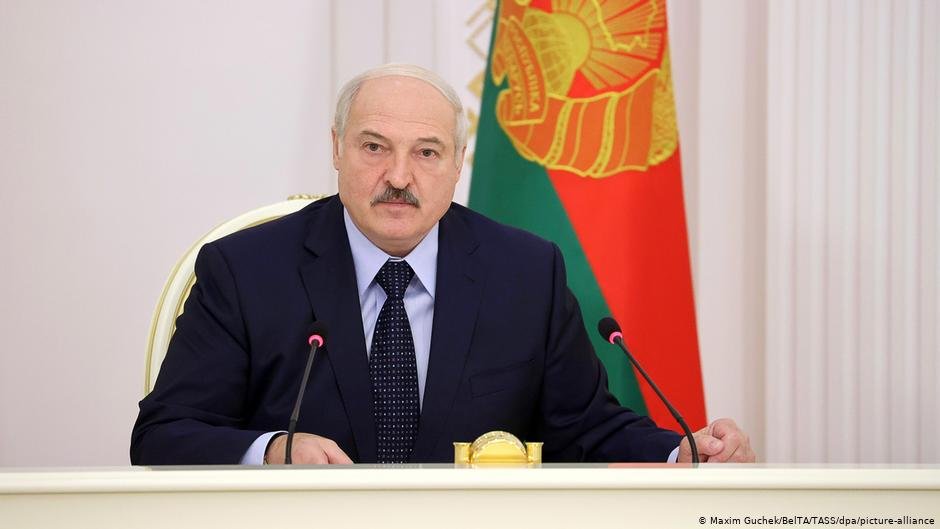
The ruling was issued against the background of Belarus' state actions along its borders with the EU in recent years. EU member states have repeatedly accused the totalitarian nation in Eastern Europe of attempting to send migrants to the bloc as part of a deliberate state policy, in a kind of hybrid warfare tactic.
Read AlsoLatvian authorities discover smuggling tunnel along Belarus border
Belarus' 'hybrid war' on Europe
The governments of the three eastern European states stress that amid a sudden rise in migrant arrivals from Belarus, they've been facing an emergency situation along their borders with significant challenges in managing irregular arrivals.
Poland, Latvia and Lithuania say that for the past five years, the government of Belarus has been exploiting migration as a political tool to weaken the bloc, referring to this method as a form of "hybrid warfare" — with the EU agreeing with this assessment.
Read AlsoLatvia presents evidence of organized migrant transfers through Belarus
In its judgement, the ECHR made direct reference to this position, saying that the cases examined in this context "occurred in a context of hostile actions carried out by the Belarusian authorities referred to as 'instrumentalization of migration.'"
ECHR added that Belarus "had encouraged, facilitated, or forced the movement of migrants across its borders with the intention of destabilizing the respondent states or the wider region."
Belarus: Official scheme to smuggle migrants into EU
ECHR judges however stressed in the judgement that in this context, the prospect of any possible exploitation of migration by Belarus as part of such a political tactic against Europe, does not affect the responsibility of the countries concerned to protect those presenting as asylum seekers, emphasizing the importance of respecting their individual rights.
This part of the ruling refers in particular to accusations that as part of this "hybrid warfare" tactic, authorities in Belarus directly fly in migrants to their capital Minsk — especially from Iraq — often sending them to the EU border on the same day as their arrival.
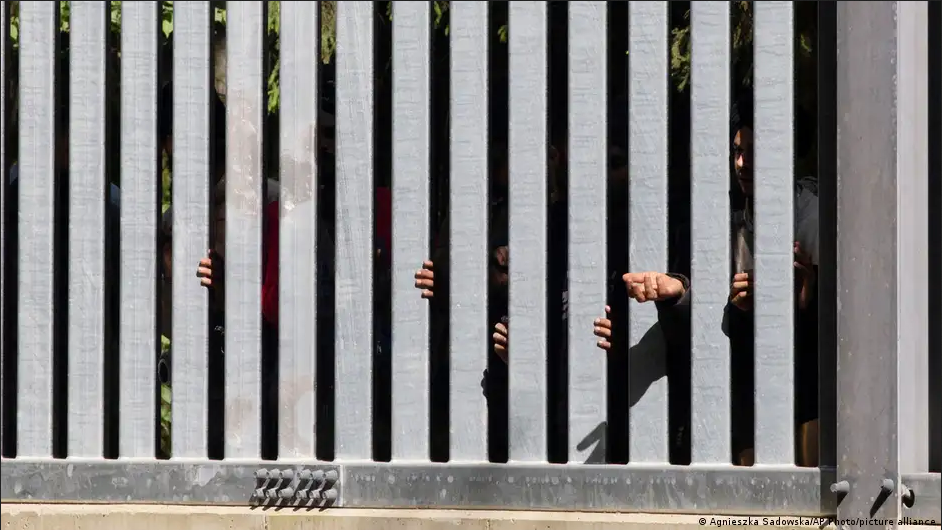
There Belarusian officials are reported to force these migrants under great duress to repeatedly attempt to scale border fences and other fortifications under the threat of facing recrimination if they fail.
Read AlsoLatvia: Border guards encounter armed migrant escorts
Victims of 'hybrid warfare' not automatically protected
Furthermore, the ruling highlighted at the same time that the "instrumentalization of migration [and] the removal of a foreign national to the instrumentalizing state" does not in itself qualify as a violation on the prohibition of torture and inhuman and degrading treatment.
With the various aspects of the decision taken into account, the line between the rights of EU countries to protect themselves and their responsibility to take care of migrants presenting as asylum seekers remains somewhat blurry.
According to the judgement, "it was only those individuals with evident personal vulnerabilities, or who could show a specific basis for the claim that, if sent back to that state, they would be evidently exposed to a real and immediate threat to life or a real and immediate risk of severe ill-treatment, who had to be detected by the national authorities with a view to assessing their need for protection and taking appropriate action to comply with their obligations under Article 3 of the convention."
The complaints of some of the applicants were thrown out of court, during the course of the proceedings, or were withdrawn before the process could start. However, Poland, Latvia and Lithuania were all ordered to pay some "just damages" to some of the applicants, ranging from between five thousand and 20,000 euros, depending on the case and the applicant's complaint and whether or not it was upheld by the judges.
Read AlsoLatvia alleges Belarus-linked scheme forces migrants into sabotage