
After fleeing Taliban rule through China and Spain, two Afghan sisters reached Germany. One was allowed to pursue her asylum claim. The other faced removal to Spain, despite psychiatric evidence of trauma and the sisters' close bond. Her case changed only after the transfer deadline expired, following a period of church asylum.
For six months, Laila* lived in a Protestant church in the western German town of Burgsteinfurt, near the city of Münster, while German authorities sought to transfer her to Spain.
Her sister had already been allowed to remain in Germany and pursue her asylum claim. Laila feared that another separation would undo the fragile stability she had begun to rebuild after fleeing Afghanistan.
That threat only ended in late October, after an application to search the church premises reportedly reached the responsible judge too late. Weeks later, Germany’s Federal Office for Migration and Refugees (BAMF), revoked the Dublin decision in her case and confirmed that Germany is responsible after all for examining her asylum application. The Church made the case public this week in a long press release, published on November 20.
The case has become a pointed example of how the EU's asylum responsibility rules can divide families and place people with severe trauma at risk, even when they are already in Germany, say the Church's authorities.
Read AlsoReactions continue to the European 'return hub' plan for Rwanda
A journey through three countries
Laila and her sister fled Afghanistan after the Taliban returned to power. According to the Evangelical Church district of Steinfurt-Coesfeld-Borken, which supported the women, they traveled through China and Spain before reaching Germany.
Under the EU’s Dublin system, one member state is generally responsible for examining an asylum application. In many cases, that is the first EU country a person enters.
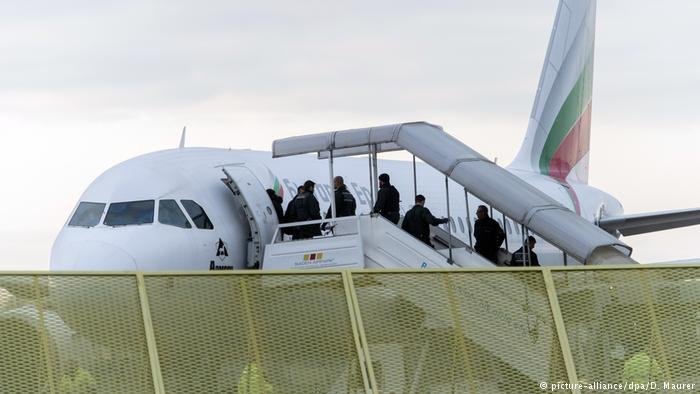
Because the sisters entered the EU through Spain, German authorities initially considered Spain responsible for their claims. A German transfer to Spain would not have meant an immediate return to Afghanistan. But Laila repotedly has no family ties in Spain. Her parents now live in the United States, while her sister lives in Burgsteinfurt.
The church community and a local support network sought to prevent the transfer. They argued that Laila needed protection, continuity of care and proximity to her sister.
"We quickly recognized that both women had experienced trauma and needed special protection and support," Guido Meyer-Wirsching, pastor of the Burgsteinfurt congregation, said in a statement.
Read AlsoSaxony Anhalt: A new test‑case for far‑right migration policy?
Two sisters, two outcomes
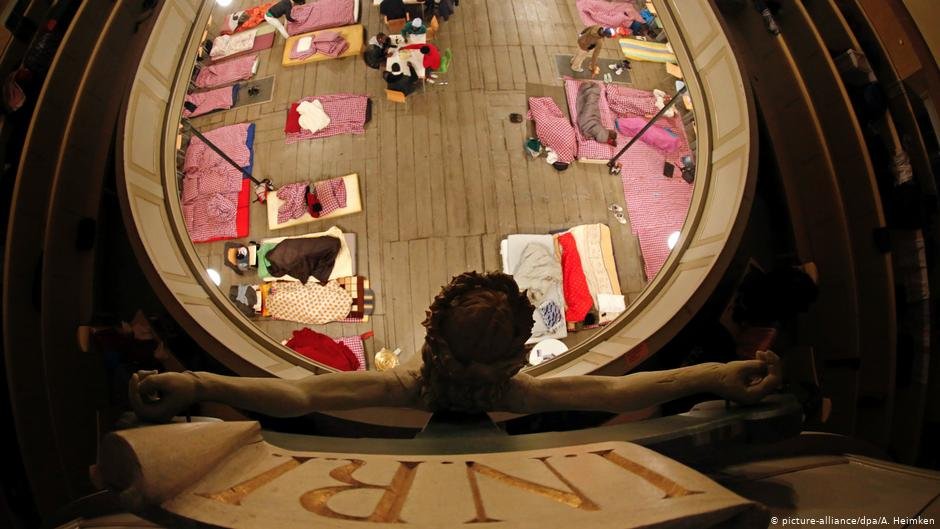
The sisters entered church asylum at the Protestant congregation in Burgsteinfurt in May 2026. Church asylum does not have a formal legal status in Germany. It is an informal practice in which congregations shelter people facing imminent removal, usually after other legal avenues have been exhausted.
For one sister, the strategy worked. A migration lawyer in Münster, Florian Träger, secured her admission to Germany’s national asylum procedure. She left church asylum in August and now lives in Burgsteinfurt.
However, for Laila the situation was more difficult. Her supporters submitted a hardship dossier to BAMF, but it was rejected. Then the immigration authority responsible for her case, the ZAB Coesfeld, then pressed for the church asylum to end and for her transfer to Spain, the church said.
The outcome suggests a potentially significant inconsistency, where two sisters with closely connected protection needs were treated differently within the same asylum process.
Read AlsoUK: Plans for safe and humanitarian routes for refugees, based on community sponsors
Trauma, disability and family ties
In October, the congregation commissioned Dr. Esther Sühling, a psychiatrist and trauma therapist based in Laer, to assess Laila. Sühling found that Laila suffered from post-traumatic stress disorder.
"Laila suffers from post-traumatic stress disorder as a result of her experiences under Taliban rule in Afghanistan and during her flight," Sühling said in a statement published by the church. "This is a psychosocial disability."
The report also emphasized the clinical importance of Laila’s close relationship with her sister. Separating them again, Sühling concluded, would seriously harm Laila, and adequate therapeutic support could not be guaranteed in Spain.
Sühling also framed Laila’s condition as a disability under German law. Under Section 2 of Book IX of Germany’s Social Code, a person may be considered disabled where physical, mental, intellectual or sensory capacities are likely to deviate from the typical state for more than six months and, in combination with barriers, hinder equal participation in society.
The church authorities claimed BAMF did not take the psychiatric report into account and did not provide a substantive explanation for its decision.
Read AlsoNetherlands: Church asylum campaign calls for residence permits for child asylum seekers
A search warrant that arrived too late
By the second week of October, the situation had become acute. After a conversation with the ZAB Coesfeld, church representatives said they believed that authorities were preparing to end the church asylum by force.
This prompted Träger to turn to the courts (Amtsgericht Rheine). The Evangelical Church of Westphalia also contacted the office of the Protestant regional churches in North Rhine-Westphalia in Düsseldorf.
According to the church, the ZAB applied for a court order to search the congregation’s premises. But the application reportedly reached the responsible judge too late for the court to act before the Dublin transfer period expired.
No forced search took place. Had it done so, the church said, it would have been the first case in years in North Rhine-Westphalia in which a church asylum was terminated through state coercion.

In addition, the six-month point is central to the case. Under the Dublin rules, a transfer period may be extended in certain circumstances, including where an applicant has absconded. German courts have held that a person whose whereabouts are known to authorities, including someone in church asylum, cannot automatically be treated as having absconded.
In 2021, BAMF also shortened the period after which a person in church asylum could no longer be transferred to the EU country first responsible for their claim. After six months, that country generally loses responsibility.
This appears to have been decisive in this case. Once the transfer period expired, Spain was no longer responsible for Laila's claim. BAMF then revoked its Dublin decision and accepted Germany’s responsibility for examining her asylum application.
Read AlsoThe EU Pact on Migration and Asylum: Questions answered
Is Germany complying with relevant safeguards?
The case comes as the EU implements reforms to its Common European Asylum System (CEAS). The new Asylum and Migration Management Regulation preserves the principle that applicants should generally lodge claims in the first EU country they enter, although family links and other criteria can make another member state responsible.
Supporters of Laila argue that the reforms were supposed to strengthen protection for people with disabilities. They have accused BAMF of neither having dedicated disability specialists nor a consistent approach to the UN Convention on the Rights of Persons with Disabilities in asylum decisions.

Their concerns are echoed by the disability rights organization Handicap International e.V. – Crossroads, which published a legal opinion in 2026 examining how asylum procedures and protection decisions should comply with the UN Convention on the Rights of Persons with Disabilities. The organization said the needs and rights of refugees with disabilities are often insufficiently considered in asylum procedures.
The report sets out requirements ranging from accessible procedures to disability-sensitive assessments of persecution and risks on return. It also includes legal arguments, relevant case law and country-of-origin information on Afghanistan, Iraq and Syria.
However, the narrower question raised by Laila’s case is whether German authorities adequately considered trauma, disability and family unity before seeking to transfer a young woman to a country where she had no family and where her supporters said she could not receive adequate care.
Read AlsoNGOs: EU 'Return Regulation' endangers undocumented migrants
Relief, but no final answer
For now, Laila has a measure of security. Germany has accepted responsibility for her asylum claim, and the immediate risk of transfer to Spain has ended.
But she remains in a central reception facility in Schöppingen. Her supporters are trying to bring her back to Burgsteinfurt, where her sister lives and where the congregation can continue to support her.
"I saw tears of joy on people’s faces," said Meyer-Wirsching, when they heard the case to transfer her had been dropped. "I am so grateful that so many people in the congregation and beyond stood up for Laila."
But he also criticized the authorities' approach.
"A person becomes a case and, in the end, an object, a file that someone wants to close," he said. "This is a development that causes us great concern, not only here in Burgsteinfurt."
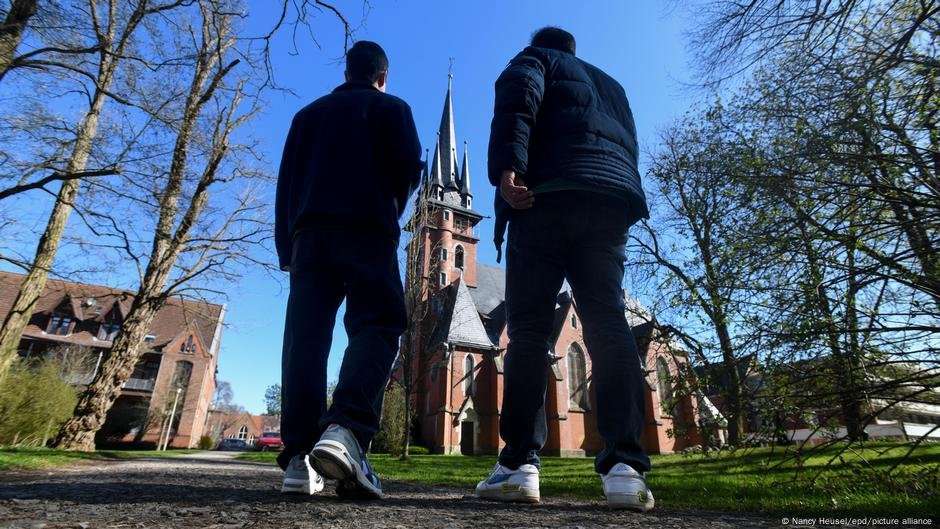
"We are trying to bring her back to Burgsteinfurt," he added. "Her sister lives here. Here, we can continue to support her."
Read AlsoHumanitarian corridors celebrate 10-year anniversary in Italy
A question of principle
The lawyer Träger, who has accompanied numerous church asylum cases, said the case had significance beyond Burgsteinfurt.
"That an open church asylum, known to the authorities, was to be ended by a forced search immediately before the deadline expired marks a new quality in the relationship between state enforcement and church asylum," he reportedly commented.
Historically there has been an understanding between the German state and churches that the state would respect church asylum, Träger explained. But he described it as a last resort, available to churches to shelter people seeking protection and, in some cases, to prevent an imminent removal.
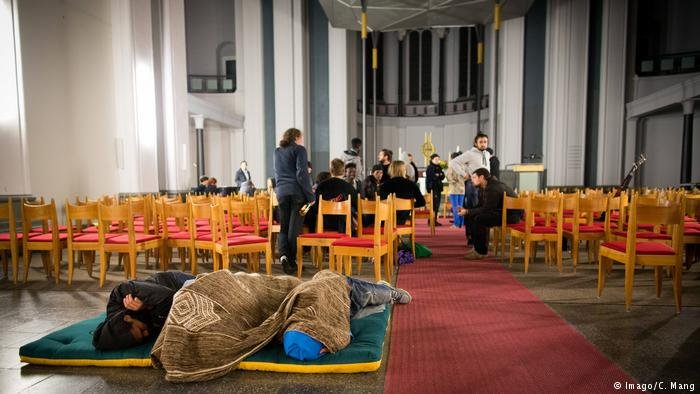
"The church asylum is the last hope for people seeking protection, practical charity and solidarity," Meyer-Wirsching said. "When people are in need, then we are there as a church. That is our mission."
Behind every church asylum, he said, were members of a congregation acting from a deep conviction that refugees deserve protection and the possibility to remain in Germany.
"We believe that the church must take responsibility for social questions," he said. "That includes protecting refugees. With church asylum, we work for a good humanitarian solution in every individual case."
With epd
*Name has been changed to protect the individual's identity.