
Six boats carrying 362 people reached El Hierro on Sunday (November 22), adding to the pressure on Spain’s smallest Canary Island, just days before a general election in which migration and border management have become central campaign issues.
Five boats carrying 294 people reached the Spanish island of El Hierro on Sunday after crossing the Atlantic from West Africa. A sixth boat carrying 68 more arrived later that evening, bringing the reported total for the day to 362. 27 women and 21 minors were also among the latest arrivals.
The arrivals came less than a week before Spain’s November 29 general election, renewing attention on the Canary Islands at a moment when migration, border management and the future of Spain’s government are competing for political attention.
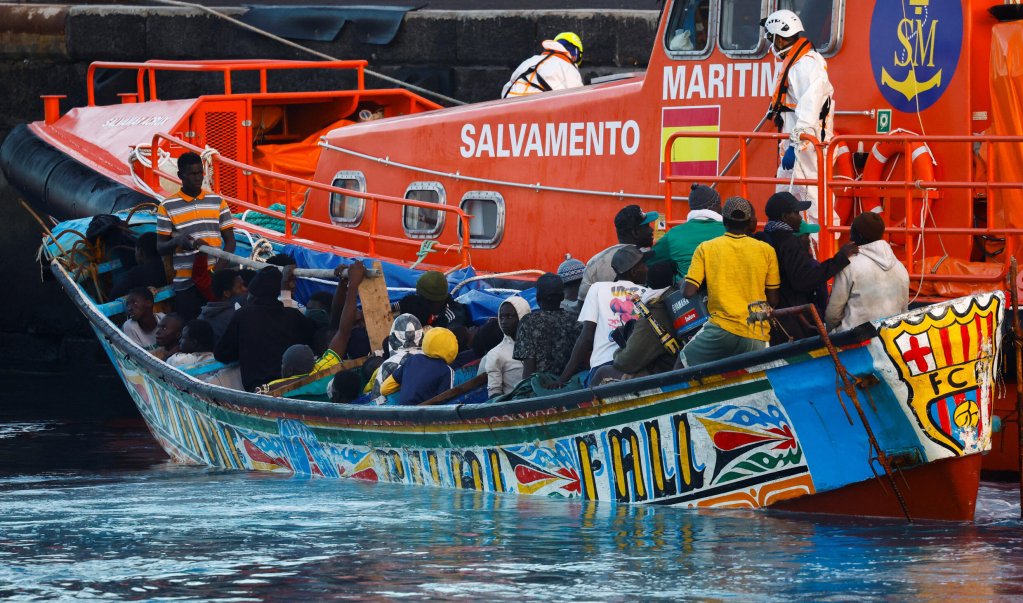
Maritime rescue services and the Civil Guard coordinated operations at La Restinga, El Hierro’s main port. The people aboard were reported to be from Senegal, The Gambia, Guinea-Conakry and Mali. Several boats are reported to have left different parts of Senegal between five and seven days earlier.
Read AlsoNearly 1,600 migrants arrive on Spain's Canary Islands in one day
A day of rescues
The first three boats reached La Restinga during the early hours and morning of Sunday. The first was reported to have carried 74 or 75 people, including five women and three minors, after leaving Thiès, Senegal, seven days earlier. The second carried 82 or 83 people, including 13 women and 12 children, after a five-day crossing from Saint-Louis.
A third boat, detected 4.2 nautical miles from port at 9.30am Canary Islands time, carried 22 people, including one woman and three minors. The Civil Guard patrol boat Río Tajo located it, and the maritime rescue vessel Acrux brought it into port. Those aboard said they had left Mboro, Senegal, five days earlier.
At 12.07pm, the Civil Guard patrol boat Río Guadiato identified another vessel about 12 nautical miles from La Restinga. The boat had experienced several engine failures during the crossing. The Acrux rescued the 35 people aboard, including one woman and one minor, and transported them to port.
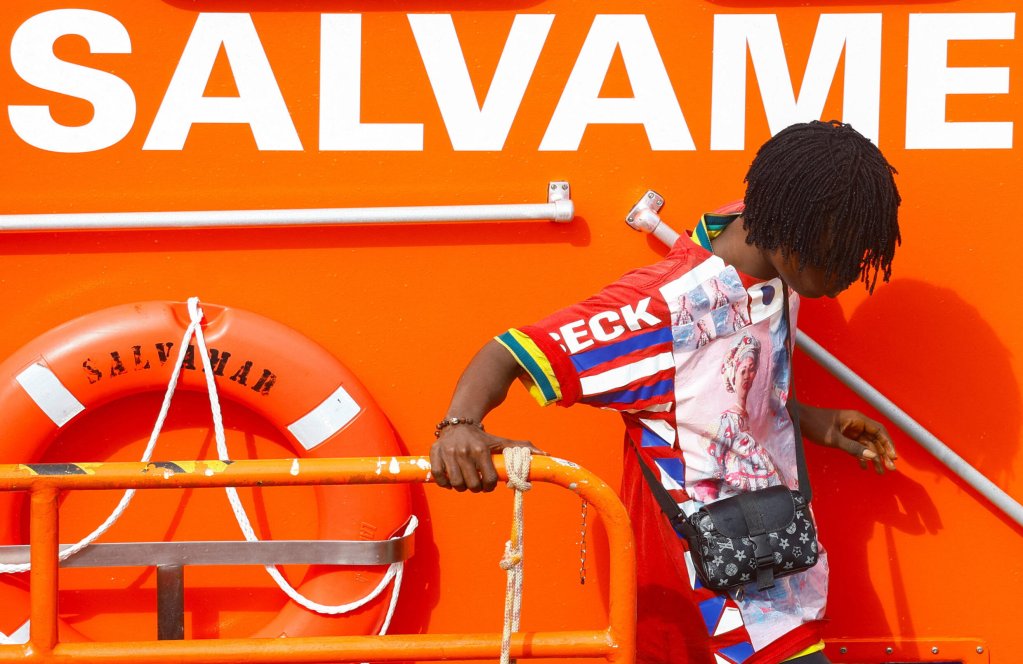
Less than an hour later, at 12.54pm, the same patrol boat detected a further radar contact about 10 nautical miles from La Restinga. The Río Guadiato located and escorted the boat to port, where the Salvamar Diphda helped it dock. It carried 80 people, including five women and two minors. Those aboard said they had left Saint-Louis six days earlier.
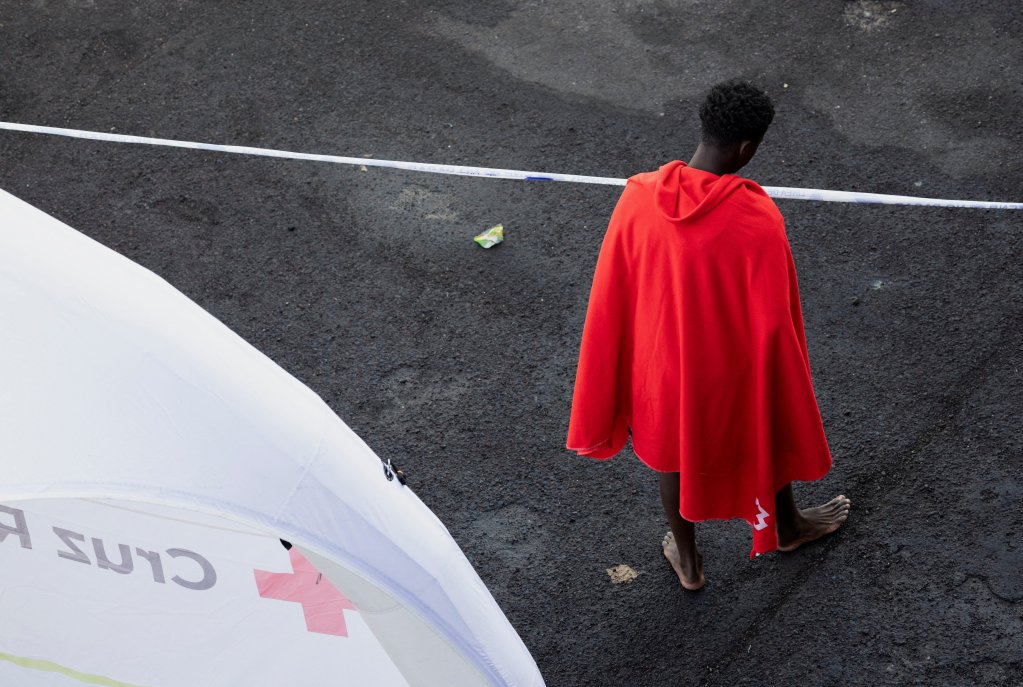
The sixth boat reached La Restinga shortly after 9.20pm, assisted by the Salvamar Navia. It carried 68 people, including two women, who had spent five days at sea after leaving Saint-Louis. Emergency personnel from the Canary Islands Emergency Services, primary care services and the Red Cross assisted those who disembarked. Authorities said none required transfer to hospital.
Read AlsoMany killed after migrant boat sinks off Senegal
A small island under strain
El Hierro has a resident population of roughly 11,400 to 12,000 people. Its port, health services and reception capacity were already under pressure before Sunday’s arrivals. The island has about 30 hospital beds, and local officials have said capacity to refer patients to Tenerife has been exhausted.
Authorities on El Hierro declared a social emergency on November 6 and estimated that more than 2,000 people remained on the island. The pressure has also affected the local economy. La Restinga, a fishing village of 673 residents, depends on fishing, diving and tourism. Local representatives have said the number of small boats has made it difficult for fishing vessels to leave and return to port, while the diving sector has reportedly contracted from 11 centers to four.
Spain’s central government declared a migration emergency in the Canary Islands on November 10. It committed 15.18 million euros to create additional places in state-run reception centers and fund transfers between the islands and mainland Spain. A further one million euros was allocated to the Red Cross for initial assistance and medical care on El Hierro.
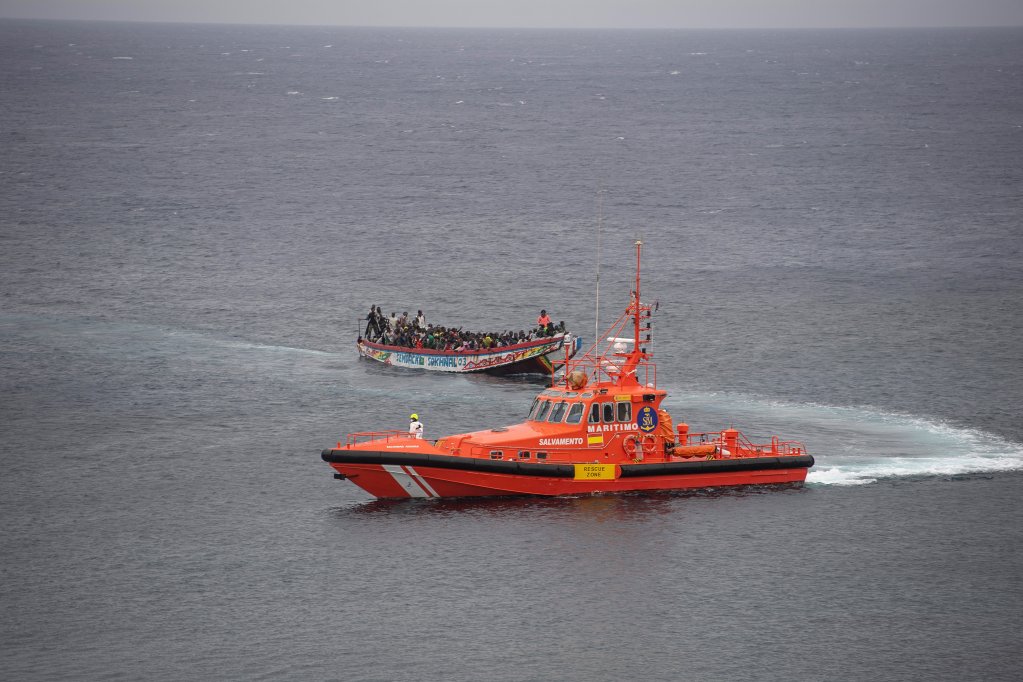
The government also said it would reinforce rescue capacity by deploying the Guardamar Caliope, meaning that three of Spain’s five operational Guardamar vessels would be assigned to the Canary Islands. Madrid said it would increase medical and police personnel, accelerate administrative procedures and transfer unaccompanied minors to other parts of Spain.
Canary Islands President Fernando Clavijo said the state had accepted the eight measures requested by the Canary Islands to address the emergency, including additional health resources, security personnel, maritime rescue capacity and support for local residents and businesses. He said he would monitor how quickly the commitments were implemented.
The measures include funding for compensation for people and economic sectors affected in La Restinga, including fishing, diving, restaurants and tourism. Clavijo said the island needed a durable solution to restore normal activity at the port, where maritime operations have affected local livelihoods.
At the European level, Clavijo has asked for an EU mission to El Hierro and a contingency plan for the next six months. He has called for relocation of international protection applicants, funding for reception, and greater operational support from Frontex, the European Union Agency for Asylum and Europol.
Read AlsoCanary Islands: Migration emergency declared as El Hierro faces mounting pressure
An election issue
The July events in Ceuta have become a political reference point ahead of the election. At least 72,000 people crossed from Morocco into the Spanish enclave on July 30 and 31, according to figures cited in the Spanish judicial record. By autumn, roughly 8,000 people remained in Ceuta, and more than 140 deaths were reported across the Spanish and Moroccan sides of the border.
Opposition parties have used the episode to argue that Spain has lost control of its borders and that the government’s relationship with Morocco has failed. Spain's far-right Vox party has made that argument central to its campaign, while the center-right People's Party (PP) has sought to present a tougher but more legally constrained alternative to Sánchez’s approach.
The political dispute has also raised questions about intelligence and diplomatic responsibility. Spain’s High Court judge María Tardón is examining what Spanish authorities knew before the crossings, whether warnings were passed to officials able to act, and how Moroccan authorities handled the border. In September, the government released 40 intelligence documents showing that Spain’s National Intelligence Center had warned both Moroccan counterparts and Spanish authorities of plans to storm Ceuta.
The judge has since ordered the release of further classified material, including assessments of Moroccan conduct and records showing who received intelligence warnings and when. The inquiry has not established that Moroccan authorities deliberately enabled the crossings, nor has it determined whether Spanish officials failed to act on the information they received.
Morocco’s position has strengthened internationally since President Donald Trump recognized Moroccan sovereignty over Western Sahara in 2020. That recognition, linked to Rabat’s normalization of relations with Israel, has increased Morocco’s leverage in its dealings with Spain and the European Union. Some analysts have suggested that internal Moroccan divisions or an attempt to pressure Sánchez may have played a role in the July events.
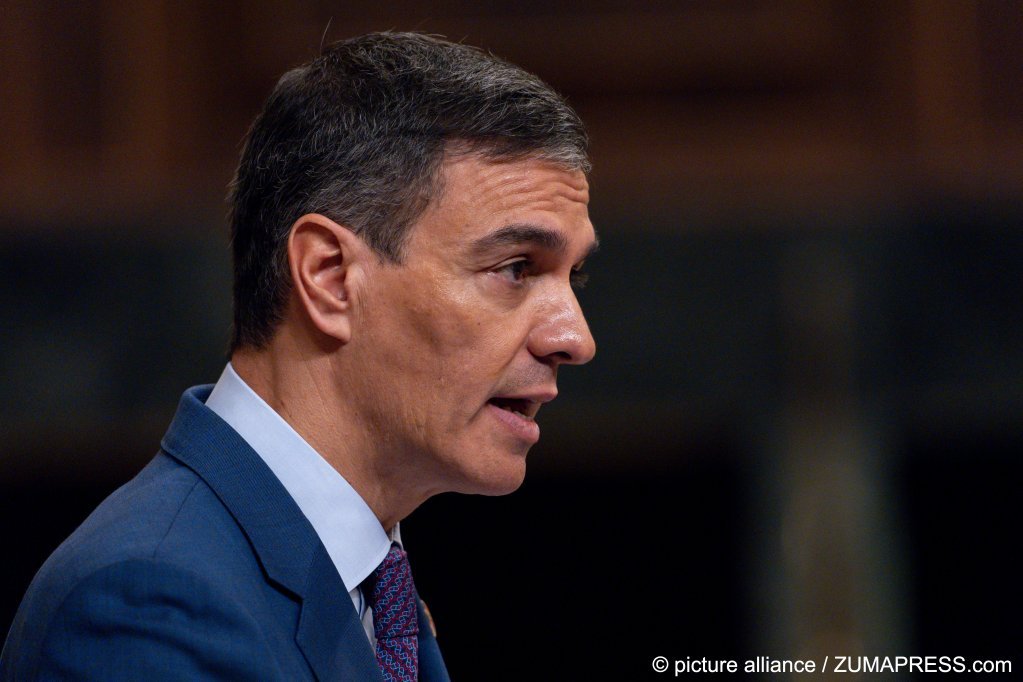
For Sánchez, the issue is politically sensitive because it combines border management, relations with Morocco and questions of ministerial accountability. For the Canary Islands, the immediate concern is different. The Atlantic route involves long crossings from West Africa, rescue operations at sea and reception capacity on small islands, rather than a short land border with Morocco.
Read AlsoSpain: How will migration affect the upcoming election?
Spain’s European position
Spain’s approach to migration has become a point of difference within the European Union. The government has expanded legal pathways and regularization measures, while continuing to pursue border enforcement and cooperation with countries of origin and transit. That combination has placed Sánchez’s government at odds with governments favoring a more restrictive approach to asylum and irregular migration across the board.
The election could affect that balance. A government led by the PP, particularly if it depends on Vox, would be likely to give greater political weight to detention, removal and external border controls. Vox has called for the expulsion of people who entered Spain without authorization, while the PP has proposed offshore processing and tighter citizenship rules. Both parties would face legal and practical limits, including EU law, Spain’s constitution and the need to maintain cooperation with Morocco, Senegal and other countries along the Atlantic route.
For the Canary Islands, the more immediate question is not whether Spain abandons cooperation with West African states, but whether it can maintain a credible rescue-and-protection system while reducing the concentration of arrivals on El Hierro. That requires vessels, medical capacity, reception places, transfers and administrative capacity, as well as diplomatic engagement with Senegal, The Gambia, Mauritania and Morocco.
Read AlsoCeuta: Thousands of identical inflatables could point to possible advance planning
EU support
The EU has existing tools that could help Spain manage the pressure, but they are not a substitute for a functioning Spanish reception system. The European Commission has said the Canary Islands may access the EU Solidarity Fund, which can provide relocation places, funding or operational assistance from other member states. Frontex already has officers deployed in Spain, including in the Canary Islands.
Clavijo has argued that these measures are not enough on their own. He has called for a European mission to El Hierro and a six-month contingency plan that would anticipate further arrivals, identify reception capacity across the archipelago and mainland Spain, and clarify responsibility for rescue, health care, accommodation and transfers.
The practical constraint is El Hierro itself. Additional funding or personnel may ease some pressure, but the island’s small port, health service and reception facilities cannot expand quickly enough to absorb the arrivals without transfers and a wider distribution system.
Read AlsoUNHCR calls for action, as deaths on migrant sea routes increase
With EFE and Lusa