
Over 11,000 migrants have managed to reach Spain’s Canary Islands archipelago since the beginning of the month, according to Spanish government figures. This sudden rise has become one of the biggest talking points in the country ahead of the upcoming November 29 snap elections, which are widely projected to result in a change in leadership.
The number of migrants arriving irregularly on Spain's Canary Islands archipelago since the beginning of November amounts to more than half the number that arrived on the islands in all of 2025. In fact, in the first two weeks of November this year, more than 11,000 migrants arrived on the Spanish islands, and according to UNHCR data, last updated on November 15, 24,364 migrants arrived since January 1.
In 2025, nearly 18,000 migrants reached the Canary Islands by boat; in the past two weeks alone, just under a third of last year's tally managed to reach the shores of the Canary Islands, according to the Interior Ministry and to data obtained from the International Organization for Migration (IOM).
For the majority of the year to date, far fewer migrants succeeded in reaching the Atlantic archipelago compared to last year; however, that situation shifted dramatically since the beginning October and peaked in the last few days with record numbers seemingly arriving daily, particularly on one of the smallest islands in the archipelago, El Hierro.

Read AlsoNearly 1,600 migrants arrive on Spain's Canary Islands in one day
In October, Spain's central government declared a state of emergency on the Canaries to release additional funds to improve and expand reception in reception centers. Regional authorities on the Canary Islands have been sounding the alarm repeatedly about the lack of reception capacities and the difficulties facing some of the smaller islands, whose tiny populations are in some cases being equalled or outstripped by the numbers arriving.
Regional leader Fernando Clavijo meanwhile has demanded even further assistance from the national government: "We are deeply concerned — very concerned — about the situation and the reactions we are seeing," he told reporters earlier this week.
However against this backdrop, a far bigger political debate seems to be raging on in the capital Madrid, and indeed across the country.
Read AlsoCanary Islands: Migration emergency declared as El Hierro faces mounting pressure
Significant shift to the right expected in upcoming vote
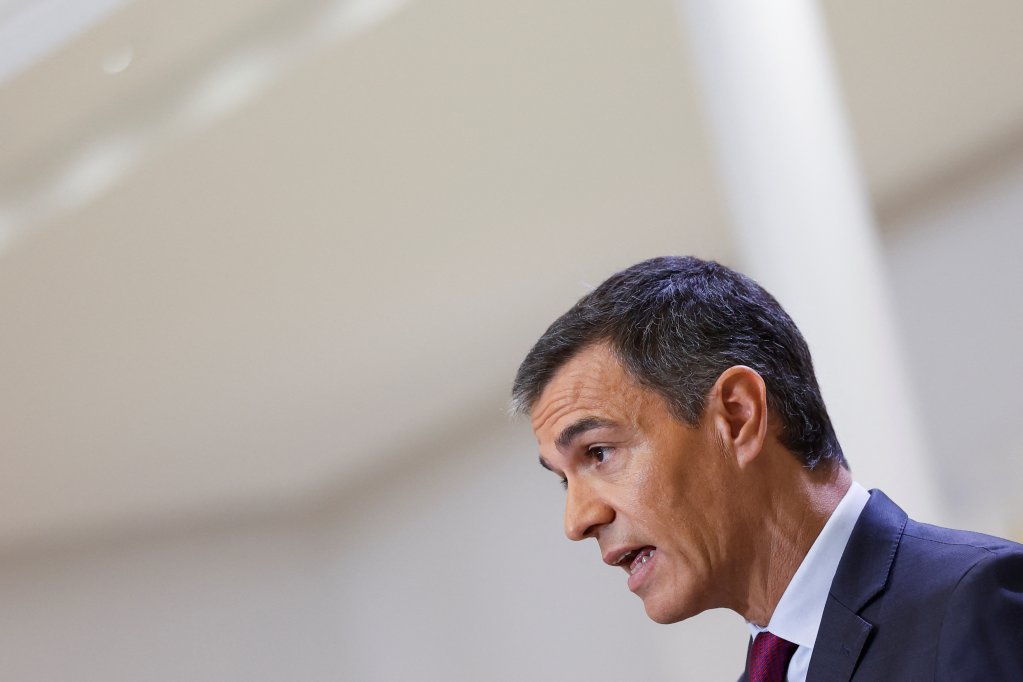
In Spain's upcoming general election, conservative and far-right parties seem poised to take over leadership from the ruling Socialist Party-led coallition, headed by Spanish Prime Minister Pedro Sanchez. According to various opinion polls, the snap elections, called by Sanchez in response to a housing crisis and the mass arrivals of migrants in Ceuta over the summer are reflecting the major societal and political divides in the country, particularly over the issue of immigration.
The combined support for the conservative Popular Party (PP) and right-wing populist Vox party indicates growing frustration among the populace against Sanchez' widely pro-immigration policies — including the introduction of a bill designed to legalize the status of over one million undocumented immigrants in the country earlier this year.
Read AlsoWhere is Spain headed after the snap election announcement?
Santiago Abascal, the leader of the anti-immigrant Vox party, referred to migration in Spain as "an invasion," at the launch of his campaign on November 16 — which was deliberately held in the Canary Islands.
"Whoever enters Spain illegally, will leave Spain and will never be made legal," Abascal told several thousand supporters on the Canary island of Tenerife, repeating his party's calls to deport irregular migrants.
Vox currently polls as Spain's third-largest party — but its leaders are confident that it is going to take either first or second place in the polls, which would mean that it could be in a position to enter a coalition government involving PP; whether the two parties together will have enough numbers for a parliamentary majority however is yet to be seen. Although they have worked together in some regional capacities, the BBC reports that the PP would only consider a coalition with Vox "under strict conditions and red lines."

Policies being espoused by PP politicians meanwhile have also turned increasingly anti-migrant. For instance, in the party's manifesto, it suggests prioritizing immigrants with established ties to Spain, joining initiatives by other EU nations to launch offshore deportation centers, and making the requirements for Spanish citizenship significantly more difficult.
Read AlsoSpain: People's Party and Canary Islands government present agreement on distribution of minors
Fallout over Ceuta arrivals creates waves in the polls
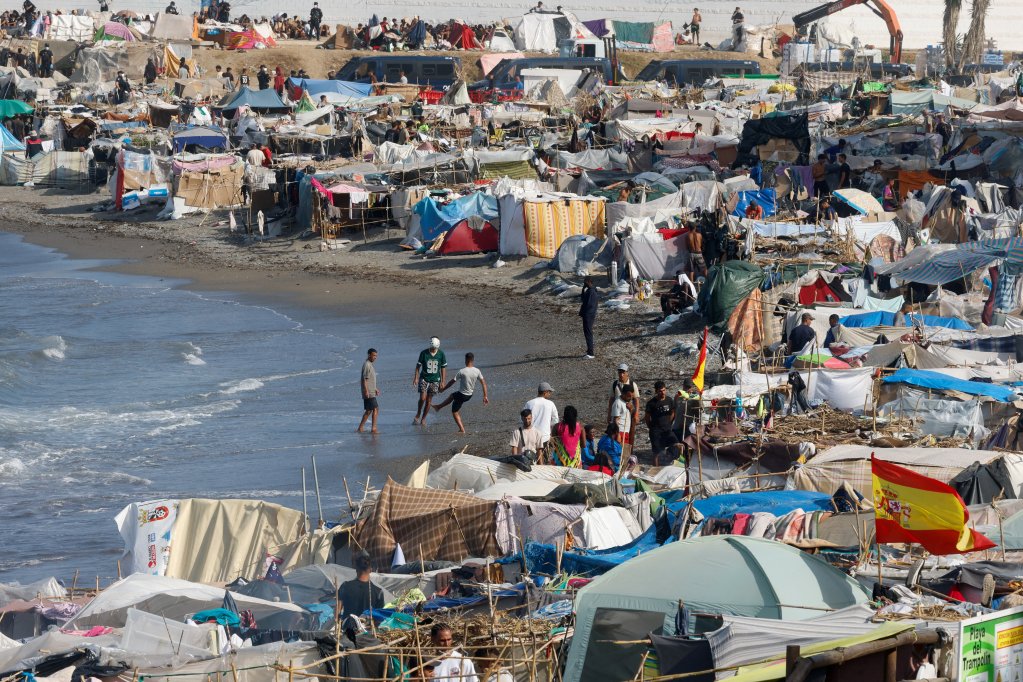
During campaigning, Santiago Abascal also made reference to the Ceuta crisis in July, when tens of thousands of migrants entered the North African Spanish exclave from neighboring Morocco over just two days.
While the majority were sent back days later, a few hundred remain in the Spanish territory months later and several thousand were still there into September and October.
Over 140 people died while attempting the journey, which mostly took place via a short but perilous sea route.
The event reignited the debate over immigration into Spain and Europe, fomenting anti-migrant views among right-wing voters in the country and beyond.
Read AlsoSpain's Ceuta grapples with aftermath of border chaos
Data suggests that Spain's economic future depends on immigrants
However, there also are some legitimate reasons for continuing the course set by Prime Minister Sanchez; like many other European countries, Spain faces a major demographic decline which is predicted to impact its economic growth and labor force.
Sanchez has argued that various data points suggest a drop in Spain's gross domestic product of 19 percent by 2050 without continued migration, stressing that in his view, the regularization effort is vital to the country.
Various business leaders in Spain meanwhile have also backed up Sanchez' views, emphasizing the critical role of immigration to maintain the nation's current standards.
Pedro Fernandez Alen, president of the National Construction Confederation, believes that foreign workers have become indispensable in Spain, telling AFP that immigrants now comprise half of the country's construction laborers.
"Some primary sectors, productive industries and parts of manufacturing need workers that we simply don't have at the moment," he explained.
Read AlsoHow Spain's 2026 regularization works
with AP, AFP