
According to Germany's latest integration report, students with an immigrant background are less likely to attend academic-track secondary schools (Gymnasien) than their peers without an immigrant background. They are also more likely to face socioeconomic disadvantages, including poverty, which can make educational success more difficult.
Students with an immigrant background in Germany continue to face significant structural barriers in the education system.
Compared to their peers without a migration history, they remain underrepresented at academic-track secondary schools (Gymnasien), the government's latest biennial integration report and a policy paper by the Expert Council on Integration and Migration (SVR) show.
Differences in family socioeconomic backgrounds, access to early childhood education and school pathways contribute to these disparities.
Despite these persistent gaps, newly released data also points to significant upward educational mobility. Almost half (46.6%) of young adults aged 25 to 34 whose parents immigrated have attained a higher level of education than their parents, according to the government's latest integration report.
Read AlsoIntegration in Germany: Much has been accomplished but problems remain
Socioeconomic factors and educational tracking
Young people from immigrant families in Germany remain underrepresented at academic-track secondary schools (Gymnasien), the main route to university education. Their educational opportunities are closely linked to socioeconomic circumstances, including family income and parents' education and employment status.
According to Germany's 14th Integration Report, based on 2023 data analysed by the Federal Statistical Office, 67.8% of children and young people who had immigrated to Germany faced at least one of three socioeconomic risk factors for educational success: family poverty, parents with low formal educational qualifications or parental unemployment. The figure was 52.8% among their descendants, compared with 16% among young people without an immigration history.
These disadvantages can limit access to educational resources and support outside school. The Expert Council on Integration and Migration (SVR) also highlights persistent differences in access to early childhood education and the role of family resources in shaping school pathways.
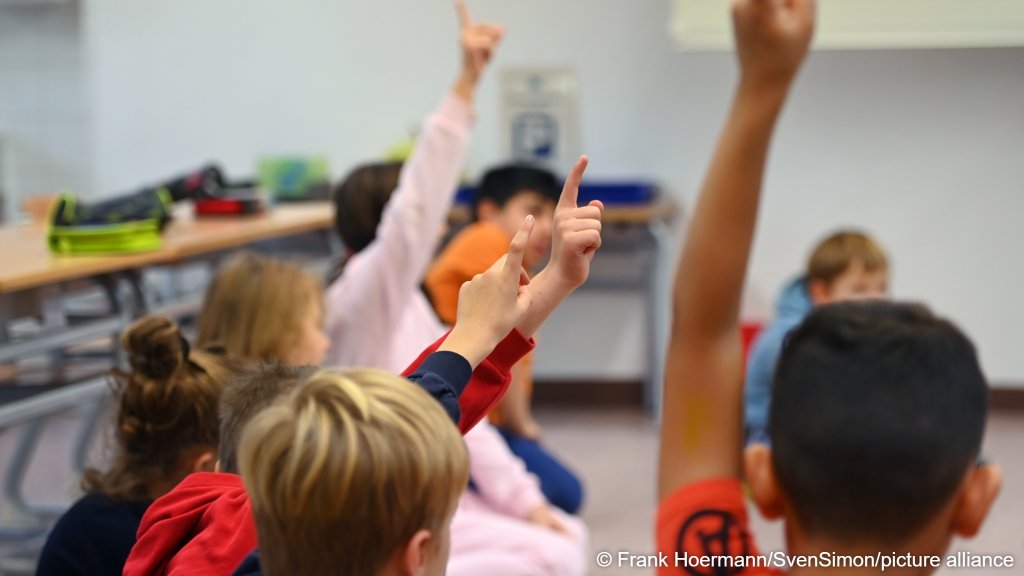
Results from the OECD's 2025 PISA study show that Germany links social background to school achievement more strongly than most other OECD nations. Although accounting for language and family background reduces this performance gap, it does not erase it completely.
Additionally, early educational tracking, limited support for multilingual students, and experiences of discrimination continue to hinder equal opportunity for migrant youth.
Read AlsoGermany: Government changes its stance on integration courses for some migrants
Upward mobility and intergenerational progress
Despite these systemic hurdles, this year's integration report emphasizes notable intergenerational progress.
About half of second-generation immigrants -- individuals born in Germany to foreign-born parents-- surpass their parents' highest level of formal educational achievement. This upward trend underscores the resilience and high educational aspirations present within many immigrant families, even when navigating complex school systems.
The SVR analysis points out that structural advancements in early language support and all-day schooling (Ganztagsschulen) have contributed positively to boosting outcomes over recent years. However, progress remains uneven across different federal states, reflecting Germany's decentralized approach to education policy.
Read AlsoGermany: Higher education counseling for migrants faces closure amid funding cuts
Calls for equal opportunity and systemic reform
Civil society organizations and educational policy experts argue that more targeted interventions are required to establish true equality of opportunity in German schools. Recommendations put forward by the expert council and integration advocates focus on several key policy areas:
- Expanding early childhood language support: Ensuring all children receive comprehensive language diagnostic evaluations and support prior to primary school enrollment.
- De-coupling social background from tracking: Reforming transition mechanisms between primary and secondary schools to reduce early tracking reliance, which disproportionately impacts disadvantaged students.
- Targeted financial investment: Allocating additional staff, social workers, and funding specifically to schools located in socioeconomically disadvantaged neighborhoods.