
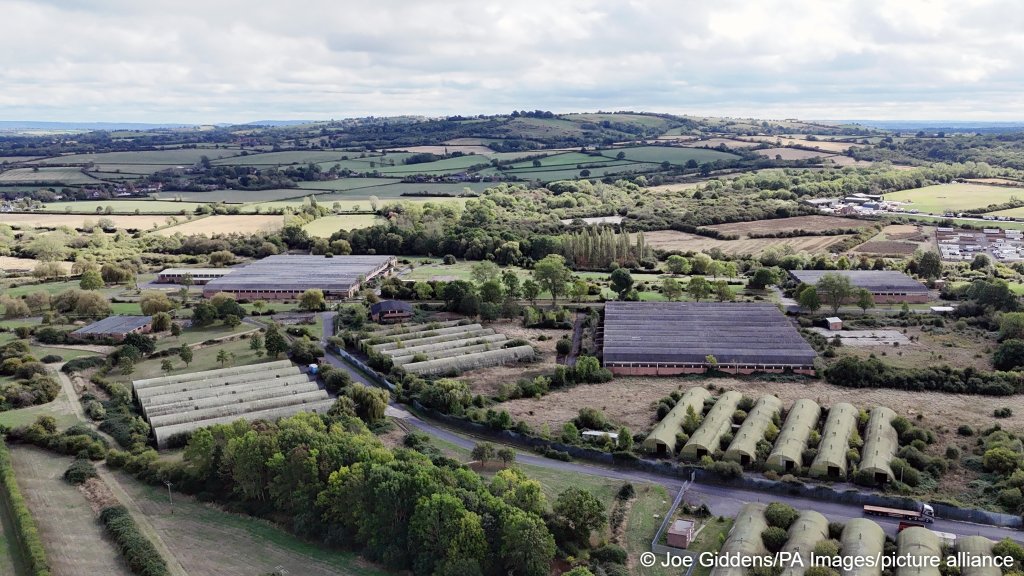
Britain's Housing Secretary Angela Rayner gave the green light to a proposal to move up to 1,200 asylum seekers to a former military site near the village of Piddington, in Oxfordshire. The plan is part of the government's move to use former military sites as alternatives to hotels for accommodating asylum seekers. The proposal has been met with local opposition over concerns about the location and environmental impact.
The UK government has approved full planning permission for an asylum center at a Ministry of Defense site near the village of Piddington in Oxfordshire. The plans give a green light to the refurbishment and redevelopment of the former barracks for use as accommodation for asylum seekers for a period of 10 years.
An estimated 1,200 asylum seekers could be housed on the site.
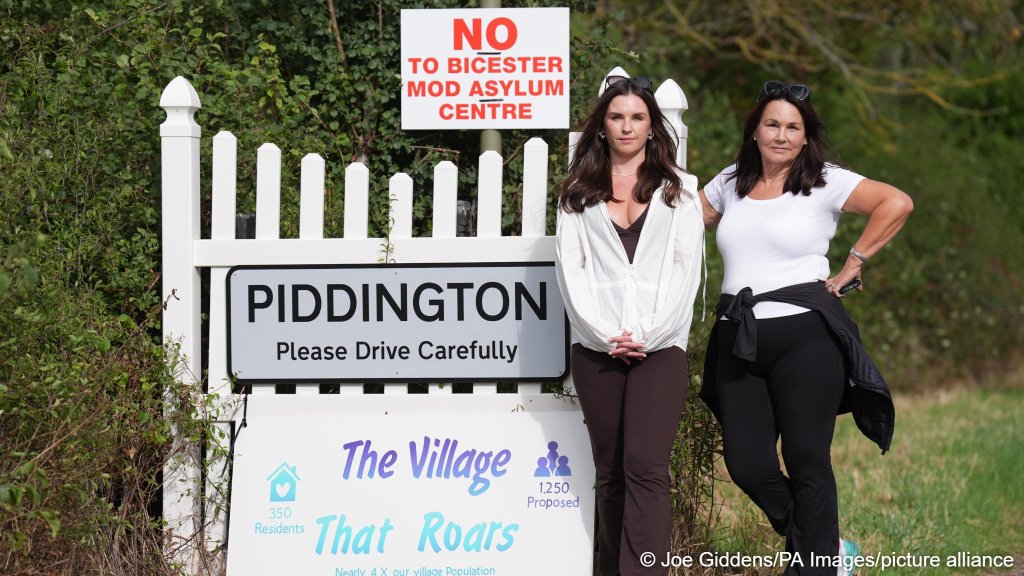
The move has been met with resistance by residents. As part of a campaign known as "Wrong Plan Wrong Site" initiative, concerned citizens have launched a High Court legal challenge to the proposal over concerns about its location, environmental impact and cost.
"None of these concerns simply disappears because planning permission has been granted," the campaign Wrong Plan Wrong Site said in a statement.
Speaking to InfoMigrants, a Home Office spokesperson said that it welcomes this planning decision and will now work through the planning conditions set out, subject to other assessments and consents.
The planning approval is only one stage of a wider process that is subject to further necessary assessments and approvals that will be duly considered before any asylum seekers can be moved to the site.
"The government is working on a fairer distribution of asylum accommodation across the country, with over 1 billion British pounds (around 1.19 billion euros) saved in costs since the election [in July 2024]. This includes closing all asylum hotels and moving to alternative accommodation, including former military sites. These are designed to be self-contained, with 24/7 security and CCTV, to minimize the impact on the local community," said the Home Office spokesperson.
Read AlsoUK: Thetford unrest raises concerns over violence against asylum seekers amid housing crisis
Use of former military sites
Several former military sites are being used or are being considered as temporary accommodation for asylum seekers. The move is part of the government's commitment to stop using hotels to accommodate these people and provide more suitable, managed accommodation.
"Where new sites are being considered or changes to existing sites' use are proposed, such as extending occupation or increasing capacity, no final decision will be taken until the necessary assessments, planning permissions and approvals have been completed and properly considered," the Home Office said in a statement.
The move has been met with resistance by local communities. In March, the government identified Cameron Barracks in Inverness as a possible new housing center for asylum seekers. However, a disagreement over local licensing requirements has further delayed the site’s opening. Cameron Barracks had originally been scheduled for occupancy by the end of last year.
On June 29, the Home Office announced that it is exploring the use of three new former military sites to house asylum seekers including Bicester, Barnham, and Linton-On-Ouse. Meanwhile, the government is seeking to extend the use of two existing sites including Crowborough until 2030 and Wethersfield beyond 2027.
"Large sites such as Wethersfield have been operating for a number of years, with no evidence of rising crime in the area," the Home Office Spokesperson said.
Read AlsoUK: Further delays in using Cameron Barracks to house asylum seekers
Lessen use of hotels for asylum centers
At its peak, the Home Office Spokesperson said that about 400 hotels were used as asylum centers, costing an estimated nine million British pounds a day (around 10.7 million euros).
"As the Home Secretary said in the House [of Commons -- UK Parliament's lower house] in July, we are committed to end the use of asylum hotels this Parliament, and we are on track to deliver. We have brought the number of hotels down from 213 in July 2024 to fewer than 160 today," the Home Office Spokesperson said.
Numbers provided by the Home Office indicate that hotels sheltering asylum seekers have been slashed to 16,000, down 50 percent in the last year and 71 percent since the peak of 56,000 in September 2023, which was under the previous Conservative administration.
There has also been a 12 percent decrease in those receiving asylum support in the past year.
Read AlsoUK: Asylum seeker accommodation costs rocket, despite government promises