
Denmark's Supreme Court is gearing up to rule on whether or not a law, known as the 'parallel societies legistlation' could be seen as ethnic discrimination. Danish authorities introduced the law to encourage integration. Tenants evicted under its parameters, many of whom have a migrant background, say it is a form of ethnic discrimination.
Denmark’s Supreme Court is considering whether tenants were unlawfully evicted from their homes because of their ethnic background, in a case that could have implications on the country’s controversial approach to neighborhoods with large migrant populations.
British newspaper, The Guardian, reported last week (November 6) that former residents of Nøjsomhed, a housing estate in Helsingør, north of Copenhagen, have argued that their landlord selected buildings for redevelopment to reduce the number of residents classified as having "non-Western" backgrounds. Local Danish media reported that the housing association in question, Boliggården, denied discrimination, saying its decisions rested on legitimate construction and economic considerations.
Lawyers for all sides of the issue, the tenants, the housing association, and representatives of the state argued for two days in court between November 6 and 9. Now, it is up to a panel of seven Supreme Court judges to decide. The judgement is expected on November 23.
'Parallel societies'
The dispute draws attention to Denmark’s "parallel societies" legislation, which was previously known as the "ghetto law". The controversial policy classifies neighborhoods using socioeconomic indicators alongside the proportion of immigrants and their descendants from what the state refers to as "non-Western" countries.
It was, says its architects, designed to encourage integration and prevent large concentrations of people with a migrant background from congregating together on estates and thus creating a "parallel society;" where they might not see the need to learn Danish and participate in wider Danish society, because they could potentially have everything they needed within their own communities.
The policy reflects wider Danish legislation that centers around controlling migration and requiring integration. Successive measures have tightened conditions for asylum and citizenship, while welfare reforms have imposed work obligations particularly affecting people with refugee or migrant backgrounds.
Every year, on December 1, reported Al Jazeera, the Danish government publishes a list of areas, housing estates that they feel qualify for the 'parallel society' definition. The first was published in 2010, adds the Qatari-based broadcaster. Although from the beginning, landing on what was then known as the "ghetto list" felt stigmatizing, it also brought money for social projects and changes for those who lived in the designated areas.
'Transformation zones'
In 2018, the law was updated and renamed "the parallel societies" legislation. References to 'ghettos' was finally removed in 2021. Any non-profit housing areas with more than 1,000 residents, where half of them are classified as "non-western" can be eligible for the list. That's if they also meet two of four criteria concerning unemployment, crime, education and income.
After five consecutive years on the list, reports Al Jazeera, the areas must cut nonprofit family housing to 40 percent by 2030, through sales, demolition or conversion. The designated areas are now known as transformation zones.
Finding themselves in one of these zones and after having received eviction notices, a group of seven tenants decided to take their case and the 91 terminated leases to the Supreme Court. The tenants' lawyer, Eddie Omar Rosenberg Khawaja, argued for them at the recent hearings.
Khawaja told Danish trade magazine Boligen that cutting crime and raising education, incomes and employment were good aims, "but we are just saying, fine, regulate on that."
Instead, he argued, politicians had made ethnicity "a decisive factor" in their deliberations.
Part of a 'master plan?'
According to reporting in Boligen: Khawaja argued that the master plan was not only about creating more accessible housing. In court, he held that the crucial purpose was to change the resident mix and in particular reduce the number of residents with non-Western backgrounds.
The lawyer referred, among other things, to minutes from a steering committee set up by the Municipality of Helsingør. According to the lawyer's interpretation, the minutes showed that the composition of the residents was mapped, including through overviews of the concentration of residents with a non-Western background in the various floors.
Khawaja also referred to calculations from the steering group, which he claims mapped the connection between the resident composition and the limit of 50 percent with a non-Western background.
According to the tenants' lawyer, these considerations had an impact on which staircases were selected for renovation.
Khawaja's hopes the Supreme Court will rule that the dismissals were unlawfully discriminatory, reports Boligen, and that the use of the criterion of non-Western background in the parallel society legislation in fact violates the prohibition against ethnic discrimination.
However, the lawyer for the housing estate, Henrik Qvist argued that the residents' ethnic backgrounds were not relevant. The main goal was to bring the estate under 1,000 residents, absolving it from being targeted by the parallel societies legislation in the first place. Financial and construction decisions were what made the authorities decide which tenants to terminate and which parts of the estate to convert.
Read AlsoDenmark: Unprecedented measures to signal to migrants they are not welcome
Controversial law
The housing regulation has drawn wide criticism. In December 2025, the Court of Justice of the European Union ruled that the legislation could constitute ethnic discrimination. It left Danish courts to determine whether the classification was genuinely based on ethnic origin and resulted in less favorable treatment.
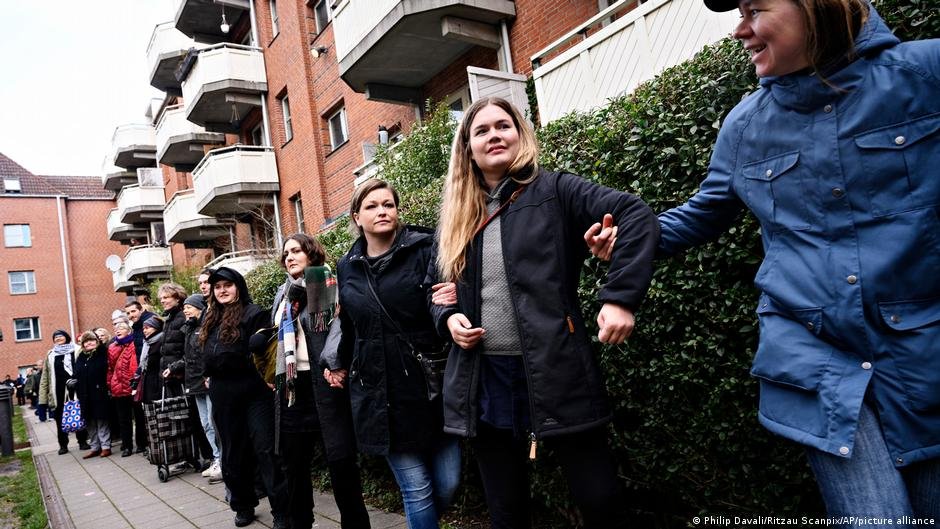
Amnesty International welcomed that ruling. In a statement, Dina Hashem, senior legal adviser at Amnesty International Denmark, said, "The law must be changed so that it no longer discriminates." She criticized politicians for ignoring warnings while residents were relocated and apartment blocks demolished.
Denmark’s Ministry of Children, Senior Citizens and Housing, responding to the Council of Europe report, said it was unaware of indications that housing associations had failed to comply, and called for specific, verifiable evidence of alleged breaches.
The Supreme Court is set to deliver its judgment on November 23. However, as The Guardian reported, some homes there have already been sold and subsequently resold.
A Copenhagen municipal memorandum confirms that several flats had been resold by May.
Other housing associations and estates are watching the Supreme Court's judgement closely. What they rule in the case of Helsingør will inevitably have ramifications for the implementation of the legislation in other places too.
Read AlsoDenmark's Avnstrup return center, where foreigners live in a state of limbo