
France has been rocked by months of protests, affecting large swathes of society, including migrant communities. Infomigrants spoke to Zita Cabais, president of the Filipino Council Association in Paris and Claire Rabès, deputy mayor of Montreuil, about how the continued unrest in France has ramifications for migrants.
Filipino migrant workers gathered in Paris on Sunday (November 8) for an emergency meeting about how to prepare for a prolonged crisis.
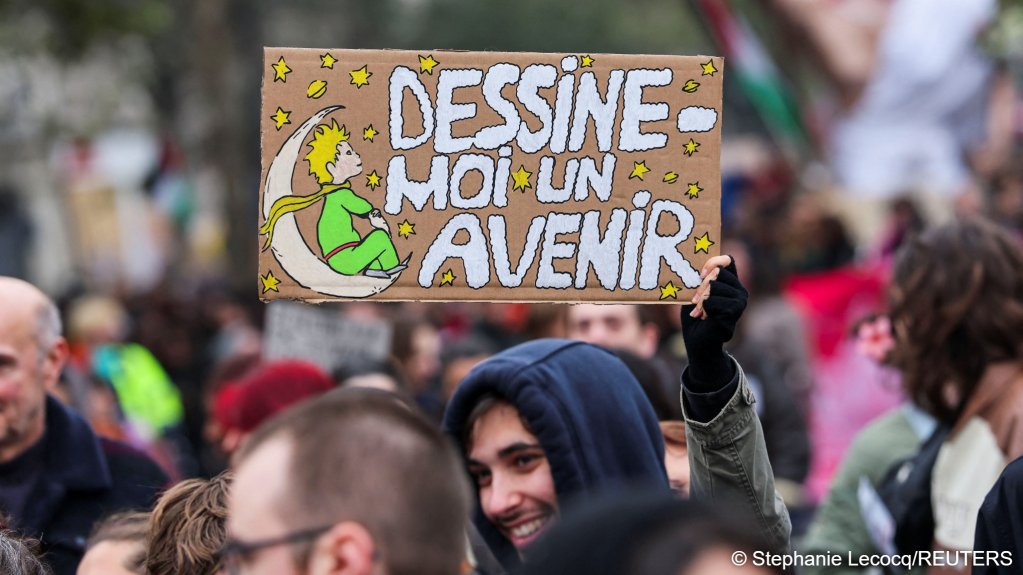
France has seen weeks of unrest since late September with student protests over underfunded schools. The protests spread nationwide with additional demands that the government address the cost-of-living crisis and cuts to public services. Some protests have been marked by violence and looting.
Zita Cabais, one of the meeting’s convenors, told InfoMigrants that workers from her community were concerned about possible power cuts and wider disruptions to services if the unrest escalated.
For some, particularly those without residence papers, the more immediate question is how to keep earning a living.
"A main concern for many is how they could send money home to their families who depend on them," said Cabais, who is also president of Asosasyong Sanguniang Filipino (Filipino Council Association) in France.
"Life has become increasingly hard here in Paris. Government rules are making it more and more difficult to secure residency for undocumented workers. Some are afraid to travel to work because of the increased police presence around the protests. They worry that an identity check could lead to deportation. But staying home could mean losing earnings they cannot afford to go without."
Read AlsoFrance: Bill extending detention for foreigners deemed 'dangerous' passes legislative houses
Being pushed into exploitative work
Government figures estimate that as of 2023, there were about 450,000 undocumented migrants in France.
Last year, the French government outlined new criteria for undocumented foreigners to obtain regularization. The more stringent measures included a longer stay in France before qualifying and proving one's mastery of the French language.
Cabais described particular pressures within the Filipino community, where many are labor migrants who are the main breadwinners for relatives back home. Disrupted earnings can affect both their ability to cover expenses in France and the money available to families depending on them in the Philippines.
One woman Cabais spoke to was struggling with work and said she was on the brink of eviction. Her situation points to how quickly difficulties earning a living can compound and lead to other problems such as housing.
Cabais warned that mounting financial pressure could leave workers more vulnerable to exploitation. With fewer options, they may feel compelled to accept worse working conditions to cover their expenses and continue supporting their families.
"They are being pushed into the arms of exploitative employers," said Cabais
As their options narrow, some may feel compelled to accept more exploitative work simply to maintain an income and continue sending money home. Partly to address this problem, Cabais has compiled a handbook explaining migrants' rights and the regulations affecting them.
"For migrant workers, especially those without residence papers, knowing their rights is particularly important when financial pressure makes it harder to turn down exploitative work," Cabais said.
Mounting risk
Beyond the financial pressures, the unrest has also heightened concerns about migrants' safety.
Speaking to InfoMigrants, Claire Rabès, deputy mayor of Montreuil, east of Paris, said that the October 23 attack in Trappes and nearby La Verrière raised particular fears for residents already exposed to racism.
The suspect in the Trappes attack allegedly told police he wanted to avenge shopkeepers whose businesses had been looted during the October 17 demonstrations. Prosecutors said he specifically targeted people he perceived as Muslim, African or North African. He was subsequently placed under formal investigation for terrorist murder and attempted murder, with an aggravating racist motive.
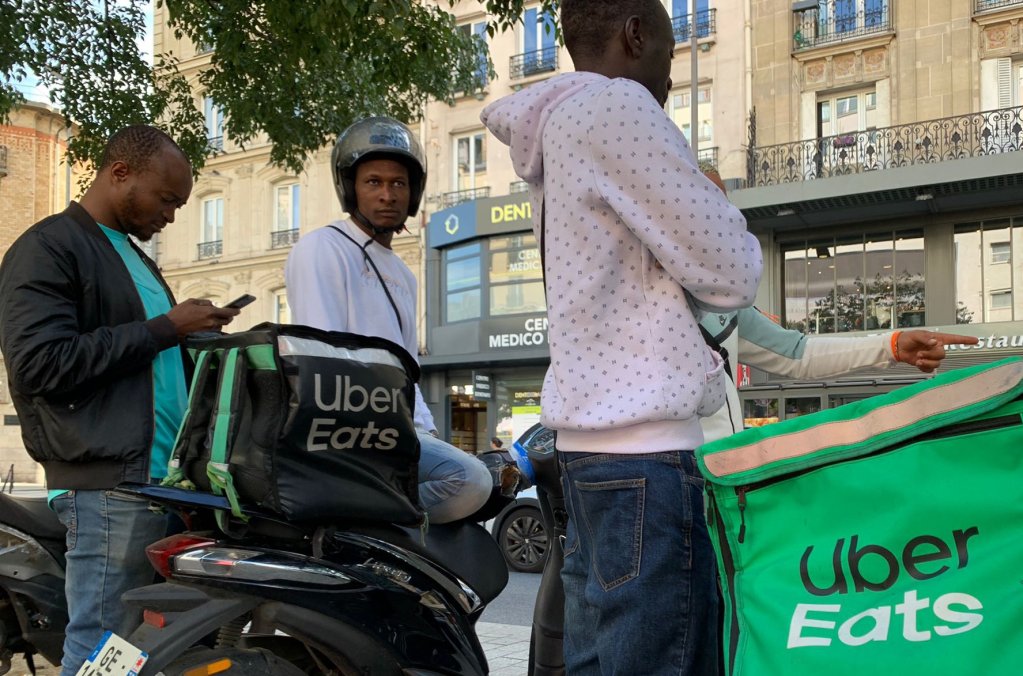
Concerns have also grown for food delivery workers after racist calls to attack and kill Black and Arab couriers circulated on social media.
"It is very shocking. Food delivery workers are being warned to avoid suspicious delivery requests to remote locations because they could be a trap," explained Rabès.
Read AlsoFrance: Calls to murder foreign delivery drivers lead to creation of mutual aid system
Kitchen table issues
But Rabès also saw grounds for encouragement in the protesters' demands. In her view, the demonstrations center on everyday economic concerns — living costs, education and young people's futures — rather than opposition to migrants.
"The protests are about kitchen table issues. For young people, it is the state of the education system and what this means for their future," she said.
Rabès criticized attempts by the far right to blame migrants for the unrest. Similar rhetoric has come from US President Donald Trump, who attributed the student protests to immigration and Islam in October.
"What we are seeing is the public’s reaction to the economic failures of the government, not opposition to migration," Rabès said, stressing that the debate should instead address the barriers preventing migrants and asylum seekers from participating fully in the economy.

Research by the French labor ministry's statistics service, Dares, shows that immigrants are disproportionately represented in several demanding occupations. Migrants accounted for 20 percent of workers in cleaning occupations, compared with nine percent of employees overall.
The NGO France terre d’asile (France, land of asylum) has also argued that removing barriers to integration could benefit public finances. In a 2025 proposal, the association estimated that a package of five migration policy reforms could generate more than 3.3 billion euros annually in additional revenue and savings.
"It is the government that is making migrants illegal by creating administrative nightmares that hinder their regularization," Rabès said.
Read AlsoFrance: Large-scale survey challenges immigration stereotypes