
More than 900 migrants reached the UK over the weekend. Meanwhile, rescue services on the Belgian coast dealt with two separate emergencies involving migrants adrift off shore, as routes extend beyond the French coastline most closely associated with Channel crossings.
More than 900 people reached the UK in small boats between Friday (November 6) and Sunday (November 8), as rescue services responded to two separate emergencies off the Belgian coast.
British government Home Office (Interior Ministry) figures show that 378 people arrived in six boats on Sunday, November 8, following the arrival of 364 in five boats on Saturday and 161 in three boats on Friday. No arrivals were recorded between Monday and Thursday.
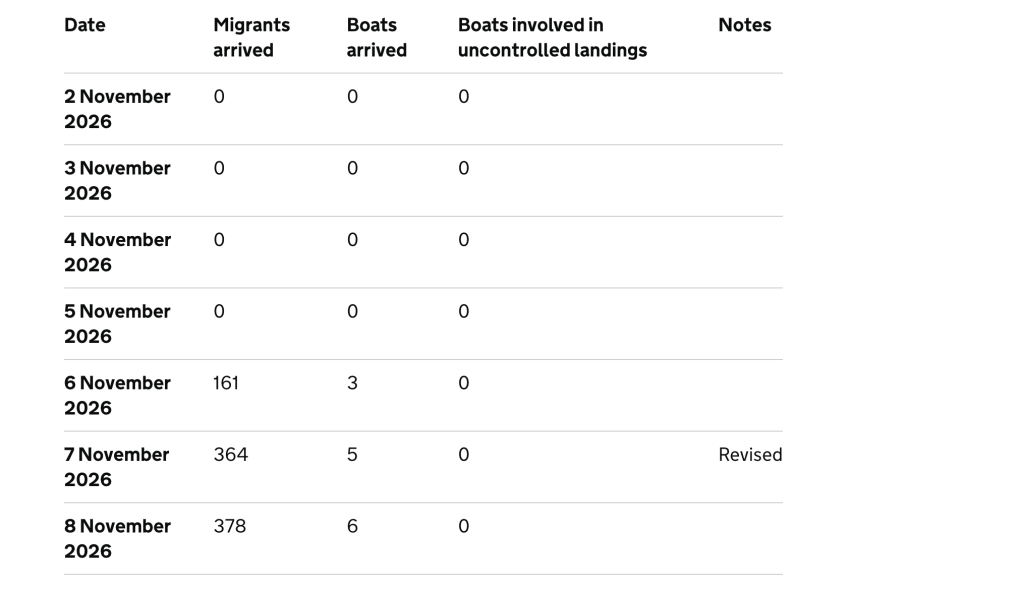
A total of 23,129 people have now crossed by small boat since the start of 2026, according to the latest Home Office data. The total remains well below the equivalent point last year, when more than 41,000 people had crossed, and is the lowest year-to-date figure since 2022, when 39,939 people had made the journey by November 7.
Read AlsoInflatable platforms aim to make English Channel rescues safer
Belgian coast emergencies
On Sunday (November 8), Belgian emergency services received a 112 call at about 5.30 am reporting a boat in difficulty in the North Sea. Rescue teams deployed an NH90 helicopter and several rescue and police vessels, but poor visibility meant the helicopter did not locate the boat until around 8 am.
The Brussels Times reported that the vessel was found about three kilometers off Nieuwpoort, in West Flanders. It was not taking on water, but the maritime police said those aboard had become disoriented. About 30 people were on board, and three rescue and police boats monitored the vessel as it drifted.
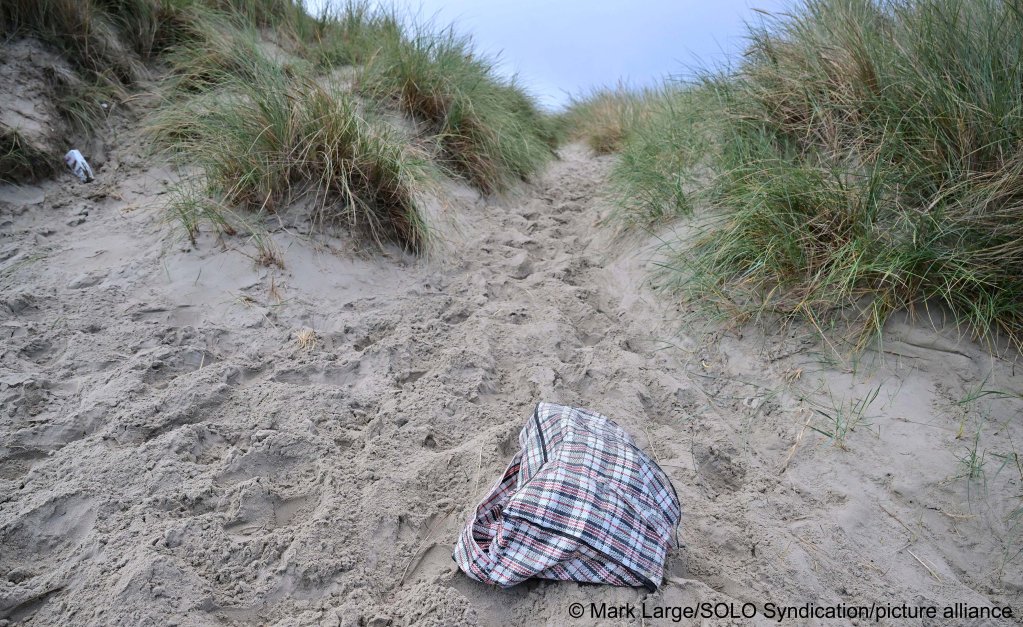
For several hours, the people on board declined to be transferred to rescue vessels, hoping still to reach the UK. The boat later entered French waters. Belgian Federal Police officer An Berger said around 50 people were waiting in the water at Bray-Dunes to board, and that people already on the boat used sticks to prevent others from getting on. Later, all those aboard were eventually transferred to a French rescue vessel and brought ashore at Dunkirk.
A second operation followed on Monday (November 9) in the evening. The Maritime Rescue and Coordination Center in Ostend received a report at about 5.40 pm of a small boat carrying two people off the French-Belgian coast. Belgian rescuers located the vessel using an NH90 helicopter and four rescue boats.
Both people were rescued; one was suffering severe hypothermia. They told rescuers that 11 others were still at sea, and a reconnaissance flight later found them clinging to a buoy in French waters. All 13 were taken to Ostend for medical care.
Read AlsoBelgium approves home raids for migration enforcement
A wider route
The Belgian incidents followed a rare departure from the Netherlands last month, raising questions about whether smugglers are increasingly using launch points beyond the traditional sites around Calais and Dunkirk. Departure attempts have been reported from Belgium and Normandy this year, while Dutch prosecutors confirmed that a boat carrying 38 people rescued near Cadzand in late October had launched from the Netherlands.
Dutch police described the rescue as rare. Bastiaan van Blokland, of the Netherlands Red Cross, said those aboard had been exposed to the cold without an engine, with their legs dangling over the sides of the boat. Two men were being questioned on suspicion of people smuggling.
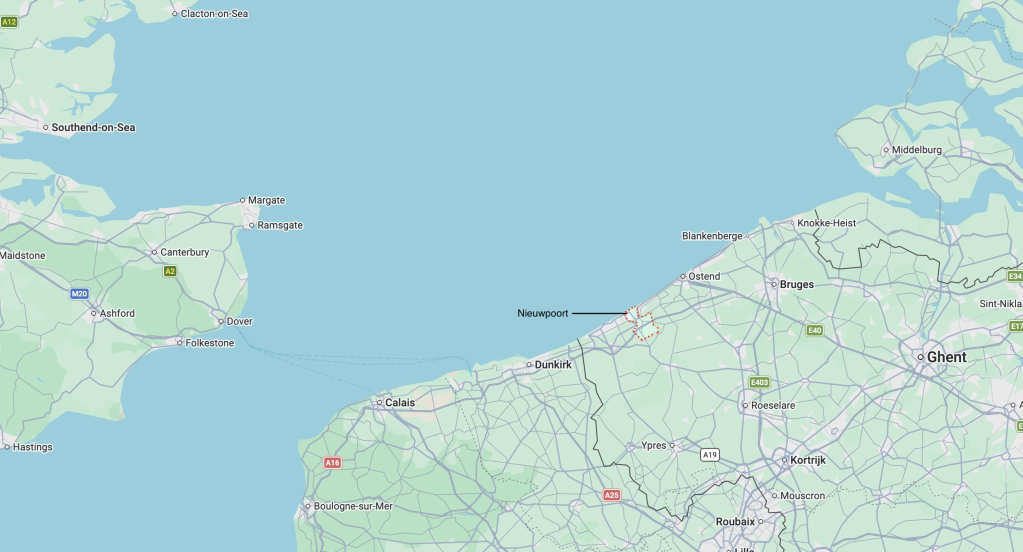
Belgian federal police linked an earlier increase in departures from Belgium to French enforcement activity. Dover MP Mike Tapp told the BBC that smugglers were adapting to launch disruptions by seeking new locations and methods. Departures from further along the North Sea coast involve longer journeys to Britain than the usual crossing from northern France.
Meanwhile, the UK has continued returning some asylum seekers to France despite the expiry of the "one in, one out" pilot on October 1, according to The Guardian. Home Office sources told the newspaper that the returns involved people who had arrived before the scheme ended. The Guardian also reported that some people previously returned to France had subsequently crossed back to Britain.
Read AlsoNetherlands: Officials intercept 38 migrants off coast in rare operation
A dangerous sea
French rescue services have warned that Channel rescues are becoming more difficult as larger, more overcrowded boats are used. The French National Sea Rescue Society has begun using an inflatable rescue platform to allow people in the water to hold on while awaiting transfer to a rescue boat.
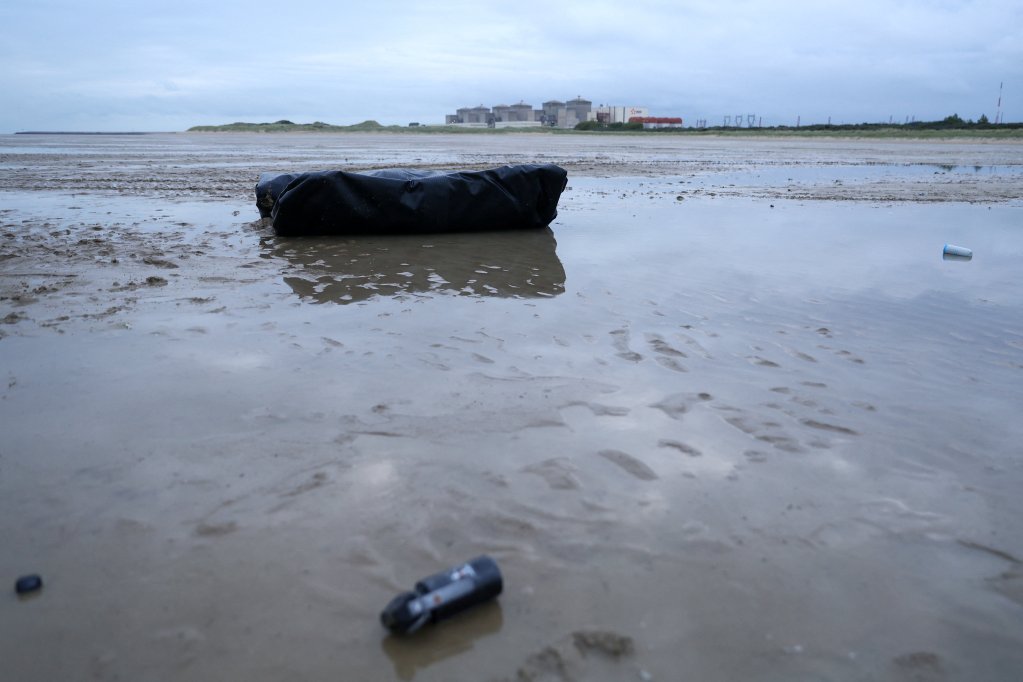
The UK-France "one in, one out" returns pilot ended on October 1 without renewal. The UK Home Office said flights removing people with no right to remain would continue, while the government said it would use lessons from the pilot to accelerate returns.
At least 24 people had died at sea along the French-British border by early October, according to official figures cited by InfoMigrants. Two men died during an attempted crossing off Berck on October 4, following the deaths of two women and a 10-year-old child the previous week.
With dpa