
As Egypt facilitates the return of Sudanese refugees, many face the stark choice of enduring a precarious life in Cairo or return to a country still marked by violence, hunger and precarious living conditions.
When Egypt launched a special “return train” in July 2025, it offered Sudanese refugees a route home: rail travel from Cairo to Aswan, followed by buses towards Khartoum. By December 2025, Egyptian authorities said the service had carried 42,944 Sudanese passengers. Officials described the journeys as “voluntary return.”
But the description raises a difficult question says UK based NGO The Next Century Foundation (NCF). What does it mean to choose return when the country of asylum has become increasingly difficult to remain in -- and when the country of origin is still marked by war, displacement, hunger and the threat of further atrocities?
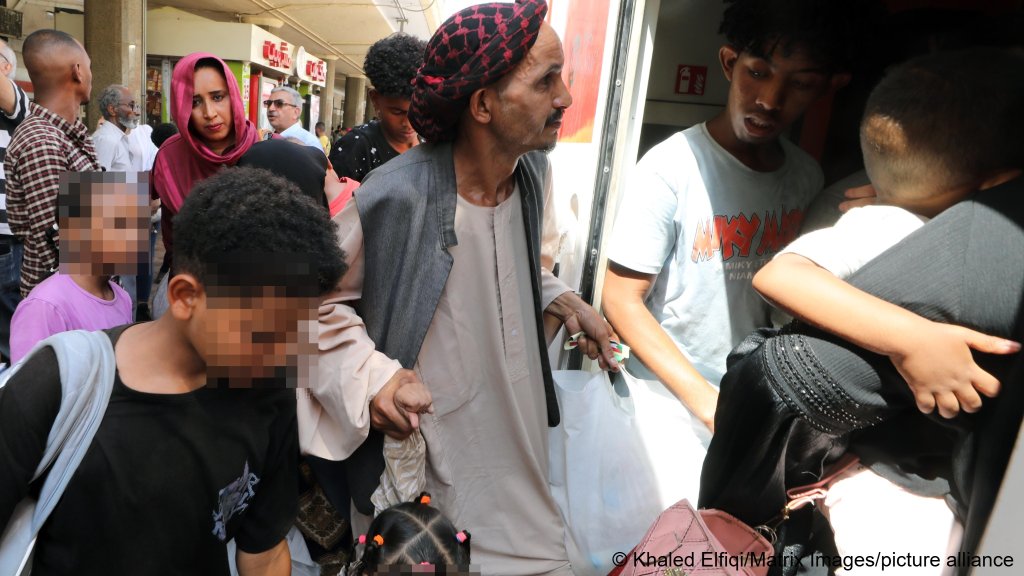
Since conflict erupted between Sudan’s army and the paramilitary Rapid Support Forces in April 2023, Egypt has been one of the principal countries of asylum for Sudanese people. In the early months of the war, more than 250,000 people entered Egypt under rules that exempted many categories of Sudanese nationals from visa requirements. That relative openness did not last. By June 2023, Egypt required visas from all Sudanese arrivals; in December 2024, it adopted its first asylum law.
For many refugees, the decision to return is shaped less by a belief that Sudan is safe than by the accumulating difficulties of staying in Egypt, according to the NCF. These include an uncertain legal status, limited work, restricted movement and fear of arrest.
Read AlsoFree trains, full hearts: Sudanese refugees return home from Egypt
A narrowing space in Egypt
Sudanese refugees in Egypt are expected to register with the United Nations refugee agency, UNHCR, and then apply to Egyptian authorities for a residence permit. In principle, this provides a route to lawful stay. In practice, both stages have become prolonged and uncertain.
Demand for UNHCR registration has risen sharply since the war began. Applicants have reported waiting months or years for appointments; some who sought registration in 2024 and 2025 were given dates in 2026.
Funding pressures have compounded delays: UNHCR Egypt reportedly closed two of its three registration centers in 2025, concentrating services in Cairo’s 6th of October district. For refugees who entered through Egypt’s southern border, reaching Cairo can mean a long and costly journey.
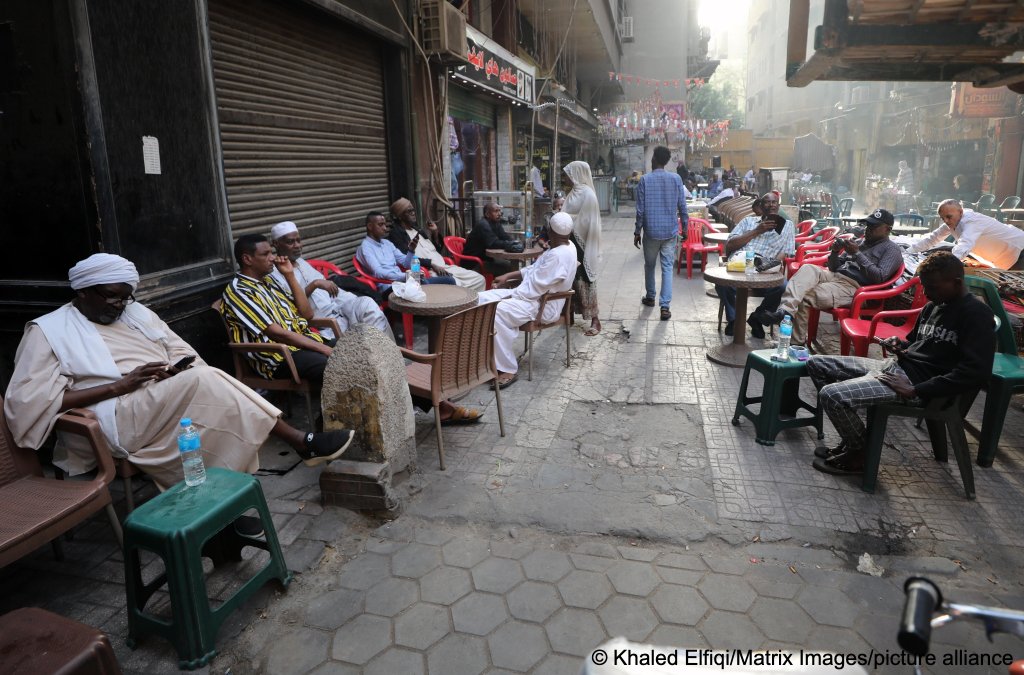
The residence-permit process can be equally difficult. In early 2024, applicants were reportedly offered appointments around 273 days later. By March 2025, some appointments were reportedly scheduled for October 2027, while renewals were being allocated for 2028. In some cases, the wait outlasts the validity of a refugee’s UNHCR document.
The Refugee Platform in Egypt has described the result as “forced undocumentation.” People who have followed the required procedure may still be left without secure proof of their right to remain, exposing them to exploitation and making access to services more difficult.
Read AlsoWhy are people migrating from Egypt?
Living without certainty
The lack of secure legal status affects more than a refugee’s ability to travel or access services. It shapes whether families can work safely, send children to school, seek medical care, or move freely without fear of being stopped. Egyptian security authorities generally treat a valid residence permit as proof of lawful status. Refugees have therefore reported being arrested even where they are registered with UNHCR, are waiting for a permit appointment, or are trying to renew an expired document.
Since mid-2024, human rights organizations have documented mass arrests, detentions and deportations. These operations have reportedly included checks based on skin colour, raids in neighborhoods with large refugee populations, and arrests of people seeking medical care. In documented cases, 42 percent of those arrested held valid UNHCR documentation, while 12 percent had evidence of an upcoming registration appointment.
The risks begin before refugees reach Cairo. Amnesty International has reported that Egyptian forces intercepted people fleeing Sudan, detained them in makeshift and military-controlled facilities in poor conditions, and returned them to Sudan without a meaningful opportunity to seek asylum. For those who enter Egypt, checkpoints on the route from Aswan have reportedly involved identity checks at train stations and on buses. More than half of documented cases involved people travelling for UNHCR registration appointments.
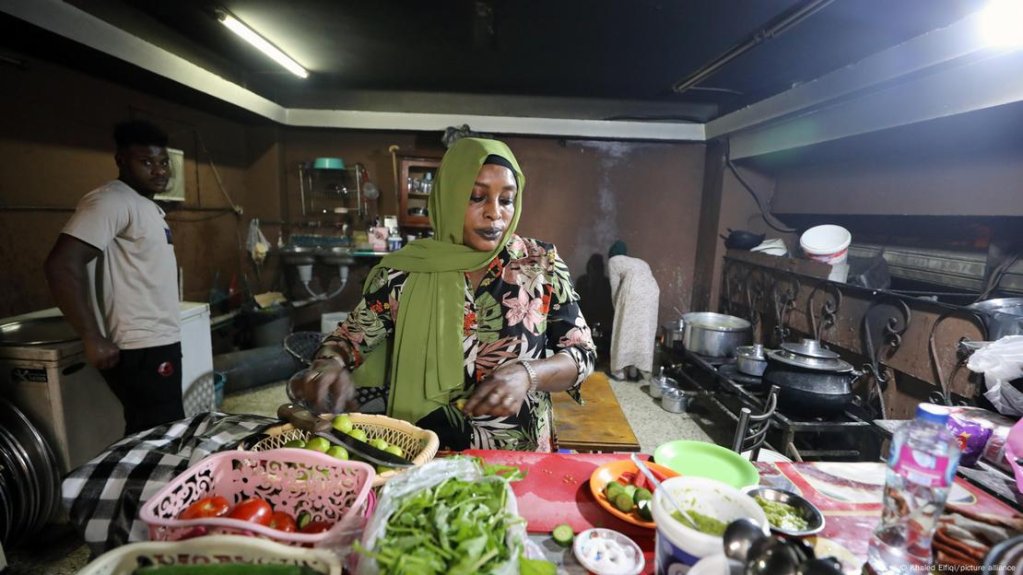
Fear of detention shapes daily life. Families may avoid public spaces, hospitals, schools and workplaces if they believe they could be stopped and asked for documents they do not yet have. Restrictions on access to formal employment can push refugees into informal work, where wages are low, hours are long and protection against abuse is limited.
Children face further barriers. Enrolment in Egyptian schools generally requires proof of legal residence and recognised school records. Both can be difficult for families who fled Sudan abruptly, particularly where residence permits are delayed or original documents were lost. Even where children meet the formal requirements, school fees and related costs may be unaffordable.
Healthcare carries similar risks. UNHCR’s 2025 vulnerability assessment found that 34 percent of newly arrived Sudanese refugee households had not sought medical care despite needing it. Reports that refugees have been turned away from public hospitals, or arrested while receiving treatment, deepen reluctance to seek help.
Read AlsoClose to half of all refugee children still don't go to school, UNHCR warns
Return to a worsening war
The conditions inside Sudan make the choice more troubling.
The war has entered a more lethal phase, shaped not only by ground fighting but by the expanding use of drones. In July 2026, UN human rights chief Volker Turk warned that El-Obeid, capital of North Kordofan, faced “relentless” drone attacks. His office documented 15 strikes in and around the city in just three weeks, killing at least 45 civilians.
The strikes have reportedly hit markets, schools, fuel stations, water infrastructure and civilian vehicles. More than half a million people live in El-Obeid, alongside at least 100,000 internally displaced people, many of whom had already fled El-Fasher and other devastated areas. Residents described growing insecurity around the city, with RSF forces controlling most surrounding routes and attacks making departure dangerous.
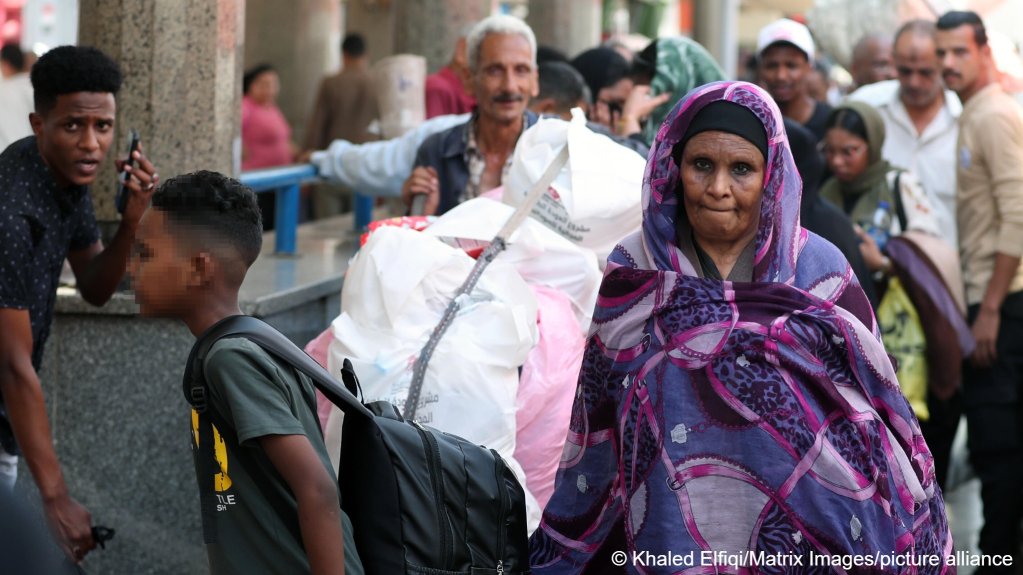
For those trying to leave, the cost of escape can be prohibitive. Turk said some residents were selling belongings to finance their escape, while high transport costs and attacks on vehicles along exit routes made leaving impossible for many. His office also documented summary executions, abductions, torture, ill-treatment, sexual violence and looting along displacement routes in Kordofan.
The warning evokes El-Fasher, where UN investigators said a three-day rampage in October 2025 killed 6,000 people and bore the hallmarks of war crimes and crimes against humanity. The fear now is that El-Obeid could follow a similar trajectory.
Against this backdrop, return is not simply a journey home. It may mean arriving in a country where homes and infrastructure have been destroyed, humanitarian access is constrained, and civilians remain exposed to violence.
Read AlsoFaced with shrinking escape routes, Sudanese refugees fall back on solidarity movements to survive
Shelter is running out
The humanitarian system is struggling to keep pace. On 6 November, UNHCR and the International Organization for Migration (IOM) warned, in a joint statement, that Sudan’s emergency shelter stocks were running dangerously low. An estimated 15.4 million people across the country need emergency shelter and basic household items, but funding constraints mean agencies can target assistance for only about 10 percent of them. So far, 936,000 people have received assistance.
Speaking from Khartoum, Mohamed Refaat, IOM’s chief of mission in Sudan, told reporters in Geneva that the agency had distributed more than 40,000 tons of relief assistance since the start of the year. “But our warehouses are completely empty now,” he said. "We could soon reach a point where families desperately need shelter but there is simply nothing left."
More than 5.2 million people have returned to their areas of origin, often to find homes, infrastructure and basic services damaged or destroyed. UNHCR and IOM describe shelter assistance as “often the first step towards rebuilding their lives.”
The wider humanitarian response is also underfunded. Sudan’s 2026 plan seeks 2.9 billion US dollars to assist 20.4 million of the 33.7 million people in need, but less than half has been received. Only one-third of the 179 million US dollars needed this year for shelter has been funded, according to Abubakarr Jalloh, UNHCR’s deputy representative in Sudan.
For a refugee boarding a train in Cairo, these figures describe a possible destination without adequate shelter, damaged services and limited humanitarian support.
Read AlsoAs Sudan's war worsens, more displacement is likely
The road beyond Sudan
The return train is often presented as the final stage of displacement. But for some Sudanese refugees, it may be only another stage in a longer journey. The IOM official highlighted that Sudanese nationals now constitute the largest nationality arriving in Europe via the so-called Eastern Mediterranean route. “If we are not able to provide aid in Sudan at scale, it means neighboring countries will be impacted, other countries will be impacted,” he said.
UNHCR’s Regional Bureau for Europe found that onward movement to Europe is driven primarily by unmet protection and basic needs in countries of first asylum. Its analysis of Sudanese arrivals found that 93 percent of surveyed Sudanese nationals had transited through Libya, while 25 percent had travelled directly from Sudan to Libya. Others had passed through or stayed in Egypt or Chad before reaching Libya.
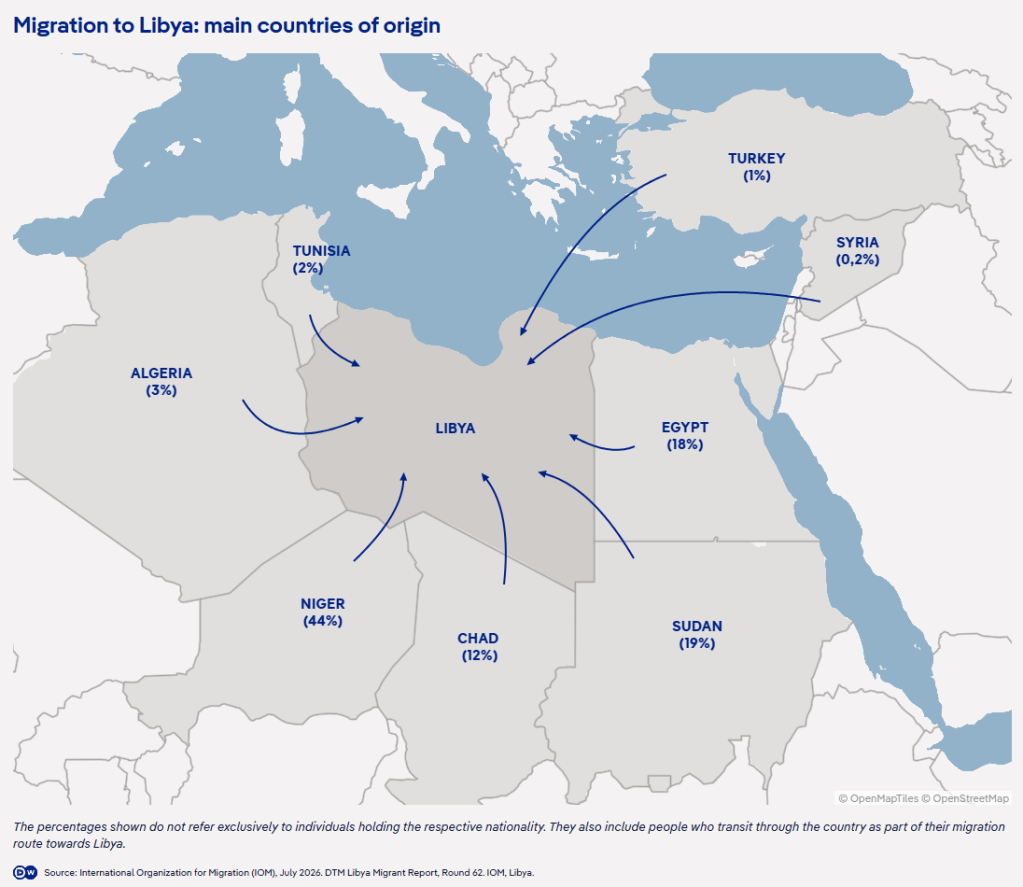
That route is not merely theoretical. In 2025 Reuters reported that Sudanese refugees who, facing economic hardship and a crackdown in Egypt, travelled through smuggling routes into north-eastern Libya and then attempted the sea crossing to Greece. Sudanese arrivals in Mediterranean Europe rose to 14,104 in 2025, a 246 percent increase from 2024; Greece recorded 9,110 Sudanese arrivals that year, nearly six times the 2024 figure.
The main issue here says NCF, is that a return which leaves people without shelter, income, documentation or security may fail to resolve the conditions that made them flee in the first place. If fighting continues, services remain destroyed and humanitarian assistance is rationed, some returnees may conclude that their only remaining option is to move again -- through Libya, where refugees face serious protection risks, and then across the Mediterranean.
This has implications beyond Sudan and Egypt. European policymakers increasingly frame migration control around returns, border enforcement and cooperation with transit states. But a policy that encourages or facilitates return to an unsafe, under-serviced Sudan may simply postpone movement rather than end it. UNHCR has warned that support for refugee-hosting countries helps preserve asylum space and reduces pressure on refugees to return before conditions are conducive to safe and dignified repatriation, or to make dangerous onward journeys, including to Europe.
Read AlsoSudan war drives growing numbers towards Europe as crisis spreads
A constrained choice
This does not mean that every return is coerced. Some Sudanese refugees may have family, property, work or community ties that make return a genuine preference. Others may believe that life in Sudan, however difficult, offers greater stability than an uncertain existence in Egypt.
But “voluntary” return requires more than the absence of physical force. It requires that people can decide freely, with accurate information and a realistic alternative, says NCF. When a refugee cannot obtain documents, fears arrest, cannot work safely or educate their children, and faces the prospect of returning to destroyed homes and depleted services, the space for a genuinely free decision narrows.
Egypt has hosted Sudanese refugees for decades, and the scale of recent arrivals has placed real pressure on public services and local communities. While NCF recognizes that this pressure deserves acknowledgement, it does not, however, justify practices that leave refugees undocumented, exposed to arrest, or unable to access basic services.
Under the 1951 Refugee Convention and its 1967 Protocol, Egypt is bound by the principle of non-refoulement -- it may not return refugees to territories where they face persecution or serious threats to life or freedom. Return programs can be legitimate, NCF says, but they cannot become a substitute for protection, documentation and durable solutions.
With AFP and Reuters