
Terror spread among foreign delivery drivers, many of whom are undocumented, after calls to assault and kill them were shared on social media by a group of extremists. With no concrete measures to protect them put in place by delivery apps, a mutual aid system is beginning to take shape among key players in the sector.
A chatroom on X named "It's time to take action against the violence of islamo-collaborator antifas[cists] (translated from French and referring in this instance to broadly left-wing activists who are often grouped under the name 'antifas' -- anti-fascists -- because they often demonstrate against fascist / right-wing positions but also often in favor of migrants, people of color and what some of the right-wing might term 'woke' positions, editor’s note)" called for people of color, in particular food delivery drivers, to be assaulted and murdered.
"Delivery apps… you order McDonald's or something like that to the middle of nowhere… you make them deliver it and then you make them disappear," said one user in this group, whose voice message was shared on X by France Unbowed (LFI) lawmaker Thomas Portes. Another user spoke of "poisoning, machine-gun fire, sulfur spraying… whatever it takes — just let us reclaim our territory. This is my country, not the country of Arabs," he continued.
"Calls for murder, incitement to racial hatred, racist remarks: I am immediately referring this matter to the public prosecutor of Paris," Portes stated on X on October 25.
In addition to the claim filed by the left-wing MP, the Paris prosecutor’s office announced it was opening an investigation into "public incitement to racial hatred or violence," as well as into "direct incitement to commit an act of terrorism, public and direct incitement, not followed by action, to commit any of the crimes or offenses that undermine the nation’s fundamental interests," and "public and direct incitement, not followed by action, to commit an intentional attack on a person’s life or physical integrity."
'Deeply shocked'
When questioned on this issue in the National Assembly on November 3, Labor Minister Jean-Pierre Farandou acknowledged the "seriousness of the incidents" and called for those responsible to be identified and punished. "We will bring [food delivery] platforms together and ask them, in very concrete terms, what measures they will take" to protect delivery drivers, he said. On Saturday (October 31), the minister had "strongly condemned this content" in a post published on X. "No worker in this country should fear being threatened or attacked while doing their job because of their ethnicity, nationality, skin color or religion," he wrote.
When contacted by public broadcaster franceinfo, Uber said it was "deeply shocked" and noted that it had reached out to all its chauffeurs and delivery drivers to warn them.
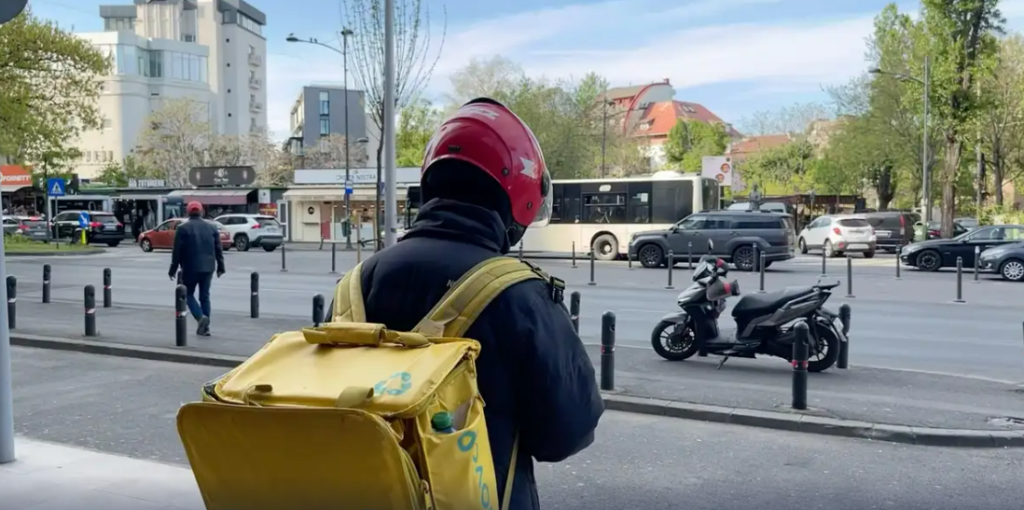
Similarly, Deliveroo told public broadcaster France 3 that it "condemns in the strongest possible terms any incitement to hatred, violence, and discrimination," and affirmed that, to date, "no incidents related to these events" had been recorded by its services. Like Uber, the food delivery platform said it had "sent a notice to all delivery drivers," reminding them that they are "free to refuse an order and, in the event of an assault or discrimination, to halt a delivery without facing any consequences."
"Any delivery driver who is the victim of an assault or an act of discrimination can contact our dedicated service at any time, by phone call or message. This service will record their testimony, and, if they wish, the driver can be referred to specialised organizations for psychological support and assistance with the necessary legal steps," Deliveroo told the TV network.
Calls for concrete measures
According to those on the frontlines, however, these responses fall far short of what is actually needed.
"Sure, the platforms have sent messages to their delivery drivers, but nothing concrete has been put in place," said Circé Liénart, co-coordinator of the Maison des Coursiers (House of Delivery Drivers), a support center for delivery drivers in Paris.
Above all, and contrary to Deliveroo’s statement, turning down a delivery can have very serious consequences for riders: they run the risk of being penalized on future deliveries or even of having their accounts suspended. "Refusing to complete a delivery means losing money. And how can we be sure that, under these circumstances, delivery drivers won’t be penalised?" asked Liénart, noting that the status of delivery drivers is extremely precarious and that many in France, particularly in big cities, are undocumented.
Reporting an assault to the police also means running the risk of being handed an OQTF, an Obligation to leave French territory.
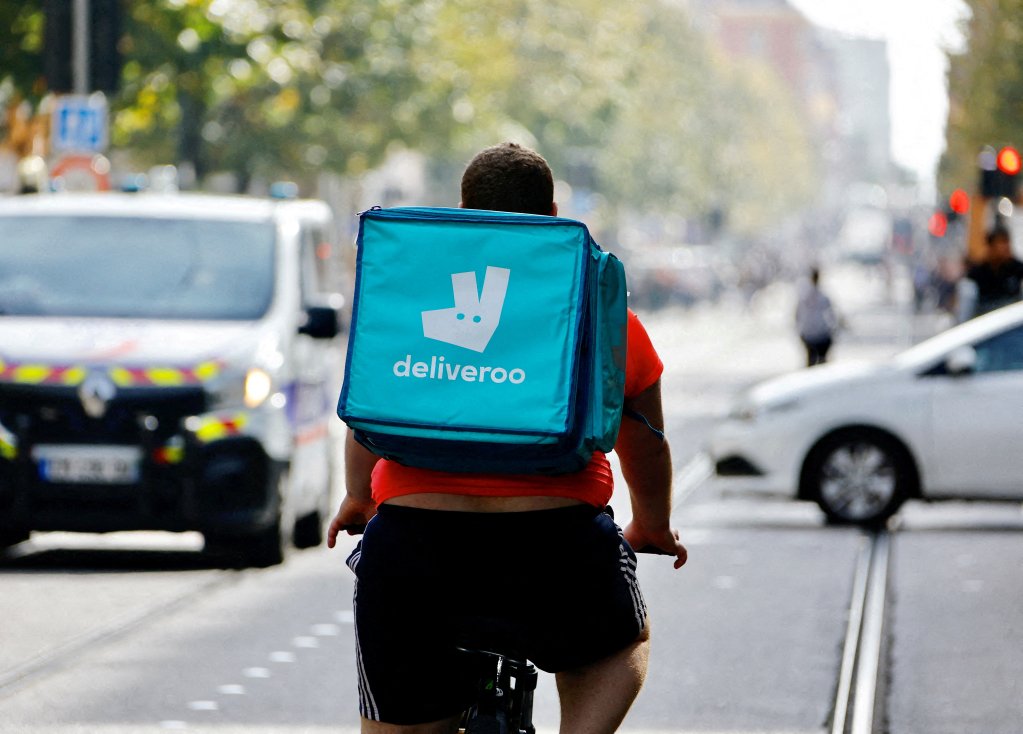
"I question the actions of the Labor Ministry, which does nothing but issue statements," said Ludovic Rioux of the National Federation of Transportation Unions (CGT Transports). "What is the French government offering? What options do delivery workers have in the event of verbal abuse or racist attacks? There are none. And what safeguards do delivery workers have if, while fearing an OQTF, they turn to the courts?" asked the union leader. “Today, their only option is to not work — and therefore to not have an income," he said.
The city of Paris, in a letter penned by Deputy Mayor Barbara Gomes, has also asked delivery platforms to take concrete action, such as blocking suspicious orders (placed from a remote location, by a customer using a pseudonym or with a newly created account), giving riders the option to cancel a delivery without facing consequences and without losing income, and providing an appropriate support and protection system. "So far, I haven’t received a response to my letter," said Gomes.
"We are also asking the government to issue a directive to prefectures (local administrative offices of the French State, editor’s note) so that delivery drivers do not receive an OQTF if they file a complaint at a police station regarding an assault," added Gomes.
Making do
While they wait for authorities and platforms to intervene more firmly, people are making do as best they can. The Maison des Couriers has contacted its network of delivery drivers to advise them to be careful, to not accept orders to industrial areas late at night or remain alone whilst waiting for deliveries and to contact the association if needed. "The risk is that people will panic and hide for fear of being attacked, but it is important to not become isolated," said Circé Liénart.
In collaboration with Paris City Hall, a leaflet containing recommendations has also been distributed to delivery drivers. It features a phone number to contact in case of an emergency, calls for vigilance and advice on how to report or refuse an order, including instructions on taking a screenshot to help prosecute the perpetrators, etc.
For its part, the FO INV trade union (the national inter-union group for private-hire drivers), has set up an alert group on Telegram called "SOS BBA aggressions" (SOS BBA assaults). Through this channel, delivery drivers can trigger an alert if they're suspicious of an order. "Geolocation is then activated and sent to everyone in the group, who can accompany them and/or track them in real time," explained Brahim Ben Ali, the union’s representative for delivery drivers.
Whilst he understands the desire for these measures, Ludovic Rioux of the CGT trade union doubts their effectiveness. "How can you organize collectively when you’re caught in an ambush? It’s the platforms that deliberately decide to send delivery drivers to remote locations, it’s up to them to take action," he said.
'The threat has intensified'
According to everyone interviewed by InfoMigrants for this article, racist attacks are nothing new in France, although a recent shooting targeting Muslims and Africans in the French town of Trappes, near Paris, has further intensified already widespread fears. "The threat isn't new, but it has intensified," said Barbara Gomes.
"We take the threat seriously, and the attack in Trappes is certainly a factor," agreed Circé Liénart. "Delivery drivers are worried because this isn’t the first time they’ve been subjected to racist abuse or attacks by restaurant owners or customers," she said. For his part, Ludovic Rioux confirmed that "racism is part of the daily lives of delivery drivers."
Everyone blames food delivery platforms and the precarious status of their riders. "Their situation makes them particularly vulnerable," said Barbara Gomes, who is campaigning for these workers to be granted employee status. "Employee status is the first line of defense. In this context, delivery drivers would be supported by a set of rules ensuring that these threats are not downplayed but are genuinely taken into account," the elected official insisted.
"The vulnerability of delivery drivers and the cynicism displayed in this group [the X chatroom discussed at the beginning of this article, editor's note] is a consequence of the platforms’s business model: delivery workers are on the front line and have no protection," explained Circé Liénart.
Since delivery drivers are not employees, they cannot claim a work-related injury. Some insurance schemes do exist, but few workers are aware of them, and undocumented migrants – who are numerous in this sector – are ineligible regardless. As a result, many delivery drivers receive no financial compensation if they are unable to work following an accident.
"We’re dealing with huge hypocrisy: the platforms and the government are surprised by these threats, but these hate-filled messages merely highlight the risks of this profession to the general public," said Ludovic Rioux. "This must not, however, obscure the daily problems these precarious workers face," he added.
This article has been adapted from French by Claudia Colliva