
French Interior Minister Laurent Nuñez says Paris is seeking to return Afghans living in France without legal status, including those considered a threat to public order. The move has drawn criticism amid wider European efforts to deport Afghans, which critics say risk legitimizing Taliban rule despite severe restrictions imposed by them on women and girls.
The French government has confirmed they are conducting "technical" talks with the Taliban to facilitate the deportation of Afghan nationals living in France without legal status or considered a national security threat.
"We are trying to obtain the possibility to return a certain number of Afghans who are in an irregular situation. These are technical discussions," Laurent Nuñez told the French parliament. "Other countries are doing this, Germany is doing this," he added.
Nuñez was responding to lawmakers' questions on the issue, adding that some of these individuals could pose a threat to public order.
A "certain number" of Afghans "might constitute threats to public order, so it is my priority to see that we are able to deport these people," Nuñez said.
Read AlsoGermany deports 40 Afghans amid continued criticism from rights groups
Criticism by lawmakers over engagement with Taliban
France does not formally recognize the Taliban government, which took power in 2021, or maintain diplomatic relations with it. However, it has joined about 20 other EU countries in efforts to speed up the return of Afghan nationals, particularly those convicted of crimes.
Léa Balage El Mariky, a lawmaker from The Green party, accused the French government of "starting the normalization of diplomatic relations with a regime that is committing a crime against humanity" by what she called "gender apartheid."

Read Also
France weighs returns of Afghans amid rights concerns
The French news agency Agence France-Presse (AFP) first reported in early October, citing a French diplomatic source, that France had begun talks with the Taliban government to "facilitate" the deportation of Afghans to Afghanistan.
"The discussions are strictly technical and aimed at facilitating the removal of Afghan nationals who are in France illegally and pose a national security risk," a spokesperson for France’s Ministry for Europe and Foreign Affairs said at a news conference in October.
The ministry said France, like several other European countries, was seeking to deport Afghan nationals without valid residence permits and those considered a threat to public security.
It said any deportations would comply with France's international obligations and were necessary to protect public safety.
The ministry also stressed that "under no circumstances will asylum seekers or women be returned to Afghanistan."

Read Also
Slight majority of Afghans on deportation lists in Germany have no criminal record
Europe faces scrutiny over deportations to Afghanistan
Germany has also increased deportations to Afghanistan under its current government. Since Chancellor Friedrich Merz's coalition took office in 2025, Germany has deported 303 Afghan men, most of them with criminal records, according to the German Interior Ministry. The latest group of 40 men was deported on October 28.
A Taliban delegation met officials from 15 EU countries in Brussels in June, prompting several human rights groups and left-wing members of the European Parliament to condemn the meeting. The discussions focused on curbing irregular migration and increasing deportations.
In September, UN human rights chief Volker Türk criticized the international community's "deafening" silence over Afghanistan's worsening human rights and humanitarian crises. He called on countries to stop forcibly returning people to Afghanistan.
Read Also
'I fought with your armies:' Afghan soldier expelled from UK to France
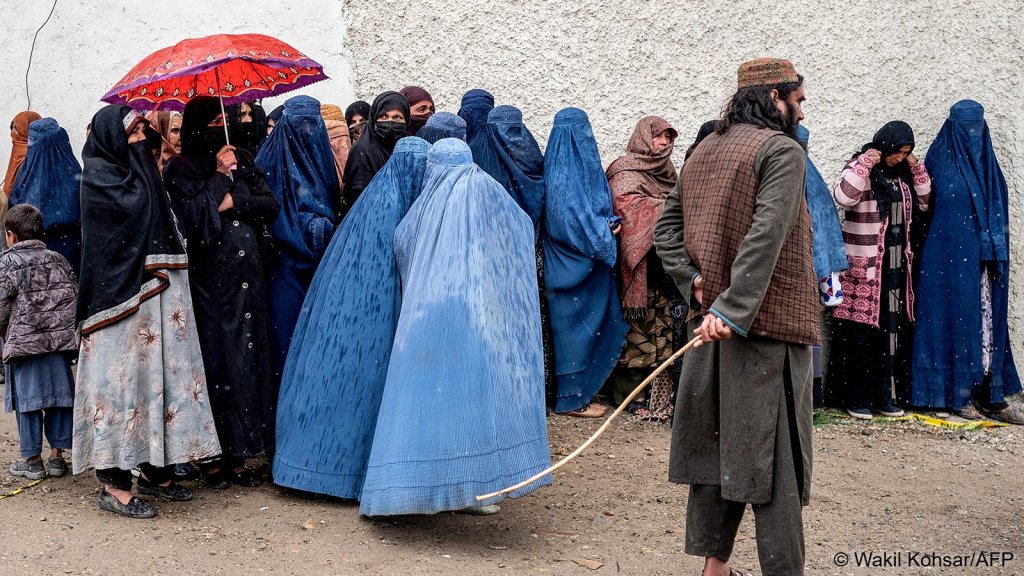
The Taliban authorities bar girls over the age of 12 from continuing their education and prevent women from attending universities.
The International Criminal Court has issued arrest warrants for four senior Taliban officials, including Supreme Leader Haibatullah Akhundzada, the Taliban's chief justice and two education ministers, over alleged crimes against humanity of gender-based persecution targeting women and girls in Afghanistan.
with AFP