
AI, misinformation and disinformation are increasingly being used to spread anti-migrant narratives, encourage hostility and expose migrants to a greater risk of discrimination and violence, warns the UN Migration Agency IOM. Various studies exploring the links between technology, migration and the far-right show how online hate and misinformation can lead to real-world harm against migrants.
Fake news, false narratives and other forms of misinformation and disinformation about migration and migrant people are becoming more widespread across the globe because of artificial intelligence, the International Organization for Migration (IOM) warned on Monday (November 2).
Such misinformation is fueling hostility and violence against migrants, "turning anxiety into suspicion" and effectively turning migrants into "targets." The IOM also said public trust in migration management policies is under increasing pressure worldwide.
Read AlsoUN: Most migrant children arriving in Europe are unaccompanied minors
Technology should not reinforce existing biases, IOM warns
Speaking at the opening of the International Dialogue on Migration in Geneva, IOM Director General Amy Pope said that economic uncertainty, conflict and climate pressures were challenging governments and communities.
"We also have to be honest about where our systems are falling short," Pope said. "Institutions have to listen, and they have to act, even when what they hear is uncomfortable."
Pope urged governments to expand regular migration pathways, improve protection and ensure humane border management, but also to strengthen cooperation between countries along major migration routes. She also called for greater investment in communities affected by climate pressures such as recurrent flooding and failing harvests, so people can remain in their own regions where possible or move safely when necessary.
On the topic of technology and its intersection with migration management, the IOM chief said migration policies should be informed by reliable data and the experiences of people directly affected, but that technology should not expose personal information or reinforce existing biases and discrimination.
Pope’s comments come as governments prepare for a series of international reviews of migration and development commitments. The United Nations is expected to assess progress towards its Sustainable Development Goal on migration management in July 2027, ahead of the Sustainable Development Goals (SDG) summit in September of the same year.
Read AlsoFingerprints, facial recognition and databases: EU prepares to launch its EES border control system
The dangers of generative AI in migration narratives
Misinformation and disinformation can spread more rapidly and reach wider audiences through social media and other digital platforms. AI-generated content, such as manipulated videos and deepfakes, can make false narratives appear highly realistic and convincing, even to the trained eye.
Policy analysts also note some forms of generative AI can stir divisions within communities, making it harder for governments to manage migration and cooperate across borders. But for migrants, the consequences can be particularly serious, leaving them more exposed to hostility, discrimination and risks along their journeys, upon arrival and throughout settlement.
A UN Refugee agency (UNHCR) survey of refugees attending the Global Refugee Forum in December 2023 found that 72 percent had personally experienced hate speech or misinformation targeting forcibly displaced people, while 85 percent had witnessed it. Respondents reported consequences ranging from psychological distress and social isolation to fraud, difficulties accessing services and threats to their physical safety.
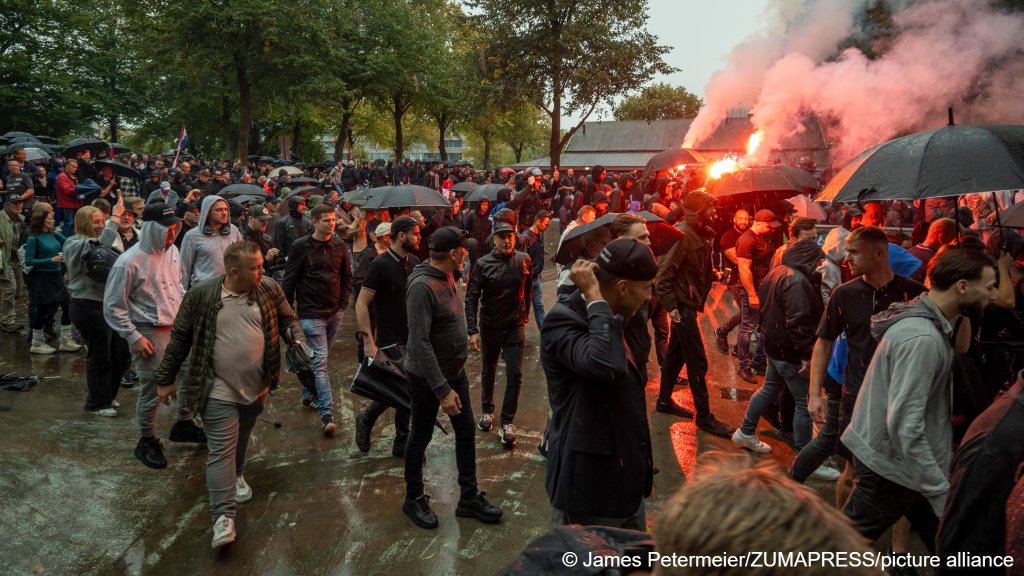
In some cases, online hostility has spilled over into violence. In Indonesia, a separate UNHCR study found that a wave of online hate targeting Rohingya refugees in late 2023 coincided with protests against their arrival and attacks on a shelter in Banda Aceh. In December, hundreds of students raided the building where refugees were staying and forced 137 people onto trucks, demanding their expulsion. UNHCR described the attack as the result of a coordinated online campaign of misinformation, disinformation and hate speech.
Read AlsoFrance expels more British anti-migrant vigilantes in Calais
Far-right turns to AI to spread migrant hate
Generative AI and its growing use allows fabricated images, videos and other misleading content to be produced cheaply and circulated widely, including material portraying migrants and refugees as dangerous, violent, criminal, or lazy 'freeloaders.' UNHCR has warned that this not only deepens divisions and exacerbates hatred, but also undermines trust in information provided by humanitarian organizations.
A 2025 European Commission study found that disinformation about migration frequently portrays migrants as threats to European economic prosperity, health, and social and cultural identity and human rights. By exploiting existing public anxieties, recurring false narratives and misinformation can shape political attitudes and influence electoral support for far-right parties.

Research conducted by the Migration Policy Institute has similarly identified health, wealth and identity as three dominant themes in anti-migrant disinformation, with misinformation appearing across both fringe and mainstream media.
In Germany, meanwhile, far-right groups and political actors are increasingly using generative AI to produce and spread anti-migrant content. A February 2025 investigation by the Institute for Strategic Dialogue found 883 posts incorporating AI-generated material published by German far-right accounts since April 2023. The content included fabricated images, videos and music, targeting refugees and immigrants. Only four percent of the AI-generated posts examined had been labelled as fabricated by platforms at the time of the investigation.
Read AlsoCeuta: Allegations of excessive force used against migrants
Women and young girls most at risk
According to the IOM, over 304 million people now live outside their country of birth, including 168 million migrant workers. Nearly half of all global migrants are women and girls, many of whom face increased risks of discrimination, abuse and exploitation.

The UN agency also noted that migration helps the livelihoods of millions of people beyond those who migrate. Money sent home by migrants reaches around one billion people worldwide, helping families pay for food, education and healthcare.
The IOM also flagged at the Geneva migration meeting that development funding is shrinking and international diplomacy is under pressure, this means migrants are left increasingly exposed to the consequences of misinformation and digital harm.