
Young people across Germany are taking to the streets to demand better education, lower living costs, greater social justice and stronger climate protections. In response, some German politicians have pointed the finger at young people with a 'migrant background' as being the source of violence that took place around the protests, without always being able to back up their claims with evidence.
Following protests in countries across Europe, demonstrations also took place in several German cities this weekend. The "largely peaceful" protests did turn violent in some places, which led some German politicians to point the finger at young people "with a migrant background," claiming that they may have been the source of the violence. This turned what at first appeared to be a call from protesters to the German authorities to offer more equality in society as a whole, to an interrogation about migration and integration.
On Sunday (November 1), German Interior Minister Alexander Dobrindt blamed the unrest over the weekend in cities like Frankfurt, Cologne, Hamburg and Berlin on "violent left-wing groups and troublemakers from migrant communities."
The conservative CSU (Christian Social Union) politician made the comments on the sidelines of an event in Peißenberg, public radio broadcaster Deutschlandfunk reported on Monday (November 2).
Hesse's minister of the interior, Roman Poseck echoed these ideas. Poseck said over 100 police officers were injured in riots in Frankfurt am Main, one of them seriously, adding that there had been looting, damages to businesses and several arrests. According to Deutschlandfunk, the conservative CDU (Christian Democratic Union) politician said up to 1,500 violent rioters were "overwhelmingly from migrant backgrounds."
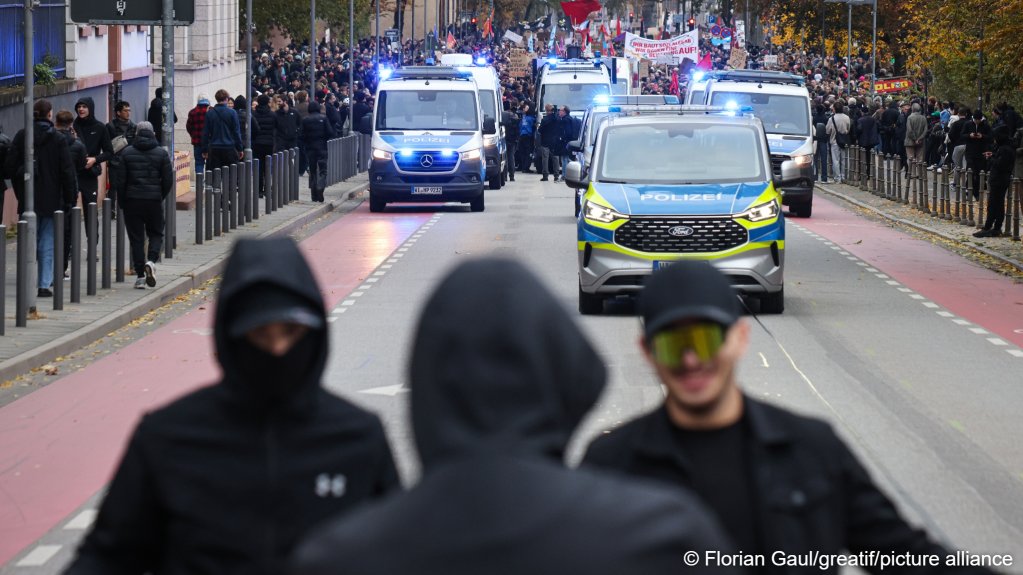
Germany's public broadcaster ARD's news program Tagesschau reported that Poseck added that the police had arrested 54 suspects in connection with that violence. According to police in Frankfurt, the 54 arrested were between the ages of 13 and 29 and were "overwhelmingly German citizens with a migration background."
Although this might sound like a justification for the types of remarks made by Poseck and Dobrindt, it is also important to remember that Frankfurt is a very multicultural city. More than half of its residents are classified as having a "migration background" and many of those people also have a German passport. So arresting 54 people that might fit into this category is not demographically surprising. And 54 out of 1,000 to 1,500 potential people thought to have committed violence is between three and five percent, so statistically less represented than the number of people who are German with a migration background in Frankfurt (around 26.17 percent).
This didn't stop Poseck from remarking however, that the main perpetrators "overwhelmingly leant towards migrants" adding that the German state should learn its lesson from the violence and "crack down hard" against any of the groups thought to be perpetrating violence.
A reporter from Germany's local public broadcaster, Jakob Schaumann from Hessiche Rundschau who was reporting from the city at the time, cautioned that if police estimate that there were around 1,000 to 1,500 people committing violent acts and only 54 people had been arrested, then it is difficult to say that all those who may have committed that violence had been rounded up.
Taking Frankfurt as an example, in March 2025, the spokesperson for Hesse's main city authorities statistics office in Frankfurt am Main, confirmed that the city was growing, mostly due to residents with a "migration background."
At that point, reported the Frankfurter Rundschau, quoting from the statistics, 57,7 percent of Frankfurt residents had a "migration background." Many of them are also German citizens, with parents, grandparents, or even great grandparents who may have originated from another part of the world. In fact, from that year, the latest available, Frankfurt counted 781,337 residents, of which 455,232 were counted as either "foreign" or "German with a migration background." Just 326,105 residents were noted as simply "German."
Read Also65 years on, many Turkish 'guest workers' in Germany face poverty
Education and integration
One of the themes of the protests was education. Protesters, mainly coming from so called Gen Z (those born roughly between the late 1990s and 2010-2012) are demanding better education and educational opportunities, which has drawn Germany's Education Minister too into the debate.
Following the protests, German Education Minister Karin Prien, also part of the CDU, was questioned by the ARD's Tageschau. Prien admitted that some of the calls from the protesters for better and fairer educational opportunities were justified, adding that "educational success in Germany is often still too tied to the [cultural and educational] background that a student might have."
Years of studies in Germany have backed that up, showing how the socio-cultural background and educational levels of parents and the family have an influence not just on children's educational performance, but also sometimes on the chances they are offered during their educational career.
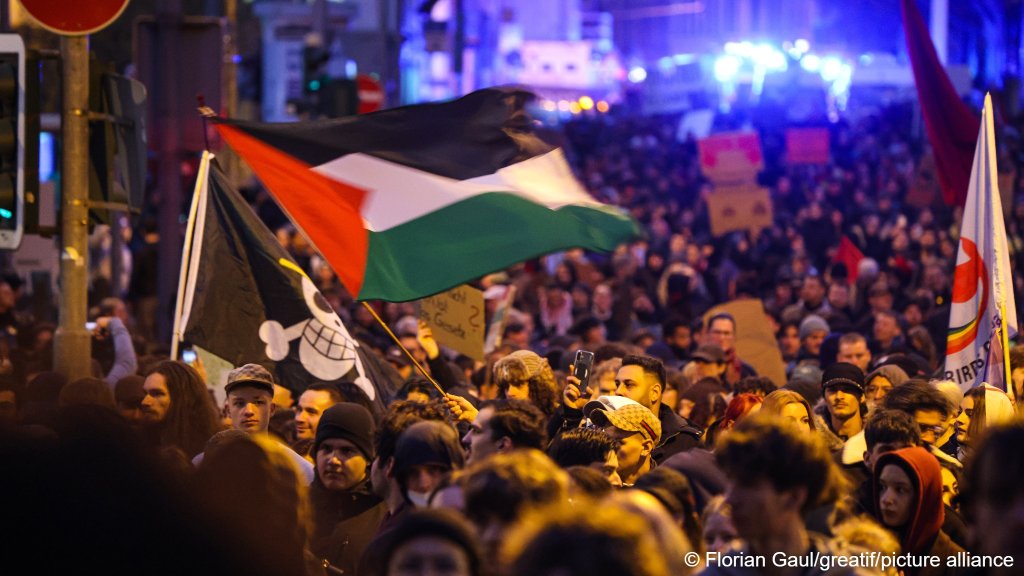
Prien went on to say that the riots in several German cities following the weekend’s youth-led protests have raised questions about how to improve the integration of newly arrived migrants into German society.
Speaking to another part of the ARD network, Deutschlandfunk, Prien was responding to comments by fellow conservative politicians who had blamed the riots on individuals "with migrant backgrounds."
Prien acknowledged that the demonstrations had been "largely peaceful," but noted that some "far-left" groups had engaged in violent acts. "But also by others who probably also come from migrant backgrounds."
"It is not about stirring up resentment, which would also be politically wrong," she added, Deutschlandfunk reported on Monday (November 2).
The focus should be on acknowledging the situation and understanding what drives people to resort to violence, she said. "And if they come from migrant backgrounds, then that must worry us, and then we must also look at the causes," the minister said, then questioned what measures could help address differences in integration outcomes among various communities, thereby linking the violent riots with the issue of migrant integration.
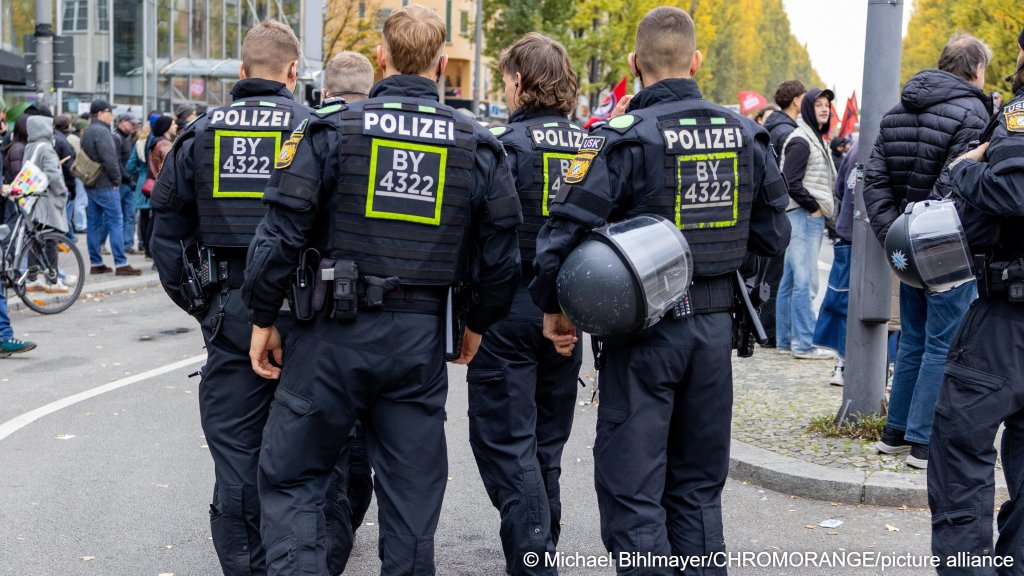
When certain groups are less well integrated into German society than others, Prien asked, "what needs to be done so that this succeeds better in future?"
The gap between rich and poor is widening
Nina Kolleck, a political scientist at the University of Potsdam commented to Tageschau that she wasn't particularly surprised that the protests had led to violence from some parts of society, without entering the debate over which parts of society might have initiated them.
Kolleck said that over the last few years, the situation in Germany had become "starker" and the "divide between rich and poor had got wider, causing more tension when it comes to big societal themes, like education, equality and the climate."
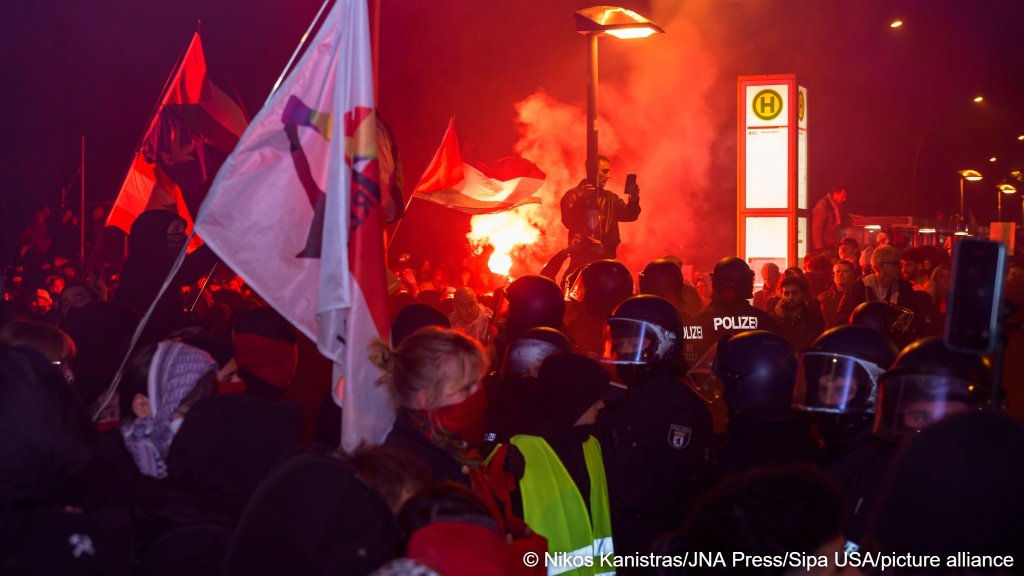
The political scientist said that many young people were feeling "very frustrated" and that if some of those young people then also felt that they had "worse prospects than those perhaps with richer parents," then that could be the spark for some to feel they have to fight the system, even perhaps with violence.
Just as with the debate about whether or not migrants might be committing more violent crimes in society, this question goes beyond nationality, ethnicity and cultural and linguistic backgrounds towards the socio-economic status and the potential chances open, or not, to an individual or group.
'Where do we stop differentiating?'
Not all politicians were on board with the CDU / CSU attempts to link violence to migration. Other senior members of the governing coalition, meanwhile, have criticized Prien and Dobrindt's remarks.
Defense Minister Boris Pistorius of the SPD (Social Democrats) questioned the distinction between migrant communities, German society and newer and older generations of migrants.
"What are 'migrant groups'? Are they people who live in Germany in the third generation and are German citizens? Where do we stop differentiating? I think that leads in the wrong direction," he said.
Moritz Promny, the FDP’s (Free Democratic Party) domestic policy spokesman in the Hessian state parliament, said though he believed the Interior Minister’s comments must be taken seriously, there should be no general suspicion against young people "with a migration background," nor should peaceful demonstrators be broadly equated with violent extremists.
Read AlsoGermany: Associations write open letter to government demanding asylum protections against AfD
What do Germany's youngsters want for their future?
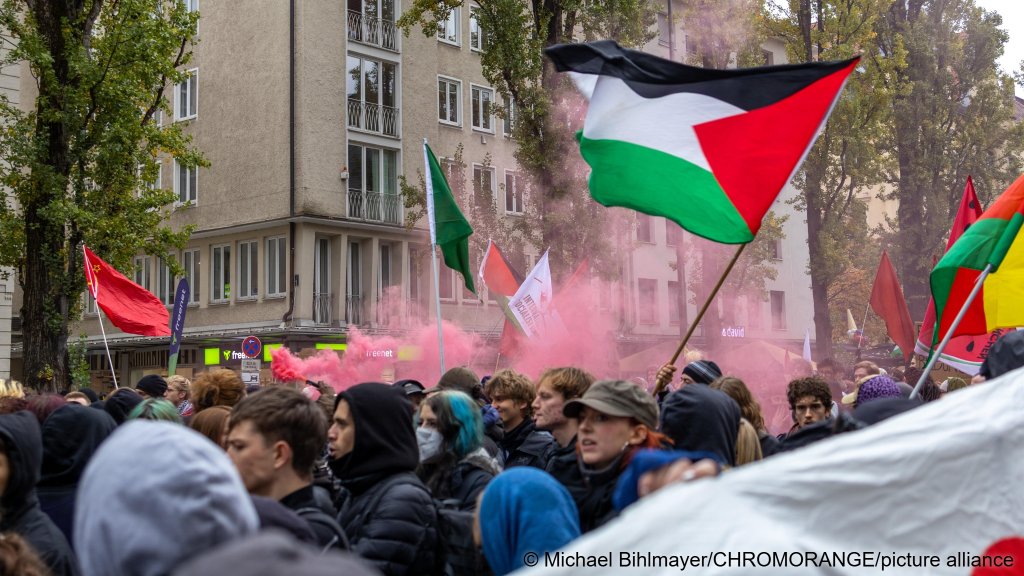
Back to the demonstrations themselves. Around 120,000 people, mostly young demonstrators, took to the streets across Germany on Saturday in largely peaceful protests calling for increased funding for schools, action to tackle the rising cost of living, greater social justice and stronger climate protection measures. The organizers had explicitly called for non-violent demonstrations.
However, violence did break out in several cities later in the evening, particularly in Cologne, Hamburg, Berlin and Frankfurt. In Cologne, police said 23 officers were injured and several suspects were taken into custody.
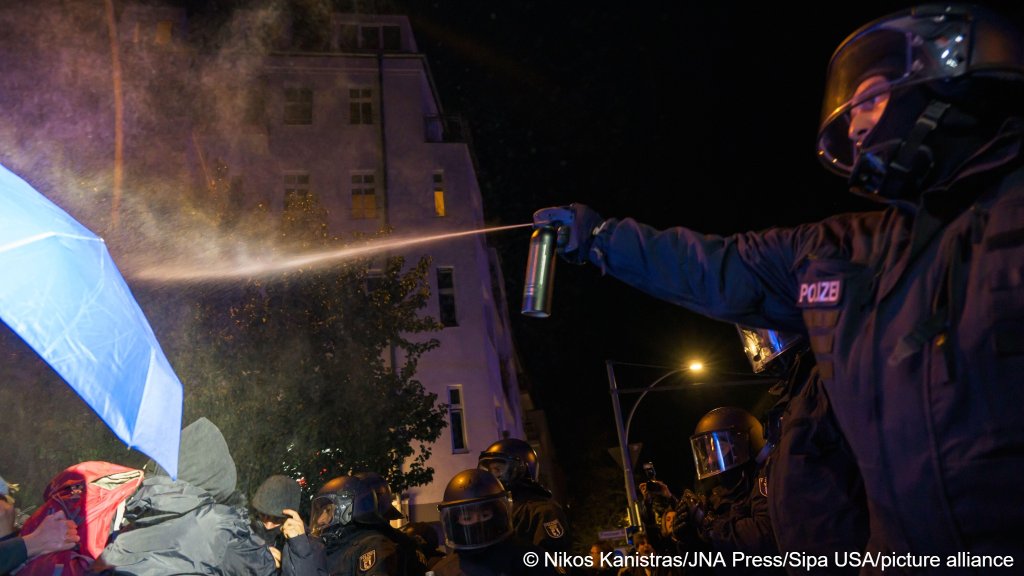
Protests continued into Monday, including at the University of Hamburg, where demonstrators blocked the entrances to a university building with construction barriers and rubbish skips. Police reported three separate demonstrations on the campus. Protesters outside one building displayed English-language banners calling for the liberation of all oppressed people.
One activist told German news agency dpa that the demonstration aims to highlight that one in three euros was now being channelled into the arms industry rather than education. The protesters also expressed solidarity with demonstrators elsewhere in Europe, including participants in the weekend's "Gen Z regelt" (Gen Z Takes Charge) protests, although they stressed that their own action had been organized independently.
"This era tells us that there are crises everywhere; we don't even know where to start," German climate activist Luisa Neubauer said.