
Rwanda is reportedly set to host the EU’s first "return hub" for rejected asylum seekers. The plan promises faster deportations -- but raises questions over rights, accountability and Europe’s growing dependence on third-country partners.
Rwanda is reportedly set to host the European Union’s first third-country “return hub” for rejected asylum seekers, under plans developed by Germany, Austria, Denmark, Greece and the Netherlands. Unlike Britain’s abandoned Rwanda scheme, the proposed facility would not process asylum claims. However, it would accommodate people who have already received final return decisions while EU states arrange their removal to their countries of origin.
According to sources cited by RTL Nieuws, a proposal for Rwanda has been put forward and could be announced at a special migration meeting in Vienna on November 16. Neither the Rwandan government nor the five EU governments has publicly confirmed the plan, and it remains unclear whether Rwanda’s former UK-funded Hope Hostel would be used.

Earlier reporting by InfoMigrants suggests the initiative would begin as a pilot involving roughly 100 people, with each participating state sending about 20 rejected asylum seekers. The governments have said they want the first hub operational by 2027.
Officials have sought to distinguish the model from detention. Greece’s migration minister, Thanos Plevris, has described the planned facilities as "open" rather than closed centers, while saying responsibility for transferred individuals would remain with the participating EU states.
Critics argue that the practical difference may depend less on the label than on the agreement’s terms, access to lawyers, freedom of movement, healthcare and independent monitoring.
Read AlsoRwanda expected to become first host nation for EU migrant 'return hubs'
What the new EU rules change
The plan has been made possible by the EU’s new Return Regulation, which entered into force on October 16, 2026. It replaces the 2008 Return Directive and creates an EU-wide framework for returning third-country nationals who have no legal right to remain.
The regulation creates a European Return Order, making a return decision issued in one member state enforceable elsewhere in the EU without reopening the case. It also allows transfers to a third country with which an EU state has an agreement, even where the person has no prior personal connection there.

It expressly permits member states to establish return hubs in non-EU countries for people subject to return decisions, while excluding unaccompanied minors. Agreements must set out transfer procedures, conditions of stay, the parties’ obligations and the consequences of breaches. Where onward return is envisaged, independent monitoring is required.
Such agreements may only be concluded with third countries that uphold human rights, international law and non-refoulement, the prohibition on returning people to territories where they face persecution, torture or other serious harm. National authorities must also inform the European Commission and other member states before agreements take effect.
Read AlsoEU Council greenlights new rules enabling more effective returns
Frontex’s proposed new role
The European Commission has proposed a further expansion of Frontex’s mandate that would make the border agency a more central actor in returns. The proposal would create a dedicated Return Coordination Center to collect and analyze operational information, support planning and coordinate EU-wide return operations.
Most consequentially, Frontex would be able to provide technical and operational support to third countries and help organize and carry out return operations from one non-EU country to another, subject to an agreement with the country concerned and compliance with fundamental rights and international standards. In practice, that could mean Frontex involvement in transfers from a return hub in Rwanda to a person’s country of origin.
The Commission says the reform would cover the full return process, from identification and voluntary return counseling to transport and reintegration assistance. It has also proposed a separate regulation to digitalize return, readmission and reintegration procedures.
Read AlsoBrussels proposes turning Frontex into the EU’s central returns agency
Precedents in other countries
The reported Rwanda plan is not the first attempt to externalize migration control, but earlier models have repeatedly encountered legal, political and practical obstacles.
Denmark passed legislation in 2021 enabling asylum seekers to be transferred outside Europe while their claims were assessed and signed a memorandum of understanding with Rwanda. No asylum seeker was transferred under that scheme. The original plan was later shelved, although Denmark has continued to pursue third-country return arrangements with other European states.
Israel pursued an earlier and more opaque version of the model. Between 2013 and 2018, thousands of Eritrean and Sudanese asylum seekers left Israel for Rwanda and Uganda under arrangements Israel described as voluntary departure, although no formal public agreement was acknowledged by either African state. Amnesty International and other organizations documented people arriving without legal status or effective protection and Israel’s Supreme Court ultimately suspended parts of the forced-deportation policy.
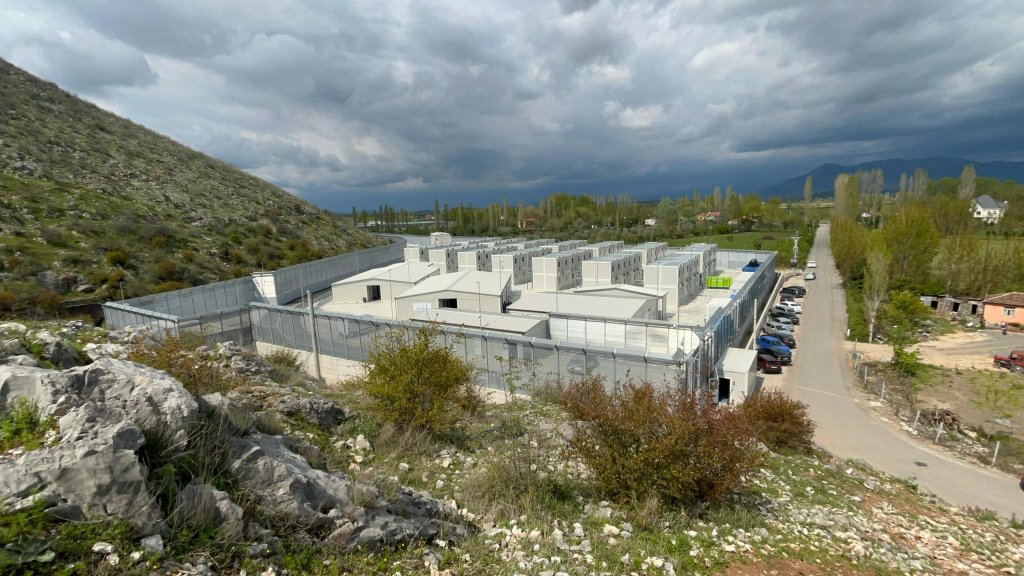
Italy’s agreement with Albania offers the closest current EU precedent. Italy initially sought to process migrants intercepted at sea in Albanian facilities, but Italian courts blocked early transfers after questioning whether countries such as Bangladesh and Egypt could be treated as safe in all cases. Italy has since used one facility for rejected asylum seekers already subject to deportation but the scheme has handled relatively small numbers at substantial cost.
The United Kingdom’s Rwanda plan collapsed in 2024 after the UK Supreme Court found substantial grounds to believe asylum seekers transferred there could face a real risk of refoulement. The UK government spent £715 million ($951 million) on the policy, while only four people voluntarily relocated.
The EU’s new model is narrower than the UK’s: it concerns people with final return decisions rather than people whose asylum claims are still being assessed. But the earlier failures illustrate the central vulnerability, namely whether a third country can genuinely guarantee safety, legal status and protection from onward removal.
Read AlsoThe return of the Rwanda plan – rights concerns and past failures
Human rights and accountability
Human-rights organizations argue that return hubs risk creating a legal no-man’s-land. A person may have lost all appeal rights in the EU, yet still be unable to return safely to their country of origin. At the same time, they may have no meaningful immigration status, work rights or effective remedies in the hub country.
The UN human-rights office has warned that expansive return hubs carry grave human-rights risks. Its concerns include the risk of arbitrary detention, inadequate legal assistance, poor medical care, and indirect refoulement if people are removed onward without proper individual assessment.

In Rwanda’s case, refugee organizations have questioned whether independent monitoring can function effectively. The director of Dutch rights group, Vluchtelingenwerk, Sjoerd Warmerdam told RTL Nieuws that independent human-rights monitoring is "virtually impossible" in Rwanda and said the Dutch immigration service does not classify Rwanda as a safe third country.
Accountability is another unresolved issue. The EU governments say they will retain responsibility and finance the scheme but it is not yet clear which state would be legally responsible for harm suffered inside the hub, how complaints would be investigated, or whether affected people could challenge transfer decisions before European or national courts.
Read AlsoCan the EU suspend the right to asylum?
Leverage for third countries
A return-hub arrangement would also alter the bargaining relationship between the EU and its partners. A country willing to accept non-nationals facing removal acquires immediate leverage -- it can demand funding, development assistance, visa concessions, security cooperation, trade benefits or diplomatic support in exchange for continued cooperation.
That leverage may be especially significant for Rwanda. Kigali previously received substantial UK funding under the abandoned British scheme and it retains infrastructure built for that arrangement. If the EU plan proceeds, Rwanda would be providing a service that several powerful European states consider politically essential, giving it a strong position in negotiations over money, monitoring and the scope of its obligations.

The same dynamic applies more broadly. States in Africa, the Western Balkans, the Middle East and Central Asia could become gatekeepers in Europe’s migration system. That may give them influence not only over individual returns, but also over EU foreign-policy priorities, sanctions debates, security partnerships and development funding.
Critics call this "migration diplomacy" -- the risk that third-country governments can extract concessions by threatening to suspend cooperation, restrict monitoring access, or refuse onward transfers. While the governments driving the initiative claim that formal agreements, EU financing and independent oversight can create more predictable partnerships than informal arrangements.
Read AlsoAlbanian Prime Minister rejects once more the idea of hosting EU migrant return hubs
What it means geopolitically
If Rwanda becomes the first host, Europe would be moving from ad hoc, often secretive bilateral experiments toward a more institutionalized system of externalized migration control. That would mark a significant shift in the EU’s relationship with partner states, making migration cooperation a core instrument of geopolitical bargaining rather than merely a humanitarian or development issue.
It could also deepen divisions inside Europe. The five governments pursuing the plan see return hubs as a way to restore credibility to deportation policy and respond to public pressure on migration. Spain and France have previously voiced opposition, while human-rights organizations argue that the policy risks exporting Europe’s legal and moral responsibilities beyond its borders.
Read AlsoEU to propose new emergency framework to tackle 'engineered and weaponized' migration