
Latvia alleges migrants are being forced into border sabotage if they cannot pay. Rights groups say protection from refoulement, violence, and arbitrary detention must remain central to any response.
Latvian prosecutors say migrants stranded on the Belarusian side of the border are being pressured to damage Latvian border infrastructure if they cannot pay smugglers for an irregular crossing. The allegation comes amid a sharp rise in sabotage incidents and increasingly aggressive attempts to bring people into the EU country.
The claims were made by Andris Aleksejevs, a prosecutor in Latvia’s State Security Protection Department, in an investigation by Latvian public television’s De facto program broadcast on 25 October. The allegations have not been tested in court, and Belarus has consistently denied orchestrating migration towards the EU borders.
Human rights organizations have repeatedly warned that people moving along Belarus’s border with EU countries face exploitation, violence, and prolonged detention. The latest allegations, if confirmed, would add coercion and forced participation in sabotage to those risks.
Read AlsoLatvia: Baltic media reports cite ongoing migrant pressure at Belarus border
Pressure to damage infrastructure
According to the prosecutor, migrants traveling through Russia to Belarus are held in camps close to the Latvian border, sometimes for days and in some cases for months, while awaiting an opportunity to cross. People in uniform allegedly visit the camps regularly, line migrants up, and use photographs to check whether each person has paid for an irregular border-crossing attempt.
The route is said to cost around $5,000 per person, usually paid in cryptocurrency. Migrants may remain in the camps for several days or, in some cases, months if they are unable to cross.

Aleksejevs said that people who have not paid are given a choice: either damage infrastructure on the Latvian side as "recompense," or face physical assault or other forms of torture.
Evidence gathered in the case allegedly shows that migrants know in advance where and what to damage once they enter Latvia. Prosecutors say they carry tools, including metal saws, damage equipment within seconds, and then return to Belarus.
Read AlsoLatvia: Border guards encounter armed migrant escorts
Operation 'Werewolf'
Latvia’s State Border Guard says more than 12,000 attempts to cross the Belarus-Latvia border irregularly have been prevented this year. The figure is already close to the 12,046 people prevented during the whole of 2025 and far above the 5,388 recorded in 2024.
Latvia has responded with Operation Vilkatis, or “Werewolf,” a reinforced border-security operation involving the State Border Guard, police, intelligence services, and the armed forces. Between 100 and 200 National Armed Forces soldiers are deployed each day.
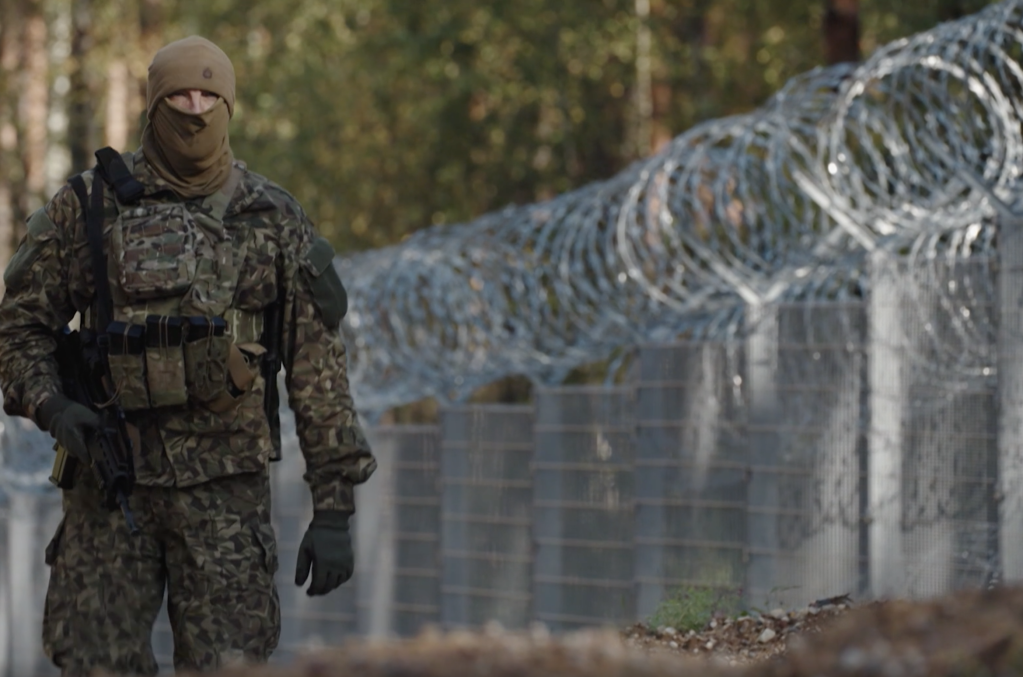
Before the operation began, Latvia said it had to take back more than 800 migrants from neighboring countries over the summer. After it started, that number fell to around 70.
Lithuanian media have also reported this summer that some migrants entered the country not directly from Belarus, but via Latvia. People intercepted in such cases are returned to the first country whose border they crossed.
Read AlsoLatvia: Guards use tear gas, fire warning shot to prevent crossing from Belarus
Increase in sabotage
As the border has become harder to cross, Latvian officials say aggression and sabotage have increased. More than 60 incidents of infrastructure damage have been registered this year, compared with 23 in 2025.
Damaged or stolen equipment has included electricity distribution boxes and surveillance cameras. In the week before the De facto report, there were at least two incidents in which people on the Belarusian side threw stones at Latvian border guards.
One of the most serious recent incidents occurred on October 5. Colonel Guntars Strazdītis of Latvia’s National Armed Forces said a group of roughly 20 people crossed the border, while several suspected escorts remained on the Belarusian side. He said the escorts threatened soldiers and brandished an object resembling a weapon; the migrants were then able to withdraw to Belarus.
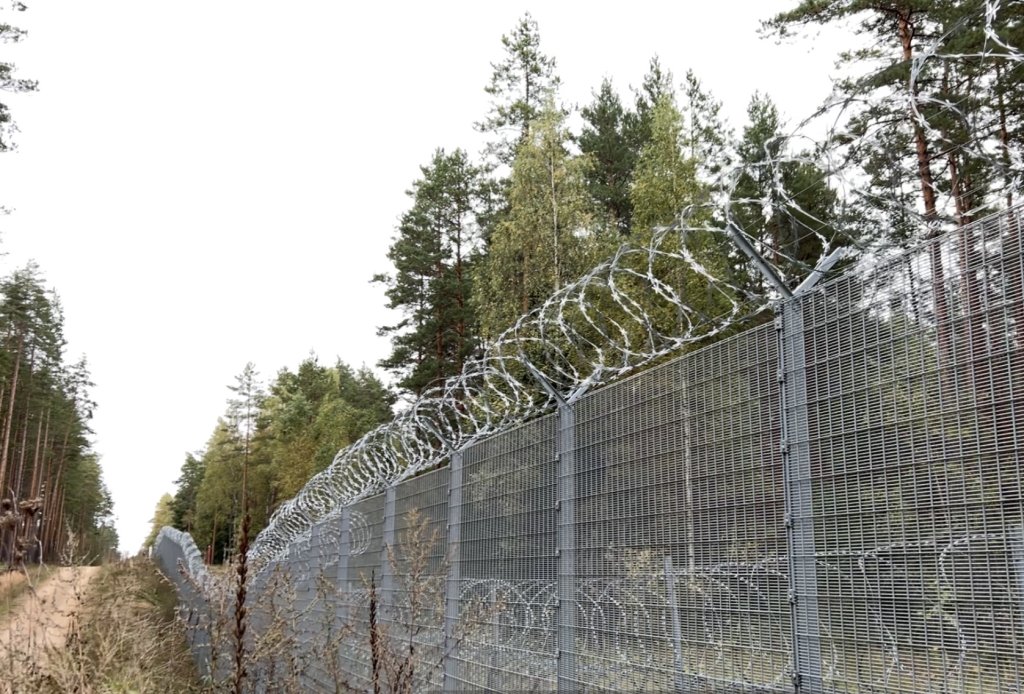
The following day, border infrastructure was sabotaged. Days later, a Telegram group calling itself "Black Russians" claimed it had entered Latvia, damaged infrastructure, and returned to Belarus, warning that further actions would follow.
Arvis Zīle, head of Latvia’s Crisis Management Center, said such an operation could not take place in Belarus without President Alexander Lukashenko’s knowledge. Lukashenko himself said that operations involving entry into a neighboring state could not occur without coordination with the president, but denied that this one had been coordinated with him.
Read AlsoLatvia discovers new tunnel at border with Belarus
Criminal case against Belarusian officials
In July, Latvia’s Prosecutor General’s Office opened criminal proceedings over the alleged intention to commit particularly serious crimes against the Latvian state. Aleksejevs said there were "reasonable suspicions" that Belarusian border-guard officials were involved in organizing irregular migration and damaging Latvian infrastructure to facilitate it.
Ivars Ruskulis, deputy head of the State Border Guard, said the investigation was taking place at the international level and that Latvian officers were working closely with Europol.
He argued that the violence and sabotage were linked to the disruption of people-smuggling networks. "All countermeasures, destructive actions, harmful actions, and actions threatening our officials are mostly related to the fact that migrants are not getting through, because then business has stopped in the criminal environment in which they are involved,” Ruskulis said.
Read AlsoLatvian authorities discover smuggling tunnel along Belarus border
Smuggling networks adapt
Latvian officials believe the route is part of a wider international migration network. Aleksejevs said people arriving from regions including Africa could not have planned the full journey themselves.
Those involved in facilitating the route are said to come from the Middle East, Asia, and South America. Latvian authorities said Colombian nationals were among suspected smugglers operating this summer.
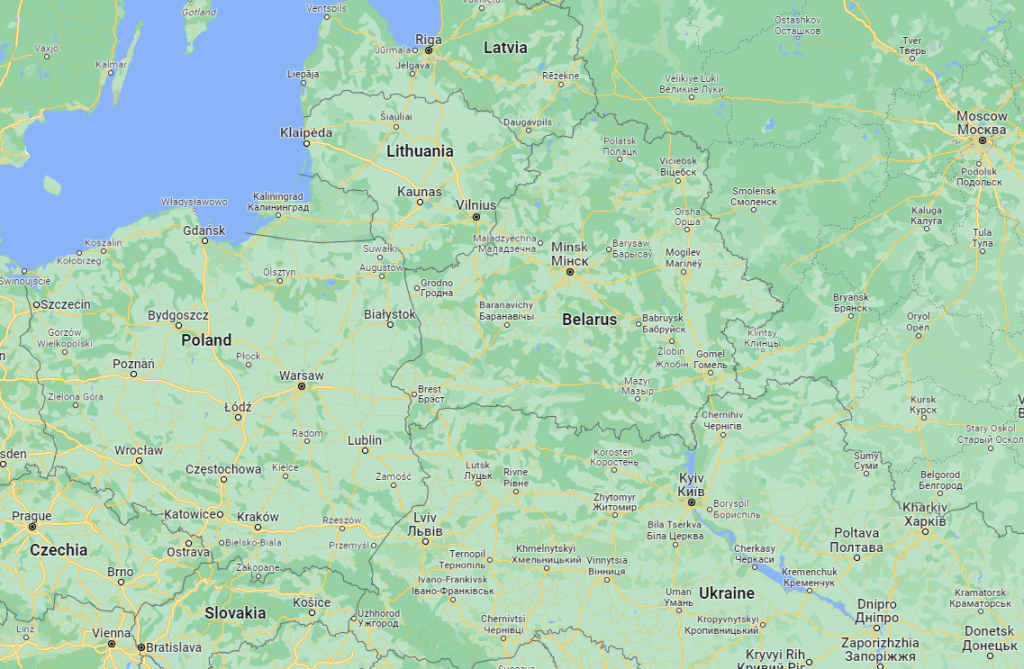
As border controls have tightened, smugglers are reportedly picking up migrants farther inside Latvia, sometimes 20 to 30 kilometers from the border. Their onward routes now more often lead north toward Estonia, Finland, and Sweden, rather than south toward Germany.
Read AlsoExplainer: The EU's anti-trafficking directive
Allegations of ‘instrumentalization’
Latvia, Lithuania, and Poland have long accused Belarus of deliberately channeling migrants from crisis-affected regions toward the EU’s external border in order to apply political pressure. Latvia’s National Armed Forces describes irregular migration as one element of a broader hybrid campaign against Latvia, the EU, and NATO.
Lithuania filed a complaint against Belarus at the International Criminal Court in The Hague two years ago. In March this year, the court formally opened an investigation into alleged crimes against humanity committed by the Belarusian regime, including the instrumentalization of migrants.

Human rights organizations, including Amnesty International, have warned that Belarusian authorities have endangered migrants at the EU’s eastern border, while also stressing that this does not relieve Latvia, Lithuania, and Poland of their obligations to protect people from pushbacks, violence, and refoulement.
Rights groups as well as the EU Fundamental Rights Agency (FRA), caution that border-security measures must not expose people to refoulement, violence, or denial of access to asylum. Under international law, people have the right to seek asylum, and states must assess protection needs individually, even where they allege that migration is being used for political pressure.
Read AlsoCan the EU suspend the right to asylum?
Rise in border incidents
The allegation that Belarusian officials directly coerce migrants into sabotage is based on evidence described by Latvian prosecutors and reporting by De facto. No court has yet ruled on the claims, and Belarus denies involvement in organizing migration toward EU borders.
However, the rise in border incidents, Latvia’s criminal proceedings against Belarusian officials, and the growing number of people stopped at the frontier have been well documented. For migrants, the reported situation adds another layer of danger -- prolonged detention in border camps, debts to smuggling networks, and according to the Latvian allegations, the threat of violence if they cannot pay.
Read AlsoMigrant tunnels in Lithuania direct suspicion towards Minsk
With dpa