
The European Commission wants to turn Frontex into the EU’s central returns agency, with a larger border force, faster crisis deployment and new powers to support removals beyond the bloc’s borders.
The European Commission has proposed legislation that would substantially expand Frontex’s role in deportations -- including by allowing the EU border agency to help organize and carry out returns from one non-EU country to another. The proposal would mark one of the most significant shifts yet in EU migration policy: from supporting member states at Europe’s borders to coordinating removals across the EU and, in defined circumstances, beyond them.
Home Affairs Commissioner Magnus Brunner framed the reform as the next stage of the EU’s “migration turnaround.” “Today we propose that Frontex becomes the central EU actor on returns,” he said. “In addition, it will be able to act faster. With a quick reaction force that can deploy within 24 hours and spot risks early, before an event becomes a crisis.”
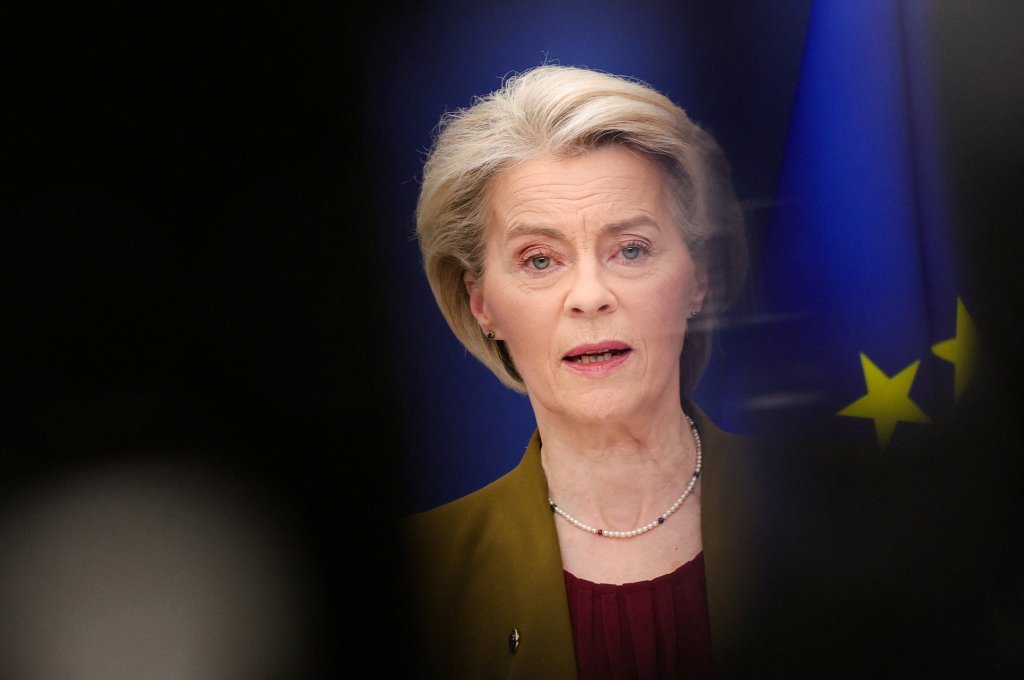
Commission President Ursula von der Leyen said: “Europe will always stand up for the protection of its borders. Europe decides who comes to our Union and under what circumstances. This is why today we propose to strengthen Frontex. So, it can support Member States whenever and wherever needed. Including on returns, with the mandate and capabilities that this new reality demands.”
Read AlsoFrontex investigation finds shortcomings in dealings with Libyan forces
What would change
Frontex, based in Warsaw, currently assists EU member states with border surveillance, coastguard operations and the return of people who have lost their right to remain in the EU. The proposal would broaden that mandate in three main directions: stronger coordination of returns, new support for operations outside EU territory, and a much larger capacity to respond to border emergencies.
A central element is the creation of a European Return Coordination Centre. According to the Commission, Frontex would collect and analyze return and reintegration data, forecast future "return needs" and coordinate operations across the EU. Its support would cover the full return process, from early identification and voluntary-return counseling to organizing removals and providing reintegration assistance.
Member states would inform Frontex each year, by November 1, of their indicative return planning and the assistance they expect from the agency. The centre would work alongside a separate Commission proposal to digitalize return, readmission and reintegration procedures, creating a single digital interface for the return process.
The reform follows the EU’s recently adopted Return Regulation, which entered into force on October 16, and permits member states to establish “return hubs” in third countries. With that legal framework now in place, Brussels is focusing on the operational machinery needed to implement it.
Read AlsoEU Council greenlights new rules enabling more effective returns
Operations beyond Europe
The most consequential change would be Frontex’s expanded role outside the EU. The proposal would allow the agency to provide technical and operational support to third countries on returns, and to help organize and carry out returns from one non-EU country to another.
Speaking to Euronews, an EU official said: "The more people you return before [they reach Europe], the less you have to return after."
Such operations would not be automatic. They would require a specific agreement with the third country concerned and would have to comply with fundamental rights and the principle of non-refoulement -- the prohibition on returning people to places where they face persecution, torture or other serious harm.
File photo: By early 2027, Frontex is expected to have a corps of around 10,000 officers | Photo : Lehtikuva/Reuters

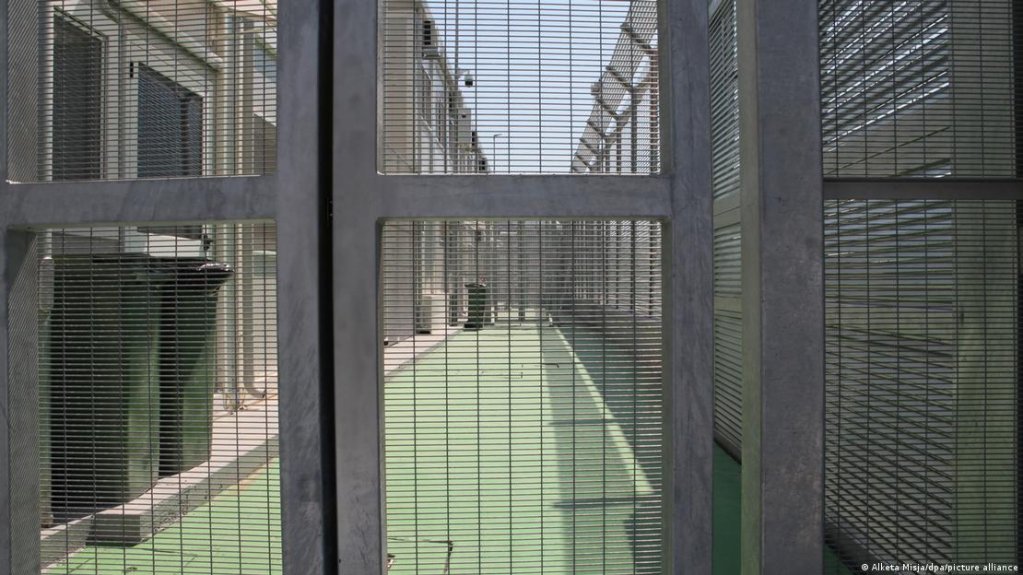
Frontex personnel could also become involved in transfers from return hubs. Five EU governments are negotiating the creation of the first hub, which is expected to begin operating in 2027. People whose asylum applications or right to remain in the EU have been rejected could be transferred there before final removal to their country of origin.
“It’s no longer only an agency supporting EU countries at their borders. […] It’s a deportation agency, increasingly operating far away from the actual border of the EU,” said Josephine Solanki, a researcher at the Amsterdam-based Transnational Institute, speaking at a press briefing ahead of the proposal, quoted by Euronews.
Read AlsoAlbanian Prime Minister rejects once more the idea of hosting EU migrant return hubs
A larger, faster agency
The Commission also wants Frontex to become a rapid-reaction force capable of intervening within 24 hours in a sudden border emergency. A new "Quick Reaction Force," composed of Standing Corps officers on standby, could be deployed at short notice for up to one month following a member-state request.
A further element is an Online Monitoring and Response Centre, intended to monitor publicly accessible social-media content and identify developments relevant to external border management.
Frontex would also act as a “trusted flagger” under the Digital Services Act, tracking and flagging illegal content to online platforms. The stated aim is to avoid a repeat of the mass crossing into Ceuta in July, when around 70,000 people made their way across the Morocco-Spain border, an incident that resulted in as many as 141 deaths, according to estimates.

The Commission stated that staffing would increase substantially. The Commission proposes gradually expanding Frontex’s Standing Corps to 30,000 officers by doubling the agency’s own staff to 6,000 and creating a European Border and Return Reserve of 17,000 officers. Those reserve officers would remain at the disposal of member states as national border guards but could be deployed by Frontex when needed. They would be additional to around 7,000 officers seconded from member states.
Executive Vice-President Henna Virkkunen said: "The EU security depends on our ability to act together, protect our external borders and invest in the capabilities we need to respond to fast-changing threats. A stronger Frontex, with the right tools and robust governance will help make the European Union more secure, more resilient and better equipped for the challenges of tomorrow."
Read AlsoEU Council greenlights new rules enabling more effective returns
Money and political momentum
Frontex currently has almost six billion euros allocated under the EU’s 2021-27 budget. The Commission says its proposal is in line with its proposed 11.8 billion euros allocation for Frontex in the next long-term budget, covering 2028-34.
The proposal also responds to sustained pressure from member states. In June, leaders of 19 EU countries urged the Commission to support return hubs outside the bloc, including through EU funding. The Frontex overhaul is intended to translate that political demand into operational capacity.
Brunner said the EU’s return rate for irregular migrants had risen to more than 30 percent, while illegal border crossings had more than halved over the past two years. "Our new migration policy is working," he said. "But good policy never stands still."
There is also pressure on voluntary return programs. According to a pre-publication report cited by German media, EU funding for reintegration assistance had run out by October after more than 21,200 people registered for support -- an increase of roughly 59 percent year on year.
Read AlsoEU ministers mull new ways to curb irregular migration
Rights and accountability
The expansion is likely to trigger scrutiny from migrant-rights organizations, lawyers and some members of the European Parliament. NGOs are expected to press for stronger independent monitoring, access for legal aid providers and enforceable safeguards against refoulement.
The Commission says fundamental rights and human dignity are built into Frontex’s mandate and operations. It points to pre-deployment training, Fundamental Rights Monitors, a duty on officers to report suspected violations, and a complaints mechanism examined by Frontex’s Fundamental Rights Office.
Frontex said it "takes note" of the proposal, which is now for the European Parliament and Council to consider. “Frontex stands ready to provide operational expertise to the co-legislators when asked,” the agency told InfoMigrants. "Until any new rules are adopted, Frontex continues its work under its current mandate, supporting Member States at the EU’s external borders and on returns, with full respect for fundamental rights."

On returns, Frontex stressed that decisions on who must leave the EU are taken by national authorities, which are responsible for examining each case, including non-refoulement. The agency says it supports member states in carrying out those decisions, while forced-return monitors oversee Frontex-coordinated return operations. Its Fundamental Rights Office monitors the agency’s activities and runs a complaints mechanism open to anyone directly affected by a Frontex activity who believes their rights were breached.
Supporters argue that a coordinated EU return system could reduce prolonged irregular stay, make removals more predictable and relieve national authorities. But the proposal will have to clear the European Parliament and Council, where the central disputes are likely to concern the limits of Frontex’s role beyond EU borders, the legal status of people held in return hubs, and whether the agency’s accountability structures can keep pace with its growing operational reach.
Read AlsoEU to propose new emergency framework to tackle 'engineered and weaponized' migration
With Reuters