
Guinea-Bissau seems to have become the latest country in West Africa to act as a launch pad for migrants hoping eventually to reach Europe. This week, police freed 71 people of various African nationalities who were detained by a suspected human smuggling and trafficking network. Migration routes towards Spain's Canary Islands have been moving further south as controls further north on the African continent take effect.
Police in the West African country of Guinea-Bissau freed 71 people of various nationalities during a crackdown on a smuggling and trafficking network on Wednesday (October 21).
Four suspects were arrested, while the alleged leader of the network remains at large, Agence France Presse (AFP) reported on Thursday (October 22). The victims are said to come from several West African countries, including Mali, Guinea and Sierra Leone.
The suspects are said to have targeted people hoping to migrate, offering to arrange travel and find them work in Europe as well as Canada and the US. AFP cited investigators saying that the operation involved human trafficking and fraud, with victims drawn in by false promises and subsequently forced to take part in fraudulent schemes.
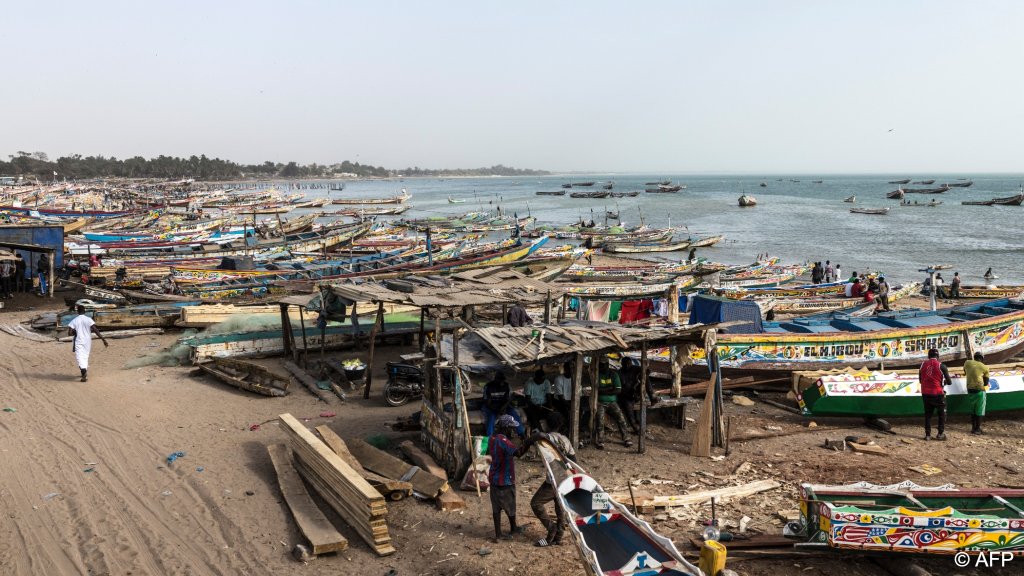
No further information was provided on how the network planned to move the migrants from Guinea-Bissau to Europe, Canada and the United States. However, Guinea-Bissau has emerged as a departure point for migrants attempting the dangerous Atlantic crossing to Spain’s Canary Islands in small, often fishing boats, a journey of around 2,200 kilometers (1,367 miles).
Read AlsoThe Gambia: At least 12 migrants die and many missing
Who are the victims?
The Guinea-Bissau Judicial Police operation (dubbed "ASTRA"), which took place following weeks of investigation into the network, resulted in the raids of two properties in the northern part of the capital, Bissau, where the four suspects were arrested and the 71 victims freed.
Police said those rescued included nationals of Mali, Guinea and Sierra Leone. The wider trafficking network is also believed to have involved people from Burkina Faso, Togo and Senegal.
Among the 71 victims was a woman from Sierra Leone identified by AFP only as Jane, who said she was subjected to attempted rape and other forms of abuse after falling into the hands of the now dismantled gang.
Fanta Makalou, a 32-year-old mother of three from Mali in the Central Sahel, was promised employment in France. The criminal network allegedly asked her to pay 1.5 million CFA francs (2,300 euros) for them to organize that journey, including an advance payment of 500,000 CFA francs (around 762 euros) before Makalou left Mali. AFP said she was held against her will in Guinea-Bissau for three months as a result of getting entrapped in the scheme.
Read AlsoIOM warns that migration routes to Europe are becoming more dangerous
How the network held the migrants captive
In an interview with AFP, Antonio Gomes, an officer from the country’s judicial police, said the migrants detained had experienced physical and psychological coercion, including threats and abuse, which prevented them from escaping.
Investigators said victims were pushed into pyramid schemes and instructed to recruit others through social media.
A 23-year-old man from Conakry, the capital of Guinea, said he also got caught up in the network’s scheme, paying a smuggler 10 million Guinean francs (around 1,000 euros), only to be told afterwards that he had to recruit another person. He wanted out but said the smuggler threatened to kill him if he told anybody else.
The criminal network reportedly tried to make the operation appear legitimate by supplying false contact information for so-called offices in Portugal, Canada and the US.
Intelligence from Interpol is also reported to have helped investigators break up the network, which authorities believe operated across several countries in the region, according to AFP.
Braima Cisse, the Judicial Police's communications officer, said the rescued people would be transferred to their respective embassies. Those whose countries do not have diplomatic representation in Bissau, he said, would have to make their own arrangements.
Read AlsoEU tightens visa policy for Guineans over lack of migrant returns cooperation
Guinea-Bissau emerges as important transit point for migration
Thousands of young people across West Africa have sought to leave their home countries in recent years, driven by conflict, climate-related pressures, incompetent governance, an unstable economy and limited economic opportunities. With legal routes to migration often difficult to access, some turn to irregular journeys and rely on criminal smuggling networks, leaving them vulnerable to exploitation, abuse, and trafficking.
Amid all this, Guinea-Bissau is emerging as part of a shifting network of irregular migration routes towards Europe, as tougher controls along the northwest African coast push people seeking to migrate farther south to attempt increasingly dangerous journeys across the Atlantic, according to the International Organization for Migration (IOM).
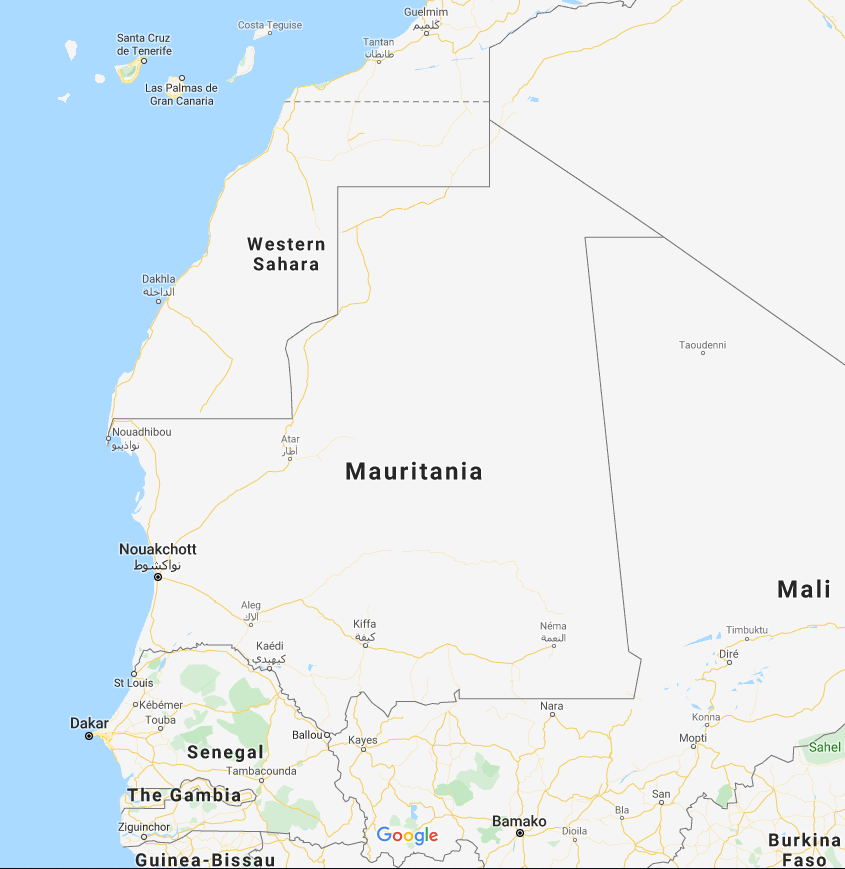
In a statement published on October 13, the United Nations warned that restrictions at traditional irregular migration departure points in Morocco, Mauritania and Senegal had not eliminated the pressures driving migration. Instead, routes have shifted towards countries farther south, including Guinea-Bissau, The Gambia and Guinea.
Migration policy changes and surveillance have increased the risks for people attempting to reach Europe by sea. Departures from locations farther south can add around 650 kilometers (404 miles) to the journey, extending the Atlantic crossing to approximately 2,200 kilometers.
People making these journeys may spend prolonged periods at sea in overcrowded, unstable and unseaworthy boats, facing the risk of shipwreck, severe dehydration and disappearance.
Although arrivals from four major West African countries of origin fell by 59 percent in the first half of the year compared with the same period in the previous year, IOM reported that the fall does not necessarily mean migration pressures have eased. Economic hardship and insecurity continue to push people to seek opportunities elsewhere, while increasingly restrictive border controls can in fact redirect journeys rather than stop them.
Read AlsoSenegal: Authorities rescue 139 migrants after days at sea
Longer journeys at sea, greater risks
The expansion of departure points farther south along the African continent highlights the dangers facing migrants who may have limited access to safe and regular routes. Longer crossings, remote departure locations and precarious vessels can make rescue operations more difficult and increase the likelihood that people will die or go missing at sea.
The movement of routes across borders also complicates efforts to identify trafficking and criminal networks, protect migrants and coordinate search-and-rescue responses.
IOM Director-General Amy Pope has warned that falling arrival figures at individual departure points should not be mistaken for an end to migration pressures. Migrant journeys may simply become less visible or shift to more dangerous and fatal locations.
Longer-term investment in employment opportunities for young people, peace-building and support for communities in countries of origin and transit, including Guinea-Bissau and neighboring countries, could deter unsafe sea migrations and people falling victim to trafficking networks, stated the IOM.