
Around 874,000 people in Somalia could be forced to flee their homes within the next three months and migrate due to flood waters, the IOM has warned. Some people are risking dangerous journeys across borders and at sea in search of security, while Oxfam warns that climate-related crises could devastate Somalia with humanitarian suffering and famine.
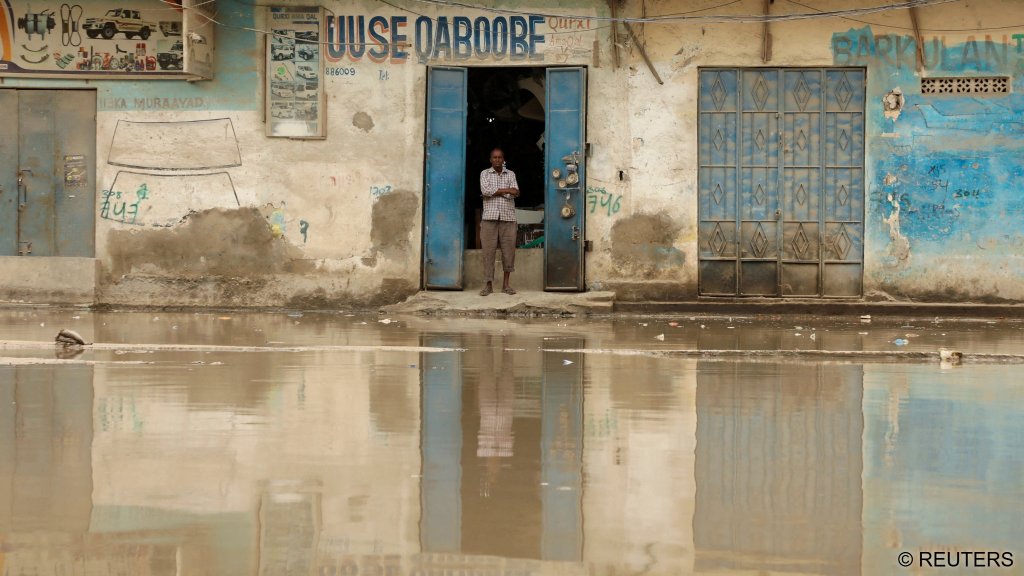
Around 874,000 people in Somalia could lose their homes and become displaced between October and December as heavy rainfall and rising river levels increase the risk of flooding, the International Organization for Migration (IOM) announced on Wednesday (October 21). The threat comes as communities already trying to recover from drought and repeated displacement prepare for a rainy season expected to bring above-average rainfall as El Niño conditions are expected to intensify.
"We are looking at the possibility of hundreds of thousands of people losing their homes in just a matter of weeks. Many of these families have already been displaced before and have very little left to fall back on," said Manuel Marques Pereira, IOM Somalia Chief of Mission. "There is still time to reduce the impact, but that window is closing. We urgently need funding to help people protect their homes and livelihoods, reach safer ground where necessary, and avoid another cycle of displacement."
El Niño occurs when sea surface temperatures rise in parts of the central and eastern Pacific Ocean, disrupting atmospheric circulation and influencing weather patterns around the globe. Its effects vary by region, but can include more severe droughts in some areas and heavier rainfall and flooding in others.
Read AlsoAt least 17 Somali migrants die off Algerian coast
Flooding can trigger mass displacement
Projections published by IOM and the Danish Refugee Council (DRC) estimate that 874,319 people could be displaced over the three-month period, with flooding expected to account for 92 percent of cases. The report warns of widespread displacement as seasonal rains threaten vulnerable communities.
The UN migration agency is struggling with funding, having received only around 14.4 per cent of the 16.62 million US dollars (around 14.84 million euros) it says is needed to prepare for and respond to El Niño-related flooding. The funding would support more than 517,000 people living in flood-prone areas across Somalia.
Flood risks are already becoming apparent in several locations in the country. In Dollow (also spelt Doolow or Dolow), a town in southern Somalia near the Ethiopian border, the Jubba River is nearing flood levels, while the Shabelle River is rising towards the top of its banks in Jowhar, a city north of Mogadishu. Heavy rain in the city Baidoa, northwest of Mogadishu, has damaged homes and forced residents to flee several neighborhoods.

Beletweyne and Gaalkacyo near the Ethiopian border are among the areas facing the highest projected displacement, with around 229,000 and 82,000 people at risk, respectively. People living in overcrowded displacement camps also have restricted access to safe drinking water and adequate sanitation, which could increase the risk of disease outbreaks if flooding worsens.
In addition to mass displacement and forced migration, floodwaters can escalate the humanitarian situation in the country by destroying crops, compromising livelihoods, and contaminating water supplies and sanitation, as well as disrupting access to healthcare and other essential services. The impacts are likely to compound the pressures on communities already suffering from repeated climate-related emergencies.
The IOM is now urging international support to assist with preparedness and early intervention against rising floodwaters and avoid displacement and migration.
Read AlsoRed Sea death trap: Why so many migrants drown
Climate-related displacement adds to pressures driving migration
Flooding and other climate-related disasters across sub-Saharan Africa are leaving people without homes, income or reliable access to basic services, adding to the pressures that push some to look for safety, stability, and opportunities elsewhere. For people already facing insecurity and limited livelihood options, repeated displacement can make it harder to rebuild their lives and increase the risks they face when moving.
For some people living through the changing climate of the Horn of Africa, journeys in search of better prospects can involve crossing the sea from Djibouti to Yemen, one of the region’s most dangerous migration routes.
More than 900 people died or went missing along the route in 2025, while the number attempting the crossing rose by 18 percent, according to the IOM. A shipwreck in March 2026 left nine people dead and 45 missing. One earlier this month ended with 139 dead and at least 84 missing. It was not reported at the time which nationalities the dead or missing may have been.
Most people attempting this journey are from Ethiopia or Somalia, according to an IOM spokesperson, who said many were becoming "stranded" in Djibouti.
The risks highlight the dangers faced by people who feel they have few alternatives to irregular migration, IOM Director General Amy Pope has warned in a statement.
"No one gets into a boat like that unless they believe there is no other safe way," she said. "We cannot keep treating these deaths as normal. Safe and legal pathways save lives. I am asking governments and donors to act before the next boat goes down."
IOM also called on humanitarian donors and partners to help Djibouti respond to search and rescue operations for migrants crossing Djibouti and risking their lives at sea.
The African Union Commission chairperson Mahmoud Ali Youssouf has also called for more action to "address the root causes of irregular migration… and promote safe, orderly and regular migration."
Some Somalis are also tempted to make the long journey towards Libya and on to Europe. On October 1, 2026, the UNHCR said they had registered a little over 1,000 Somali refugees in Libya. This, stated UNHCR Libya constituted around 1.3 percent of the total number of registered refugees there. Other Somali migrants may also be in Libya but not yet registered with the UNHCR.
Read AlsoAt least 68 African migrants dead and scores missing after ship capsizes off Yemen coast
Somalia also at risk of famine, Oxfam warns
Aid organization Oxfam has also warned that Somalia is among several countries at risk of humanitarian suffering and famine as climate-related crises continue to affect millions across the continent of Africa, with the threat compounded by a potential strengthening of El Niño.
Oxfam has also warned that preparations for the weather phenomenon remain seriously underfunded, leaving vulnerable communities exposed to the risk of droughts and flooding, and therefore displacement and forced migration.
Across eastern and southern Africa, around 62 million people are already affected by flooding, drought and hunger, Oxfam said. Somalia, along with Sudan and South Sudan, are among the countries facing the threat of famine, while large parts of the Sahel are at risk of water shortages. Sudanese refugees, registered by the UNHCR in Libya account for 83.5 percent of the total number of refugees present in Libya at the beginning of October this year, and stand at more than 93,000 people.
Oxfam has also noted that funding to help countries prepare for and respond to El Niño was far below what was needed, with major cuts in international aid from donors including Germany and the US.
Just 450 million US dollars (around 402 million euros) is currently available worldwide, Oxfam reported, as people anticipate a particularly strong El Niño in the coming months and a potential peak of its powers and effects in April next year.