
Ten years ago, the camp known as the 'Calais Jungle,' the largest camp in France for migrants hoping to reach the UK, was dismantled. As its peak, this unofficial settlement, home to around 10,000 people, left a lasting mark on the residents of Calais and the humanitarian workers who walked its streets.
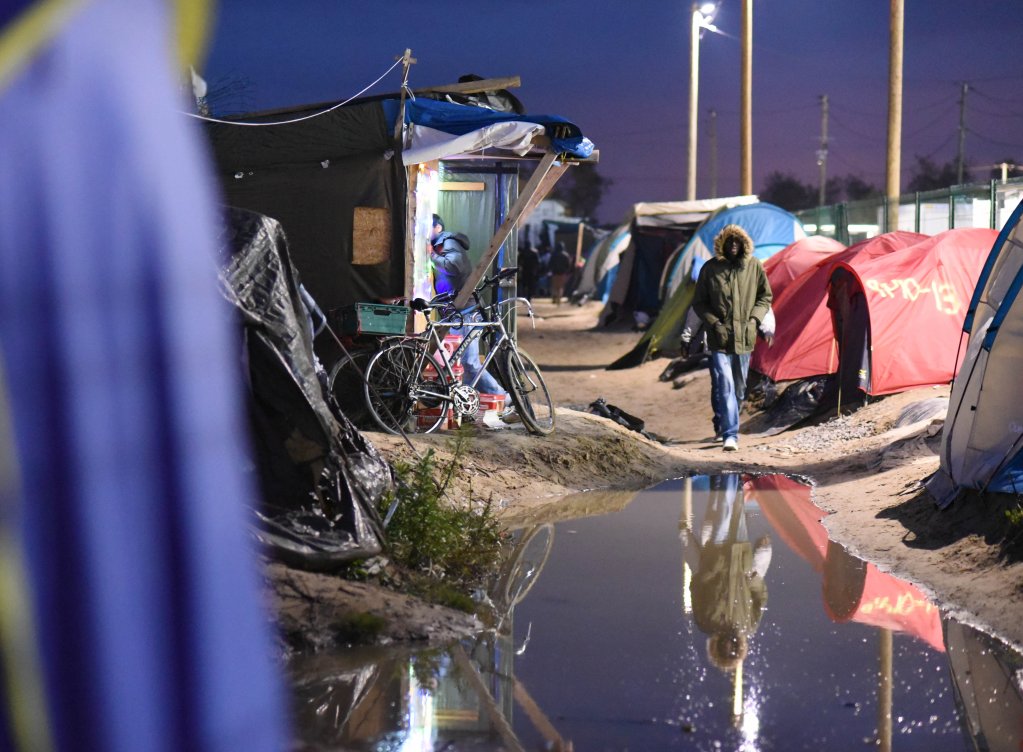
On October 24, 2016, before sunrise, dozens of buses were already parked around the makeshift settlement known as the "Great Jungle." Thousands of migrants who had been living there, from Afghanistan, Syria, Eritrea, Sudan and Iraq, were escorted onto the coaches by hundreds of police officers overseeing the operation. They were taken to reception centers across France. It was the first step towards erasing from the map a place that, since April 2015, had provided temporary shelter for nearly 10,000 migrants hoping to reach the UK.
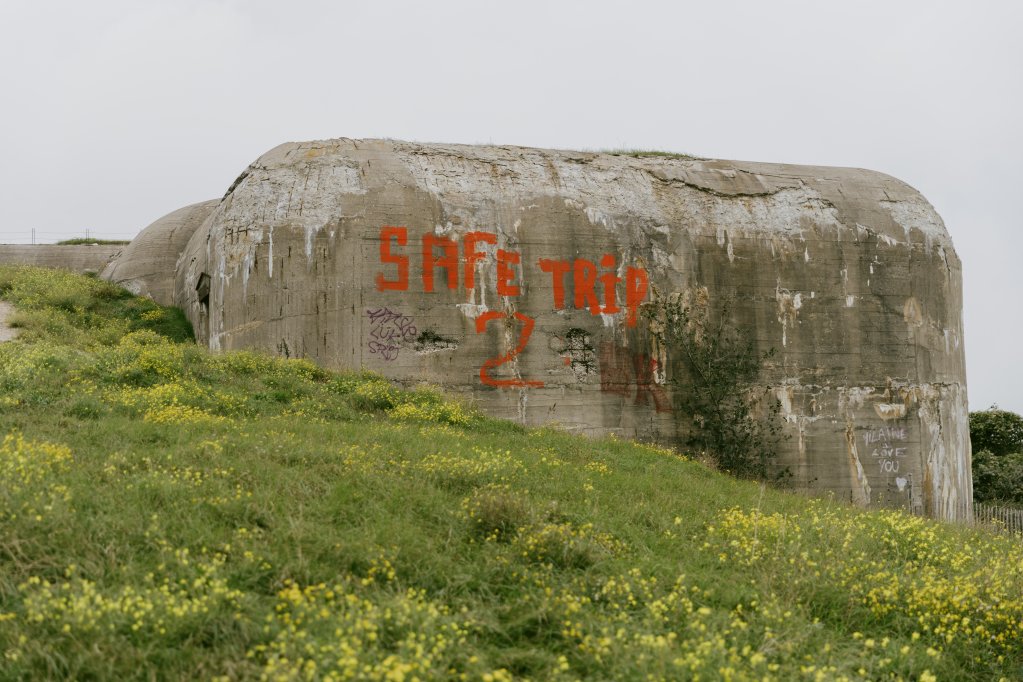
Ten years on, nature has reclaimed the site and not a trace of the Jungle remains. On this October morning, a thick mist hangs over the Calais coastline, slowly lifting to reveal a stretch of heathland dotted with a handful of sheep. Heather ripples in the wind. In the distance, a Second World War bunker bears the words "Safe trip" in graffiti. On its door, another message stands out: "Borders Kill."
But for the residents of Calais and the aid workers who worked in the Jungle's narrow lanes, the memories have never faded. Ferri Matheeuswen peers through an opening in an observation platform overlooking the heath. It is hard to reconcile the quiet landscape with the sprawling settlement that once stood here. The Dutchwoman, who arrived in Calais more than 20 years ago, remembers the thousands of people who lived here and the constant activity that made the 'Jungle' one of France’s largest informal settlements.
Volunteering with the Maison des femmes (House of women), a local organization supporting women, Ferri was involved in the Jungle from the outset, helping to build the settlement from its earliest days. Ten years on, she recalls how it began on April 4, 2015. "It was a day when people were on the move. They arrived carrying whatever belongings they had, pushing shopping trolleys… We started putting up little shelters and, gradually, a village took shape."
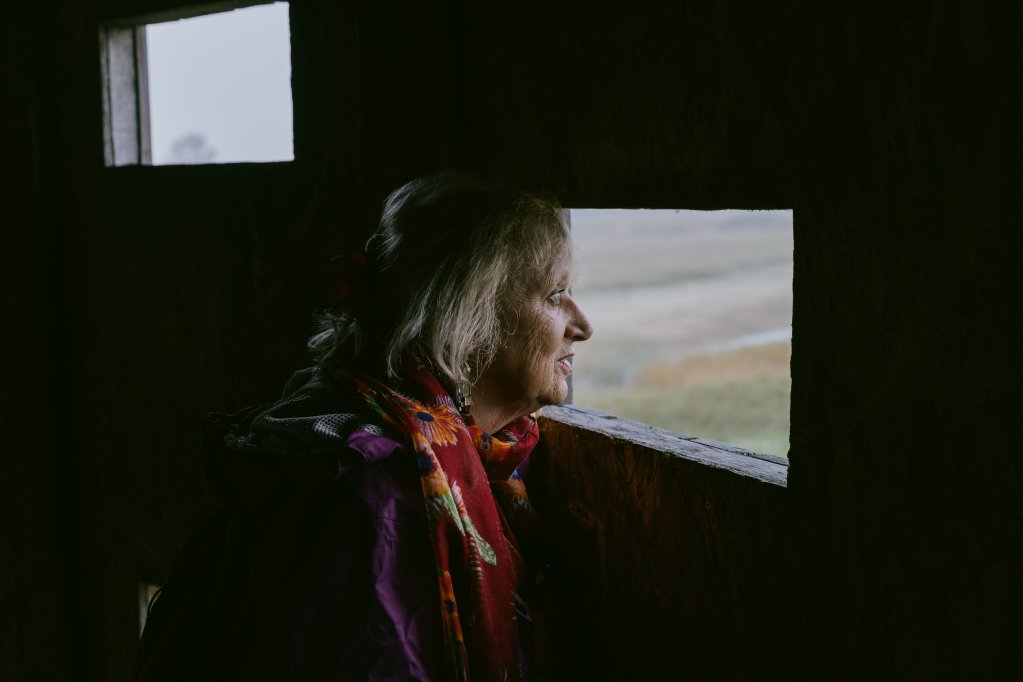
Wrapped in a purple raincoat, Ferri talks about the sights, sounds and smells that have stayed with her: the smoke that hung over the camp day and night, the parties and the long evenings spent in the homes of people who became her friends. "They even built me my own little hut" – she says with a smile. "Sometimes I would go there just to sit outside Alpha’s blue house. He was a man from Mali who had built himself a hut in the style of the homes in his country," she recalls.
'The Jungle was my second home'
For many, the Jungle became part of everyday life. Michel Tranchant, now 70 and retired, used to visit almost daily. Sitting on a bench at the ferry terminal, now a fortress-like complex surrounded by tall fences topped with barbed wire, he remembers first bringing food to the camp in February, in the snow.
"I would arrive in my lorry and people would gather around. I would tell them, 'One line,' and they knew what to do. They knew that when Michel turned up with his lorry, they had to line up. If anyone stepped out of line, I would stop handing out the food," he recalls. Michel is a jovial, broad-shouldered man who says the fight against inequality is "in his genes."
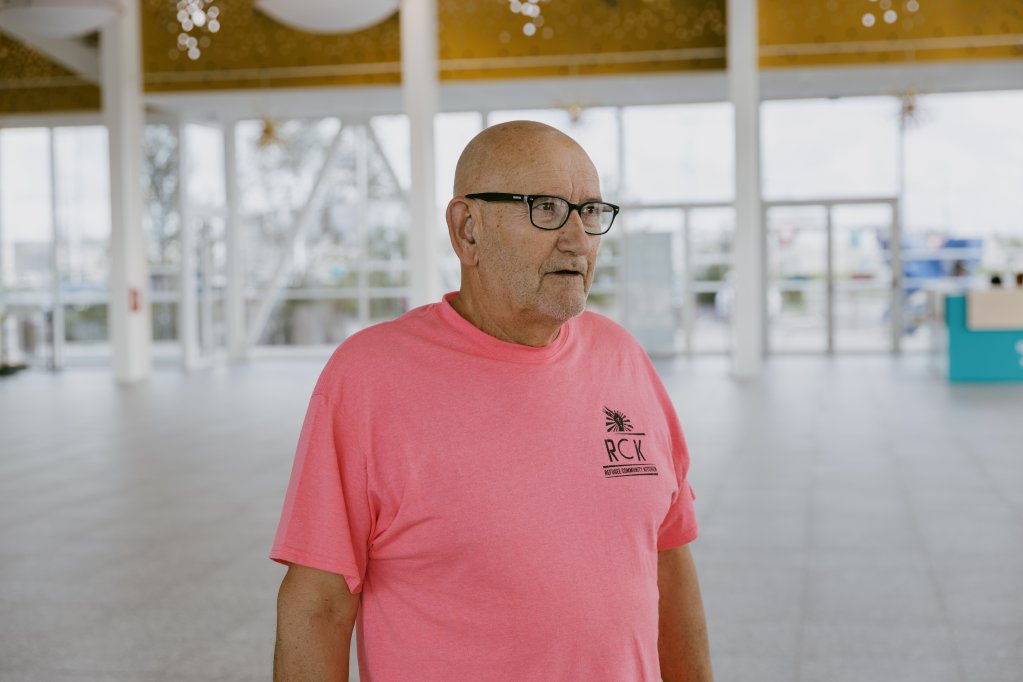
The Jungle was home to around 4,000 people in its early days. By the time it was dismantled, the population had more than doubled. "There were restaurants, hairdressers, a sauna, a church, a mosque and even a disco. We would dance to African music and then go and eat at one of the Afghan restaurants," recalls Michel, wearing a pink T-shirt from the Refugee Community Kitchen (RCK), an organization that still supports people living in camps across the region.
Read AlsoSmugglers 'driven by greed' sentenced over deadliest small-boat Channel crossing
Rasta, as he is known, now works at a day center run by Secours Catholique. He too was there from the beginning, helping to put up shelters. "The 'Jungle' was my second home. I even celebrated my birthday there," he says.
His phone still holds hundreds of photographs from those days, and every face brings back a story. On his finger, he wears a ring set with a blue stone, a gift from a Sudanese man. The makeshift settlement left a lasting mark on the city, he says. "There was a before and an after the 'Calais Jungle.' That’s for sure."
'He called us Mum and Dad'
The 'Jungle' changed the lives of those who lived there, but also those of the people who came to help. For some local residents, volunteering in the camp came at a personal cost. "My neighbors and many of my colleagues stopped talking to me because of my work in the Jungle," Michel says. Even now, he is disappointed by their reaction.
"The average person in Calais doesn’t like migrants. Why? Because they’re afraid of them; they don’t know them. I used to tell them, 'I understand why you’re afraid, but they are just like everyone else, going through a difficult time.' He began taking his neighbors into the camp to show them what life there was really like. 'And every time, they changed their minds!'" he says proudly.
François-Xavier and Marie-Annick Devaux, a retired couple who have lived in Calais for more than 60 years, encountered a similar hostility. They had begun volunteering in the 'Jungle' after their parish called on the community to show solidarity with migrants. "'The Jungle' really fueled an anti-migrant sentiment. Ask our neighbors and they’ll tell you migrants are responsible for every problem in the world," they say.
The couple spent countless days among the huts made of wood and corrugated metal. They attended a service at the Eritrean church, known as "Saint Michael of the Jungle," and even opened their home to someone from the camp. When they brought Riyaz, a Pakistani man in his early twenties, home for a shower, their neighbors criticised them. "We were told not to bring migrants into our neighborhood," Marie-Annick recalls.
Finally, Riyaz moved in with them and became part of the family. "He had lost his mother and couldn’t sleep. We felt he was becoming depressed, so we took him in for a while. I taught him French and how to write. I still have his exercise book. He called us Mum and Dad," she says, her voice filled with emotion. She is delighted to hear from him still. Today, Riyaz has legal status in France and works as a journalist.
'It was their village'
For those who had come to know the camp and its inhabitants, the sound of bulldozers and the eviction of thousands of people in October 2016 was devastating. "It was perhaps one of the worst days of my life," Ferri recalls. "On one of the last nights, we knew people would have to leave. We told them, 'If you don’t want to get on a bus, leave tonight.' We gave them our phone numbers and said, "Call us so we know where you end up."
"It was so sad. I felt terrible," Michel says. Rasta chose not to be there for the end. "I didn’t want to see the 'Jungle' disappear. It was a real experiment in living together, and a place full of life," he says.
The camp was far from idyllic, however. Overcrowding, poor sanitation, insecurity and frequent clashes were part of daily life. Its proximity to the main road brought its own dangers. "Whenever there was a traffic jam, people would shout "dougar, dougar!" -- "traffic jam" in Sudanese Arabic --and hundreds would rush towards the lorries, trying to hide inside and make their way to England," Rasta recalls.
Ferri agrees that living conditions were inhumane. But, she argues, the camp also gave people a degree of protection: they had somewhere to stay and a place where they could come together. "For the first time in Calais, people weren’t scattered in small groups across the area, as they are again today [editor’s note]. They had a village of their own."
'It had become impossible to manage'
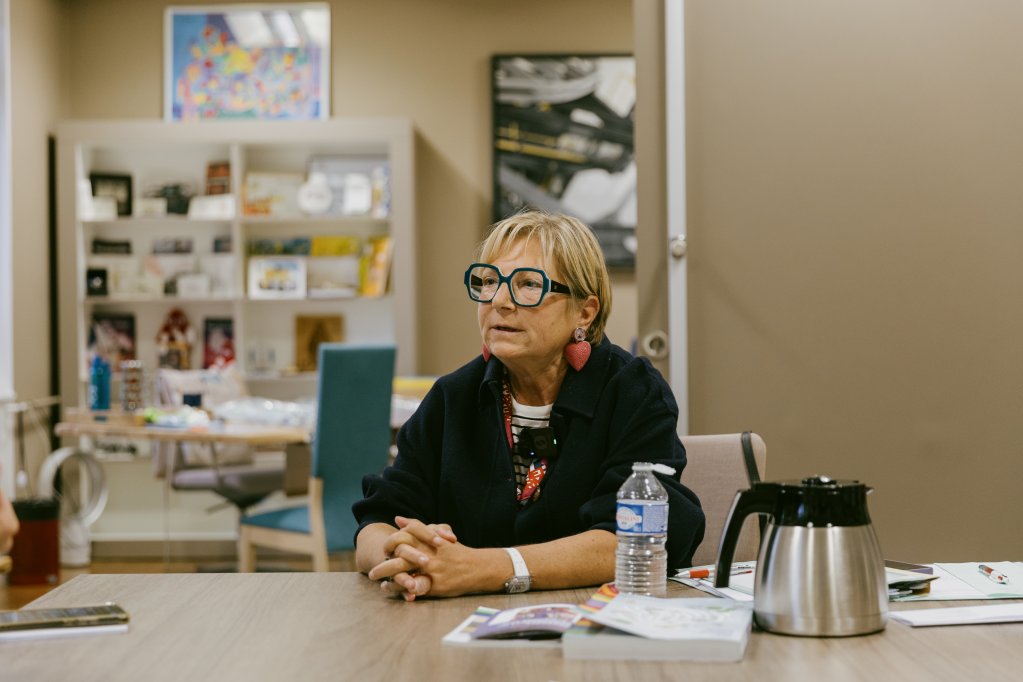
"During the 'Jungle' years, we had several serious incidents. Crowds of 500 to 600 migrants would spill onto the port ring road and try to board the ferries. There were also frequent fights," recalls Natacha Bouchart, who was mayor of Calais at the time. "It was complete anarchy."
Mohamad Shahab Rassouli, an Afghan who arrived in Calais as an unaccompanied minor in 2009, also remembers the darker side of life in the camp. "There were many difficult moments. I saw a man throw himself under a train, another lose his hand, and someone else tear off one of his own fingers," he says.
Having experienced camp life himself, he later joined La Vie Active, the organization commissioned by the French state to provide humanitarian assistance in the Jungle. "I had been a migrant myself, so I understood their pain," he says. A keen reader, he also worked as an interpreter for a psychological support team, helping Afghan residents who were, he recalls, suffering terribly. Yet, looking back ten years later, he also remembers seeing people overcome immense hardship and go on to build happy lives.
Read AlsoUK and France 'one-in-one-out' deal canceled
Should the 'Jungle' have been dismantled? Almost everyone interviewed agrees that it should. "By the end, the camp had become unsanitary, impossible to manage and far too dangerous," Rasta says.
"From a health perspective, the situation was no longer tenable," the Devaux family adds.
"Authorities had been warned. We told the state that unless it put proper measures in place to manage the situation, we would not be able to cope with the numbers. And that is exactly what happened," says Calais Mayor Natacha Bouchart.
But the agreement over this complex question ends there. Migration has not disappeared from Calais, and the legacy of the 'Jungle' continues to divide the region a decade later.
"If I had to do it all over again, I would do exactly the same thing," the mayor says, brushing aside criticism of her handling of the situation. Ferri sees things differently. "The camp may have become impossible to manage," she says, but "dismantling it without finding a better alternative was not the answer."
As she casts one last glance across the heath, Ferri says: "They could have built a reception center with flowers all around it."
Translated and adapted by Stella Elgersma