
In its latest report, the European Union Agency for Fundamental Rights (FRA) outlined concerns about the implementation of the EU Pact on Migration and Asylum, ranging from children’s reception in Ceuta to restrictions on humanitarian rescue operations.
The European Union Agency for Fundamental Rights (FRA), released its latest migration bulletin on Thursday (October 22), covering the period July to September 2026, which coincides with the first months of implementation of the EU Pact on Migration and Asylum.
The report highlighted the conditions in which the safeguards promised under the EU-wide regulations on migration and asylum now operate. Some preliminary concerns about its implementation were raised.
Children's protection tested in Ceuta
"The Pact brings new risks and opportunities for fundamental rights. It [this report] finds that not all member states have established a monitoring mechanism yet, while highlighting practical challenges in safeguarding children during screening, guardianship and age-assessment procedures," noted the FRA report.
FRA identified Ceuta as a test case for the new child protection safeguards because of relatively low numbers of arrivals elsewhere.
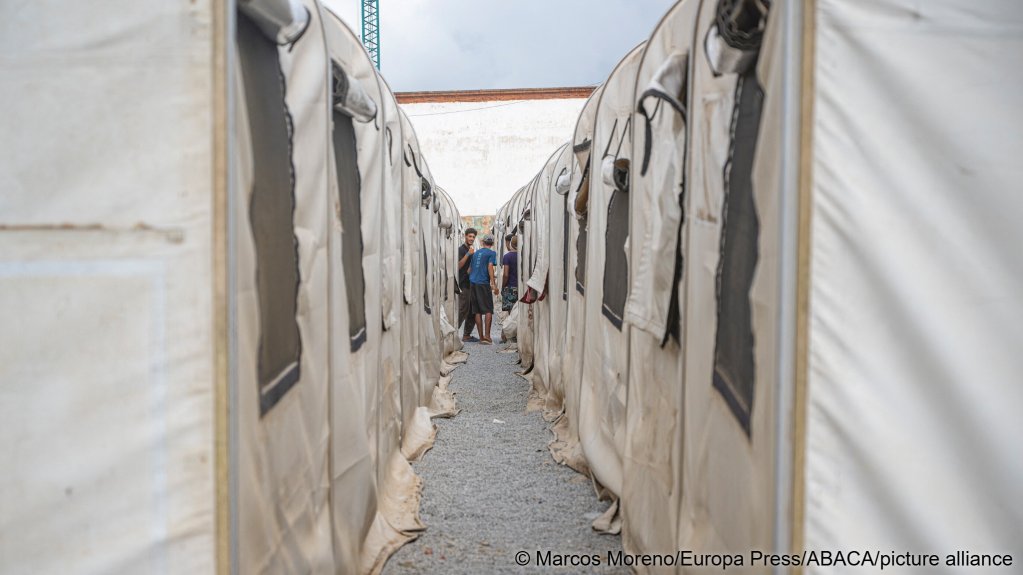
The report found that the large numbers of arrivals of mostly young Moroccan men in Spain’s North African enclave exposed difficulties in the system for identifying, registering and accommodating minors moving without an adult.
The mass arrivals which took place over two days compelled authorities to introduce emergency measures to expand reception capacity. Hundreds upon hundreds ended up sleeping on the streets or in makeshift encampments that sprawled along the beach.
Civil society organizations raised concerns about timely identification and access to protection. Other concerns included allegations that those who had returned to Morocco did so without individual assessment -- a claim that Spain has denied. Wider concerns included inadequate reception conditions and allegations of the use of unnecessary force.
Read AlsoCeuta: Additional 45.3 million euros allocated to deal with aftermath of migrant arrivals
Rescue organizations face detention and disruption
In its report, FRA also enumerated several court decisions that overturned restrictions imposed on search and rescue organizations.
In July, a court in Ortona, Italy, ruled that the December 2025 detention of the rescue vessel Humanity 1 operated by SOS Humanity had been unlawful. The court also reaffirmed that Libya could not be considered a safe place for disembarkation.
In September, a Naples court lifted the detention of the rescue ship Sea-Watch 5, operated by the German NGO Sea-Watch and annulled a fine linked to an alleged failure to communicate with Libyan authorities.

FRA underlined that judicial scrutiny can act as a safeguard to the implementation of rights, but stressed that successful challenges do not erase the disruption caused by the original court decisions or application of laws or decrees. Detention keeps vessels in port, while repeated proceedings consume organizations' time and resources, FRA noted.
Since 2017, 105 administrative or criminal proceedings have been opened against civil society organizations involved in search and rescue.
Read AlsoMore rescues in Mediterranean waters
Few investigations lead to convictions
Accountability for alleged abuses at Europe’s borders remains another major concern, stated the FRA report.
Citing collected data, FRA said that between 2020 and 2025, judicial authorities in 12 EU member states opened at least 322 preliminary criminal investigations. Only nine of them led to a conviction, eight in Hungary and one in Spain. All new convictions FRA recorded last year were from Hungary. FRA also recorded 192 disciplinary investigations during that period. None of those concluded in 2025 led to sanctions.
Most investigations are discontinued at the preliminary investigation stage. In 2024 FRA issued a Guidance on investigating alleged ill-treatment at borders report, in acknowledgement of the challenges in investigating rights violations at borders.
"Although FRA offers guidance to overcome evidentiary obstacles, two years later, systemic gaps hindering effective investigation of rights abuses at EU external borders remain."
In October, FRA published an updated EU-mandated migration-related fundamental rights monitoring and investigation in the field of asylum, borders and returns. "Gaps regarding promptness and effectiveness of investigations into reported rights violations at the EU external borders lead to a perception of impunity, which risks undermining the rule of law," said FRA.
The report concluded that the EU's migration and asylum pact itself brings both risks and opportunities for the protection of fundamental rights but, "the evidence presented in this bulletin shows that significant work remains ahead."
Read AlsoGreece to toughen sanctions against migrant smuggling