
Libya's eastern-based parliament has unanimously ratified a contested 2019 maritime boundary agreement with Turkey. The move is seen as somewhat of an opening up to other countries by the isolated administration, while also leaving other parties worried about the possible ramifications, not only in the context of migration.
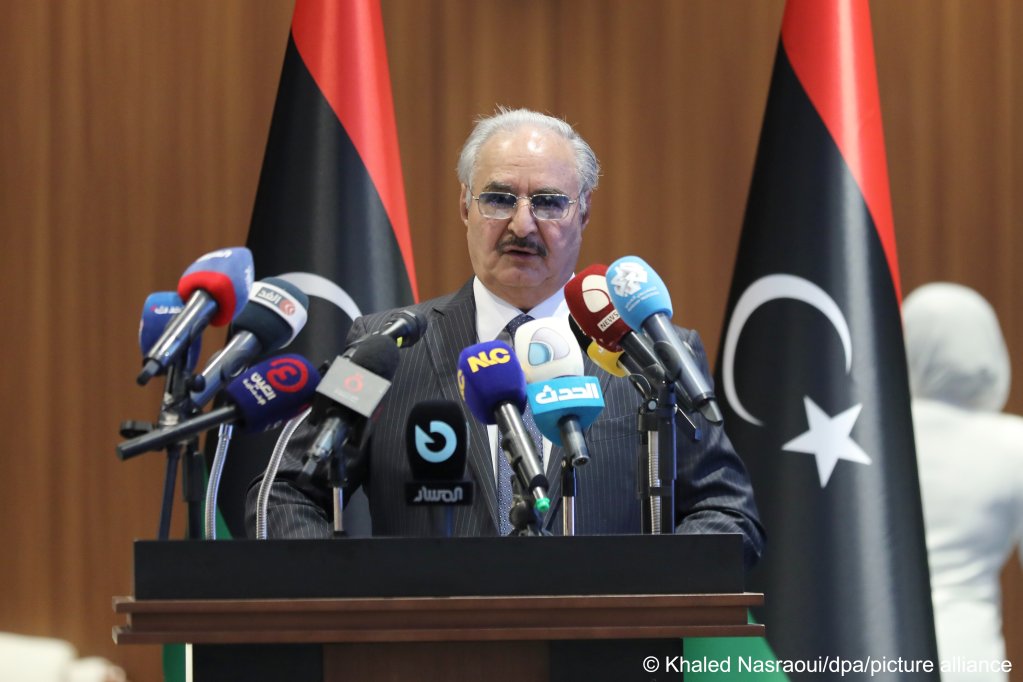
The administration in eastern Libya, under the leadership of military commander Khalifa Haftar in Benghazi, is not recognized by the international community nor the United Nations as a legitimate government.
However, various foreign governments and international bodies have in recent years made overtures to establish tentative diplomatic relations with the de-facto breakaway region.
Especially in the context of migration management and economic development. The European Union has repeatedly pushed for closer rapprochement, while still officially only recognizing the western based authorities.
Read AlsoEU-funded maritime control center planned in eastern Libya
Eastern Libya: Warming up to partners?
Last year in July, an EU delegation led by European Commissioner for Internal Affairs and Migration Magnus Brunner traveled to Benghazi to try and open fresh channels of communication on migration matters — only to literally be chased away. Since then, relations with regards to migration management seem to have improved. Last week, it was announced the EU had pledged 25 million euros to support migration controls from eastern Libya.
The authorities in Benghazi have also been increasing their talks with countries like Turkey and Russia as well as neighbor Egypt.
Read AlsoEU delegation forced to leave eastern Libya
Agreement with Turkey
On October 21, the House of Representatives in Benghazi voted to formally adopt a memorandum of understanding with Turkey on the subject of the recognition of shared maritime boundaries.
The document basically outlines where Libya's maritime borders in the Mediterranean are supposed to end, and where Turkey's waters are supposed to start.
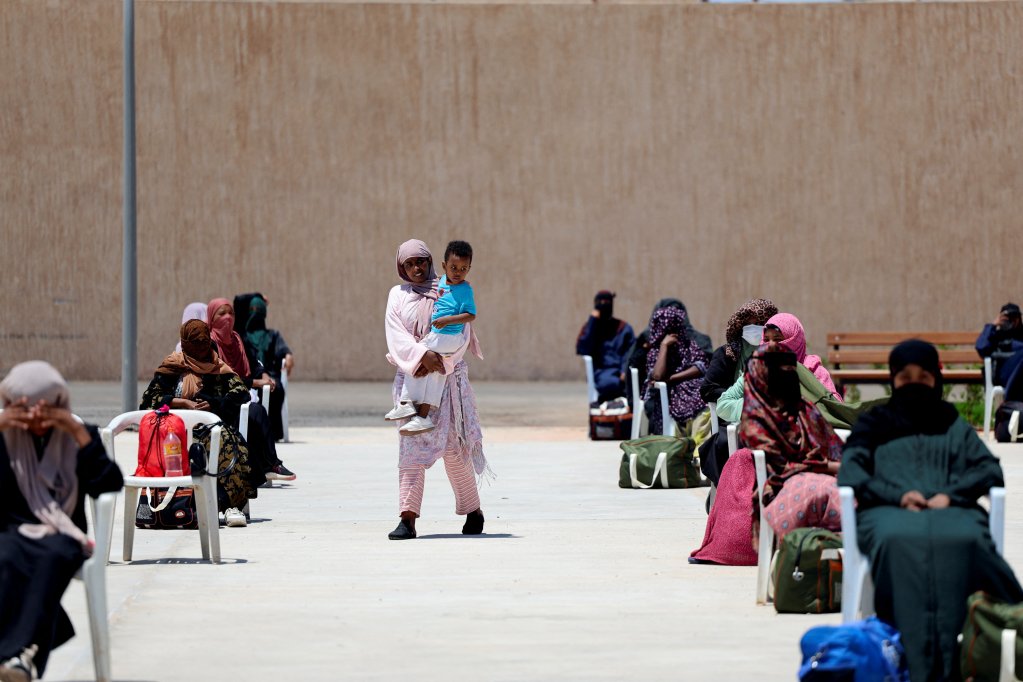
While largely an economic agreement pertaining primarily to oil exploration, the memorandum also affects various migration-related issues, in particular governing the responsibilities of either country in migrant interceptions at sea and rescue missions.
By passing the measure, lawmakers in Benghazi have now moved into closer alignment with Turkey, following several years of severed ties over this very issue.
Read AlsoMediterranean: Migrant rescue vessel 'attacked' in international waters
Memorandum brings two rival sides of Libya closer together
The deal had largely been placed on hold since 2019 — largely on account of the country being split between two rival administrations for several years.
Originally brokered in Tripoli by Libya's former Government of National Accord (which unified both administrations of the country until 2021), the signing of the memorandum marked a rare occasion on which both administrations seemed to agree on the same issue.
Officials from both the western, UN-recognized administration of the country and Haftar's eastern camp issued statements welcoming the outcome.
The recognition of the maritime boundaries coincided with a visit to the internationally recognized capital Tripoli by Turkish intelligence chief Ibrahim Kalin, who lauded the vote as a positive step for bilateral diplomacy.
Greek government expresses anger in no uncertain terms
However, some argue that Turkey and Libya lack any adjacent coastlines so should not be discussing their maritime border in the first place.
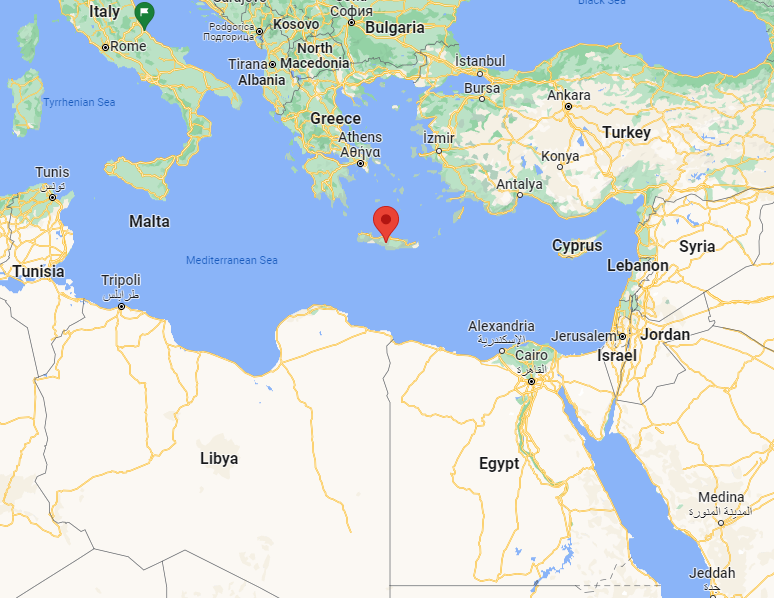
Greece, in particular, takes umbrage at the latest development, as it has been arguing for years that certain geographic formations — such as the existence of Greek islands like Crete roughly halfway between both the Libyan and the Turkish coastline, prove that there is no shared maritime border.
News of the memorandum drew sharp criticism from the Greek government, which says that the territorial rights of areas like Crete — the largest out of roughly 6,000 Greek islands — were completely being ignored.
Read AlsoCrete and Gavdos among Greek Islands with highest migrant sea arrivals
Athens went as far as responding to the development by stressing that it rejected the legitimacy of the memorandum, saying that it was "illegal, invalid and groundless," having asserted for years that if there were to be any oil exploration, it should be a matter to resolve between Greece and Libya.
On the migration issue in particular, Greece has also in the past argued that it was in charge of all migrant interception in the vast majority of that part of the Mediterranean, further supporting its right to those waters.
Athens also felt an affront at the signing of the memorandum as it had just recently started supporting and executing the training of military and maritime units aligned with the eastern administration of Libya as part of Greece's policy to stop migrants from reaching the EU member state.
EU and Egypt also worried about latest development
The European Union has similarly maintained for years that any such accord between Turkey and Libya would infringe upon the sovereign rights of other states, without singling out Greece.
Meanwhile, the latest development also drew ire from Libya's neighbor to the east, Egypt, which is in pursuit of its own territorial rights in Mediterranean waters off its coast.
Egypt previously signed a counter-maritime pact with Greece to nullify the aspirations between Libya and Turkey.
However in practical terms, Libya and Egypt are on opposite ends of the overall migration debate in northern Africa, with migrant boat departures from Egypt to Europe accounting for some of the lowest across the continent and those in Libya remaining at the highest rate for years running.
Read AlsoWhy are so many migrants arriving on Italy’s shores?
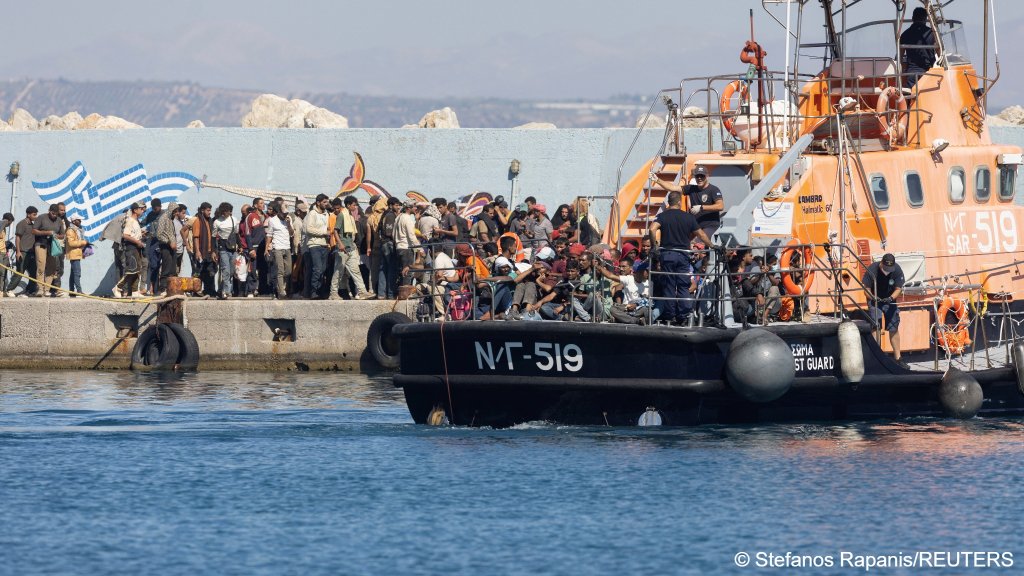
Departures for Greece from eastern Libya have particularly risen in the past two years as part of an overall shift in tack among smugglers; prior to 2024, most irregular departures from the Libyan coast were concentrated in western Libya, heading for Italy's southern coast.
But in the past few years, there's been a decided shift to eastern Libya, with migrant departures aiming for the lengthier — and more dangerous — journey to Greece's southern coastline.

Read AlsoEastern Libyan authorities claim they have deported more than 100,000 irregular migrants