
Rwanda might be about to become the first host country for the EU's so-called "return hubs," according to a report by the news agency Agence France-Presse (AFP). If the plan were to go through, an announcement confirming these reports might be made as early as next month.
According to AFP, the small African nation of Rwanda might be about to sign an agreement with a group of five EU member states, which are pushing for the establishment of migrant return hubs outside the EU.
The facilities are intended to house failed asylum-seekers who have lost every right and appeal to argue their case to remain in the EU but who equally cannot be deported to their home countries — for example on account of not having a returns deal with a particular nation.
AFP cited three anonymous sources involved in the ongoing negotiations with authorities in the Rwandan capital Kigali, who signaled that a deal between Brussels and Kigali might be imminent.
AFP also suggested that an upcoming migration conference in Vienna next month could serve as the framework to announce a returns deal.
Read AlsoWhat the new EU migrant 'return hubs' deal means in practice
Diplomatic visits between Brussels and Kigali
According to AFP's sources, the migrant return hub would be rolled out as a pilot project, with each of the five EU countries involved sending about 20 rejected asylum seekers to Rwanda.
The same source reportedly told the news agency that Rwandan authorities sought to present the purported return hub as a "welcome center" rather than a detention facility "to underscore the possibility for some migrants to stay and work in the country."
The Rwandan government however did not respond to a request for comment by AFP, nor did diplomats belonging to the five EU countries which reportedly are involved in talks with Rwanda.

A diplomatic source did tell AFP, however, that an official delegation from the five EU countries had visited Rwanda last month, followed by a Rwandan envoy traveling to Brussels and other European destinations "in recent weeks."
AFP meanwhile said that a diplomat from one of the five countries had also told the news agency that the negotiations were "progressing very well," adding however that at this point, there would be no "comment on the timing or the specific country."
Read AlsoThe return of the Rwanda plan – rights concerns and past failures
Preparations in top gear after EU approval
The group of five countries advocating for the establishment of migrant return hubs include Denmark, Austria, Greece, Germany and the Netherlands.
Their joint initiative to launch migrant return hubs follow a major legal change in the European Union earlier this year, which now allows individual member states to run such facilities — albeit without the direct involvement of Brussels; the new legislation was only signed off this month, allowing member states to speed up their negotiations with potential third countries.
The five EU members have repeatedly said that they would aim to have such a facility operational by 2027, without commenting on what particular countries they had been exploring as partners for the undertaking.
The government of Greece meanwhile has made comments in the past indicating that in addition to a joint hub with other EU partners, Athens might be interested in also signing deals for direct return hubs for failed asylum seekers in their country without the involvement of other EU states.
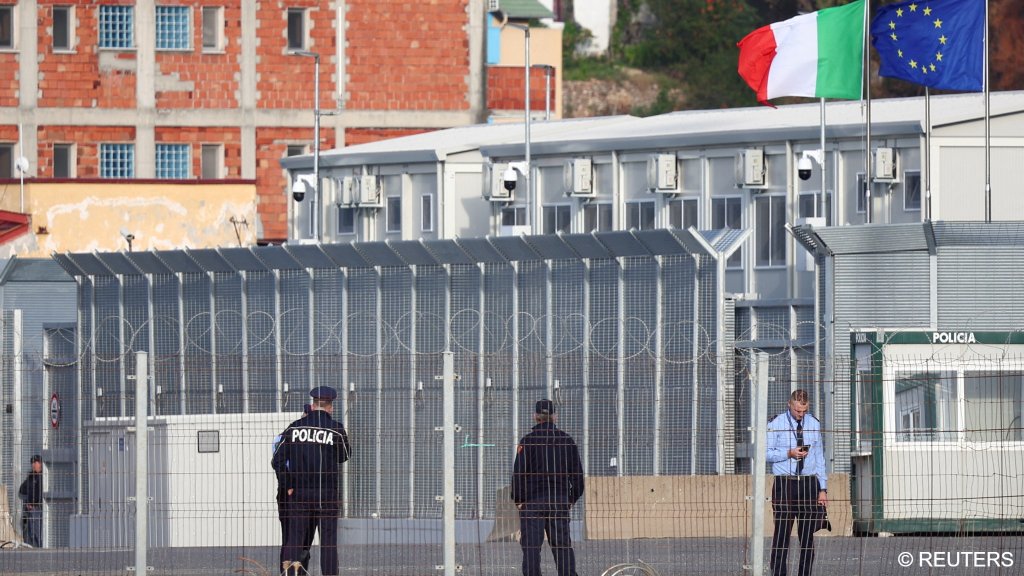
Italy already has an agreement with Albania in place to move migrants for processing and potential deportation there — however, the Italy-Albania deal was initially designed to process non-vulnerable migrants intercepted at sea, rather than to house asylum seekers who have been rejected by Italy prior to deportation. After several failed judicial attempts to detain migrants intercepted at sea in Albania, Italy began trying to send rejected asylum seekers who were already in deportation prisons within Italy to Albania. But even under this strategy, very few people have actually been sent to Albania, or been deported from there.
Certain EU members such as Spain and France, however, have voiced their opposition to return hubs.
Read AlsoFive EU states target 2027 for first migrant 'return hubs' outside bloc
Lessons from UK's failed Rwanda scheme
Rwanda has long been touted as a frontrunner for months, alongside Uganda and Uzbekistan; officials in Uganda have confirmed that they had been approached by EU officials on the matter, after Rwanda made similar remarks in August about having entered preliminary talks with EU partners on the divisive subject.

Read AlsoEU reported to be considering 12 possible countries to site migrant 'return hubs'
Rwanda already has some infrastructure in place that was leftover from a previous attempt to partner with the UK in its attempts to cut migration numbers; that plan, however, collapsed in 2024 with a change of government in Britain and a failure to launch the plan due to legal blocks.
It is unclear whether the EU nations working with Rwanda are planning to make use of those now-abandoned facilities; however, Kigali's previous negotiations for a similar deal with Britain could prove to be advantageous for ongoing negotiations with the five EU members.
Read AlsoUK:The end of the Rwanda plan
'Outsourcing' migration: benefits and concerns
The introduction of return hubs comes as public opinion appears to have increasingly turned against migrants and refugees, resulting in a spike in support for far-right political parties across several countries in Europe.
In addition to removing people with no right to remain in the EU's member states to a third state, many hope that the policy might also have a deterrent effect on would-be migrants, who hope to embark on irregular journeys to Europe.

Read AlsoCouncil of Europe warns against outsourcing asylum
However, the initiative has also attracted widespread criticism, with opponents arguing that such schemes would ultimately result in an "outsourcing" of responsibility towards the affected migrants; many also fear that these migrants might end up in a legal no-man's-land between their country of origins and Europe's externalized borders.
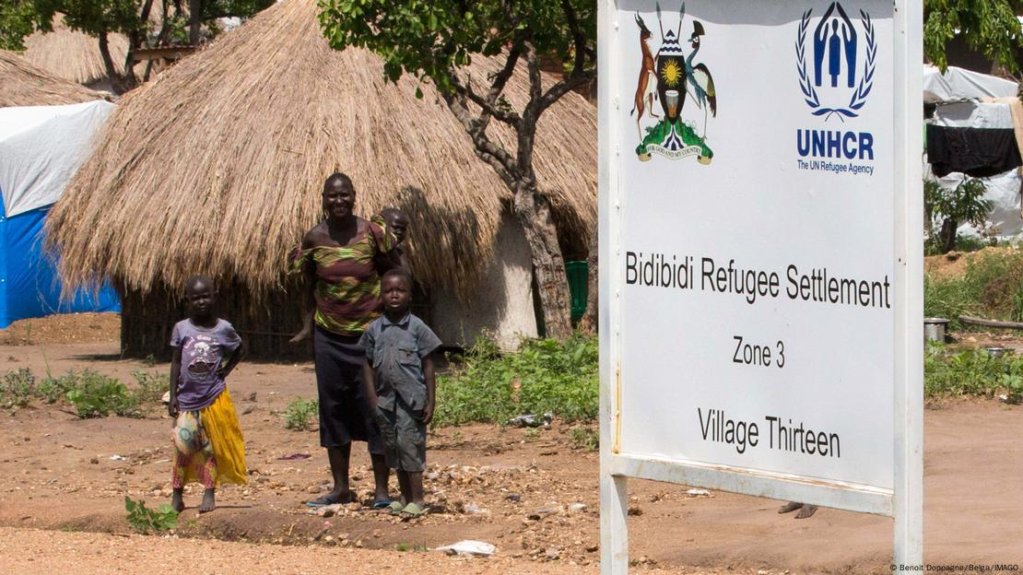
There is also criticism that third countries such as Rwanda might be treating offers by the EU to host migrant return hubs as a cash injection for their failing economies, while there are also warnings that some third countries might not be able to carry the burden of hosting failed migrants on account of already having large populations of displaced people within their own territories.
Read AlsoEU Pact on Migration & Asylum may 'legitimize violations' believes NGO
Rwanda's human rights' record
In Rwanda's case, in particular, there have also been concerns about the country's human rights' record amid mounting reports of a climate of dissident voices being silenced.
Earlier this week, a long-term government critic living in exile in neighboring Uganda was found beheaded with early investigations pointing potentially at a politically motivated nature to the cross-border killing.
Rwandan government critics have died in similar suspicious circumstances in other African nations in recent years. In 2021, DW listed 14 Rwandan government critics who they said had died in "suspicious circumstances" between 1996 and 2021. At the time, Sarah Jackson, deputy director of Amnesty International for East Africa, stated to DW that "being in the political opposition in Rwanda is quite dangerous."
"It is incredibly worrying to see these rising cases of disappearances and the impact that this has on the broader political context in Rwanda," Jackson told DW in 2021.
Critics of situating return hubs in countries like Rwanda point to these suspicions about the government's potential approach to human rights, to show that some being sent to the return hubs may not be safe in such an environment and could be under threat if their ways of being run in contradiction to the morals and ways of living promoted by the government of Rwanda.
Read AlsoMigrant offshoring: the EU's plan to deport more rejected asylum seekers under scrutiny