
Ten years ago, the "Great Jungle" of Calais was dismantled. In its wake, to prevent further large scale migrant arrivals, the French government implemented the so-called "zero fixed points" policy to prevent the re-establishment of giant shantytowns. While the Calais city council believes this security policy, although imperfect, was necessary, NGOs argue it has led to a humanitarian "disaster."
Nothing remains of the so-called "Calais Jungle." The horizon, once dotted with thousands of canvas shelters, wooden shacks, and metal containers, has now given way to a blank canvas, known as the "Site des Deux-Mers," this region east of Calais is where vegetation has reclaimed its territory. On October 24, 2016, a few hours before the dismantling of the "Great Jungle" in Calais began, launched by former Interior Minister Bernard Cazeneuve, between 6,000 and 10,000 migrants, according to various sources, were living on this vast green expanse, facing the English coast they so desperately wanted to reach.
Ten years later, Calais still pulsates — under the watchful eye of the media — to the rhythm of migration news. The migrants have not abandoned the site, they are still just as eager to reach British soil less than 40 kilometers away. But they are less visible. Since the clearance of the 'Jungle,' the authorities have experimented with a new doctrine: "zero fixed points." The goal, to avoid at all costs the re-emergence of vast migrant shantytowns.
That policy "doesn't work," Diane Léon, coordinator for Doctors of the World (MdM) in northern France, told InfoMigrants. "Not only do informal camps still exist, but they are scattered all along the coastline." Geographically, it's true, the map of the migrants' presence in the region has changed. Once concentrated in a single location, Calais, migrants are now dispersed along the entire coast from Dunkirk in the North to Le Touquet in the Pas-de-Calais region.
"It's primarily the points of departure [to England] that have changed," explains Charlotte Kwantes, one of the spokespeople for the association Utopia 56, which works with migrants in the area and across France. "The difference is that people no longer only leave from Calais, but from several towns further north and south."
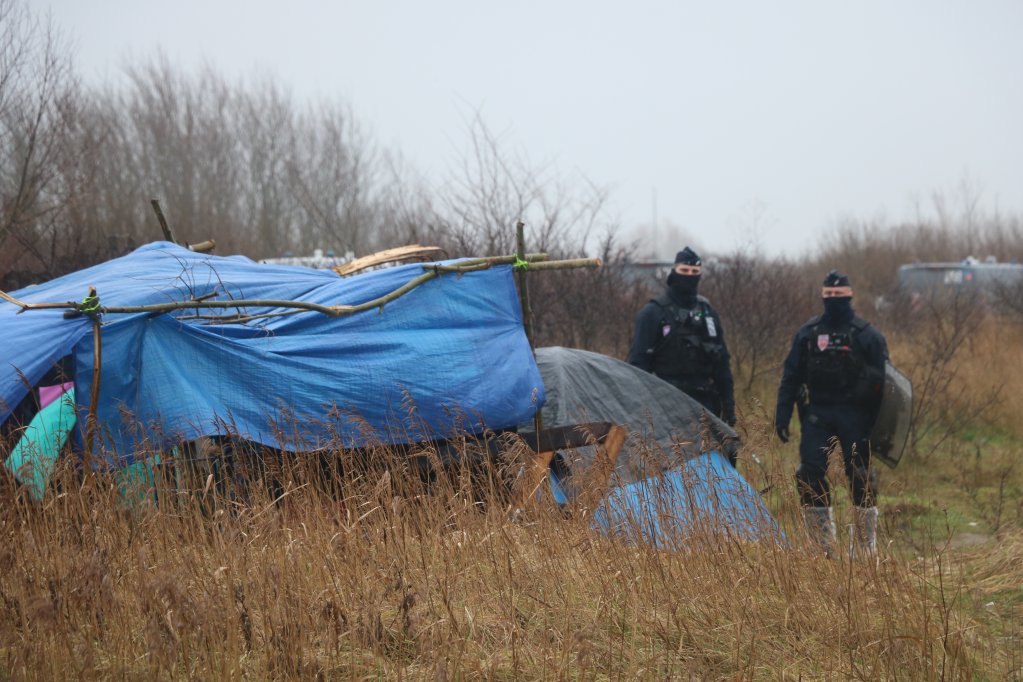
A policy bordering on the absurd, according to her. "It's as if the government thinks that by making the 'Jungle' disappear, it will make the migration problem disappear; it's completely delusional," continues Charlotte Kwantes. "The migrants who are here are at the end of their migration journey; the Channel is the last stop. It's an illusion to think they will leave. They will stay."
'A life of misery and isolation'
And this, even though living conditions have "deteriorated terribly." All the associations contacted by InfoMigrants say they have observed a collapse in the humanitarian situation on the northern coast: deterioration of informal housing, worsening health conditions for migrants, and a decline in administrative procedures. "It's horrific," explains Claire Millot of the Salam association, which has been present in northern France for years. "I wouldn't say the 'Great Jungle' was comfortable, but there was a certain level of organization, a concentration of associations with centralized access to rights, easy access to legal services, and access to water, food, and hygiene tolerated by the authorities. All of that is gone."
Today, migrants are becoming invisible, at the risk of disappearing completely from the radar of aid organizations. "They are looking for places inaccessible to vehicles by road to pitch their tents. And to prevent the arrival of demolition trucks and police vans," continues Claire Millot. In the Calais region, camp dismantling operations take place "every 48 hours," according to Human Rights Observers (HRO), which documents human rights violations against migrants.
"At the same time, they are becoming increasingly isolated from aid organizations. They have to walk for more than 30 minutes to reach food distribution points, they almost never take the bus for fear of being stopped and searched; it's a life of misery and isolation," adds Claire Millot.
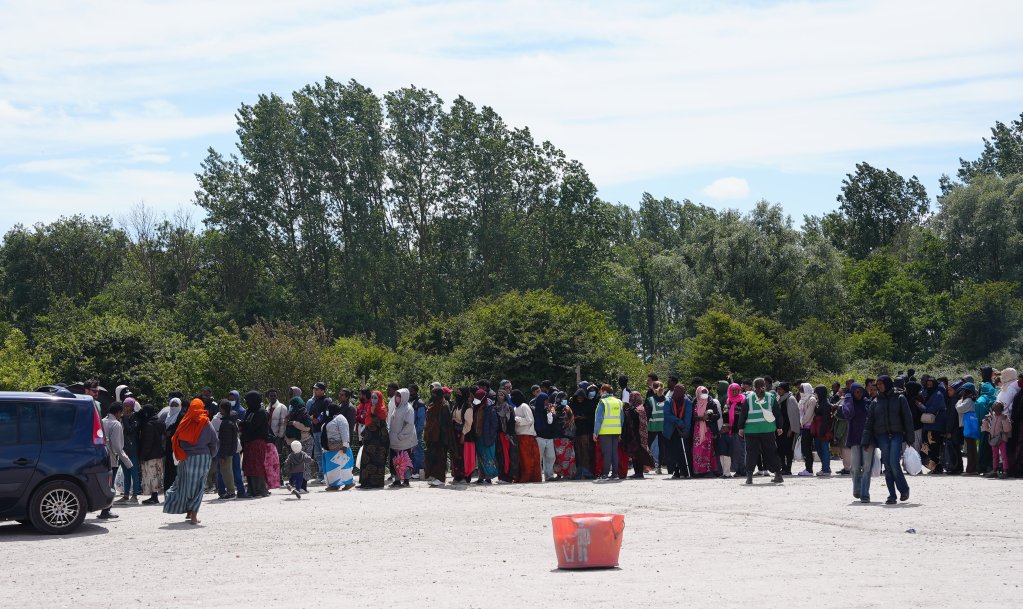
The state provides aid, but it is insufficient, argue the associations. "La Vie Active is present [a system set up by the state to distribute food to migrants in Calais, editor’s note]. But they often stop distributions even though there are people still in line. They have limited stock. When they leave, the migrants turn to us, which is normal, they're hungry," the activist explains.
The same sentiment is echoed at Utopia 56. "We also come across the Civil Protection, which is doing a fantastic job on the coast, but they don't have enough survival blankets or snacks," says Charlotte Kwantes. "Everything is designed so that the migration phenomenon doesn't last, so the state's programs run on minimal resources."
'Calais was condemned when it was the state that did nothing'
Natacha Bouchart, the mayor of Calais, who has been in office for 18 years, is keen to offer a more nuanced perspective. While she acknowledges the appalling living conditions of the migrants and deplores the central government's disengagement in Calais – "Paris doesn't care" – she nevertheless defends the current policy of "zero fixed points." While not a panacea, "it's the most efficient solution for the time being."
Dismantling the 'Jungle' was inevitable, according to her: "Otherwise, the number of people would have gone from 10,000 to 20,000. [At that time], we faced significant crowd surges as people flooded the port ring road to board the ferries. We experienced many clashes… It was complete anarchy."
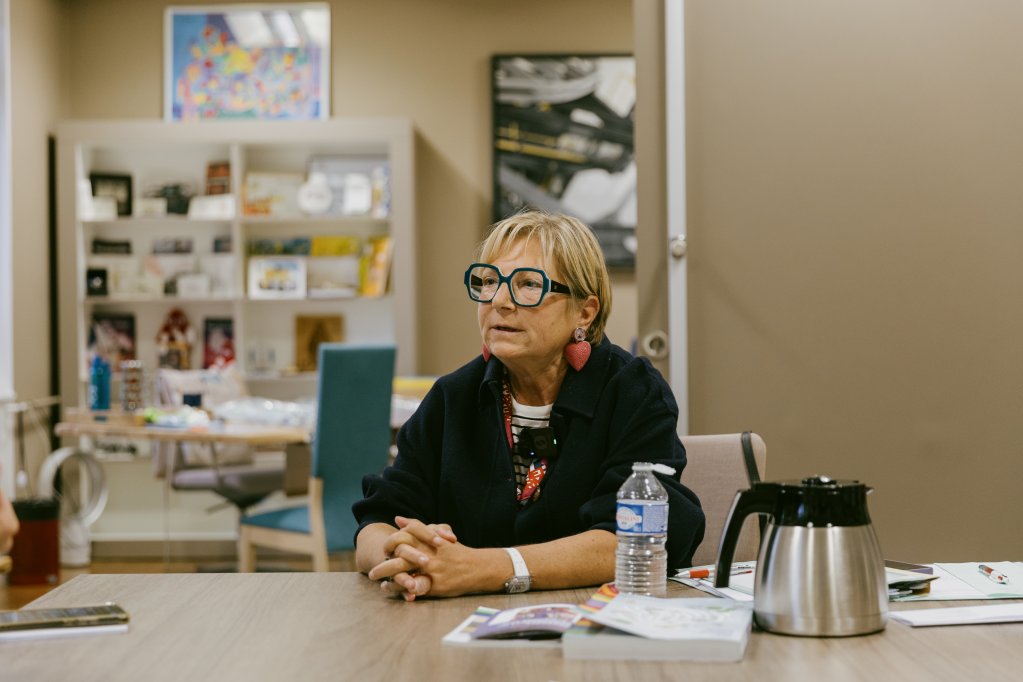
The mayor wants to defend "the right to live in peace without unsanitary camps under the feet of Calais residents," and justifies the "militarization" policy of the port of Calais, which intensified after the dismantling of the 'Jungle' camp. To prevent intrusions into trucks, a wall more than four meters high was built along the port ring road, and a high-security fence was installed for dozens of kilometers around sensitive areas.
"If the port of Calais and the Channel Tunnel hadn't been secured, they wouldn't have been able to function," she explains, before mentioning the economic hardship of her city, a victim of a bad reputation that clings to it. "During the 'Jungle' era, we experienced difficult years with the closure of shops, businesses leaving the area, and an unemployment rate that climbed to 18 percent. My city was condemned when it was the state that failed to manage this place."
'A policy with no impact on crossings to England'
As a consequence, the militarization of the border had another impact: it changed the way crossings to England were carried out. "After the dismantling of the camp, smugglers turned to the sea route," Natacha Bouchart points out. The English Channel became the preferred route for traffickers starting in 2018.
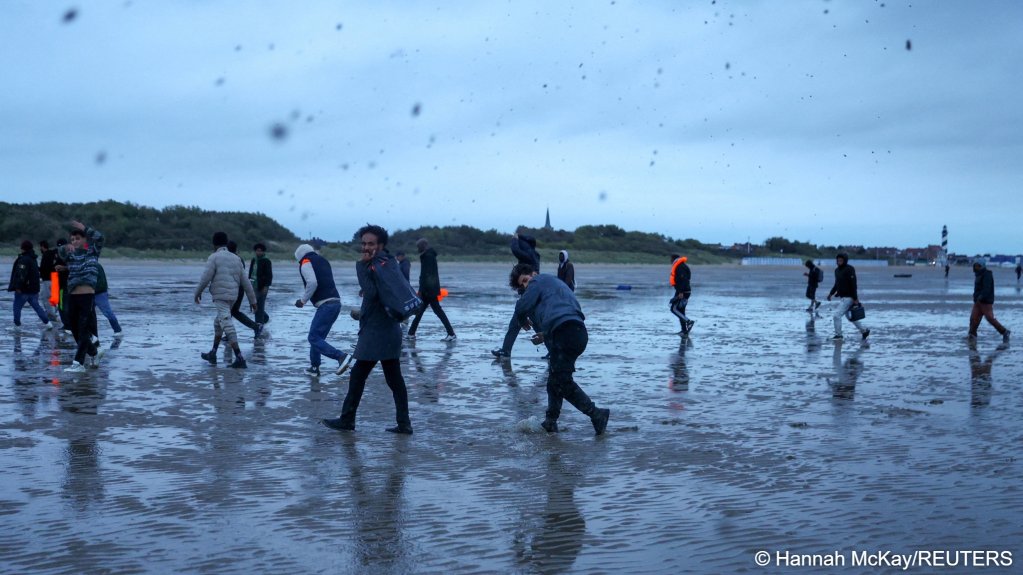
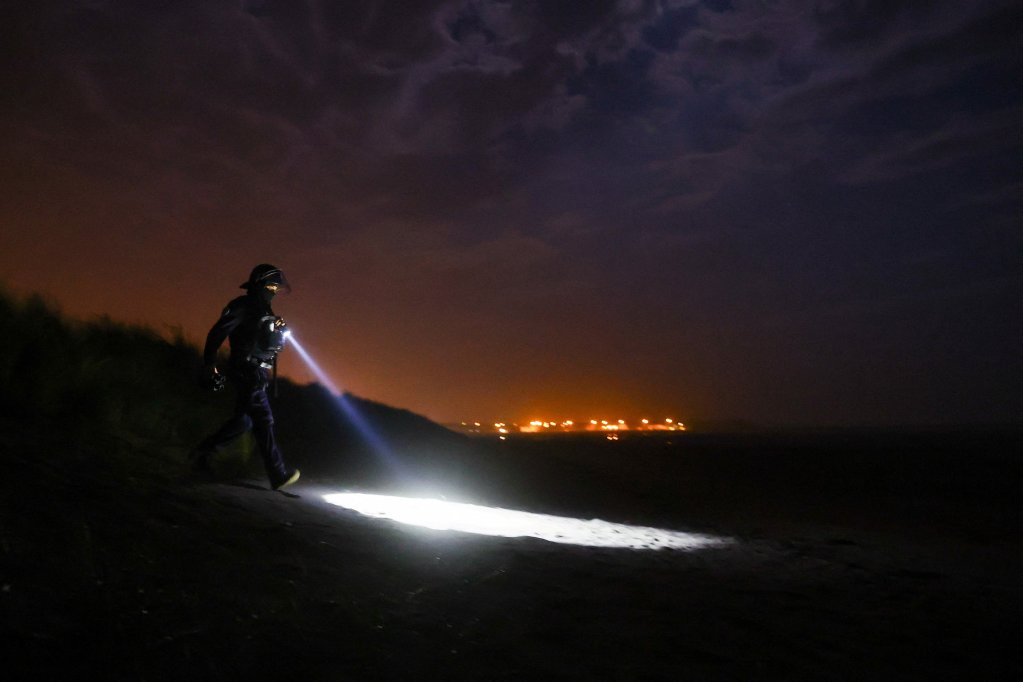
Here again, to stop illegal crossings, the state’s response has been security-focused. Through bilateral agreements with London, significant British funding, and the purchase of cutting-edge technology, Paris is doing everything possible to secure its maritime border. On the beaches, getting past the police is a real challenge.
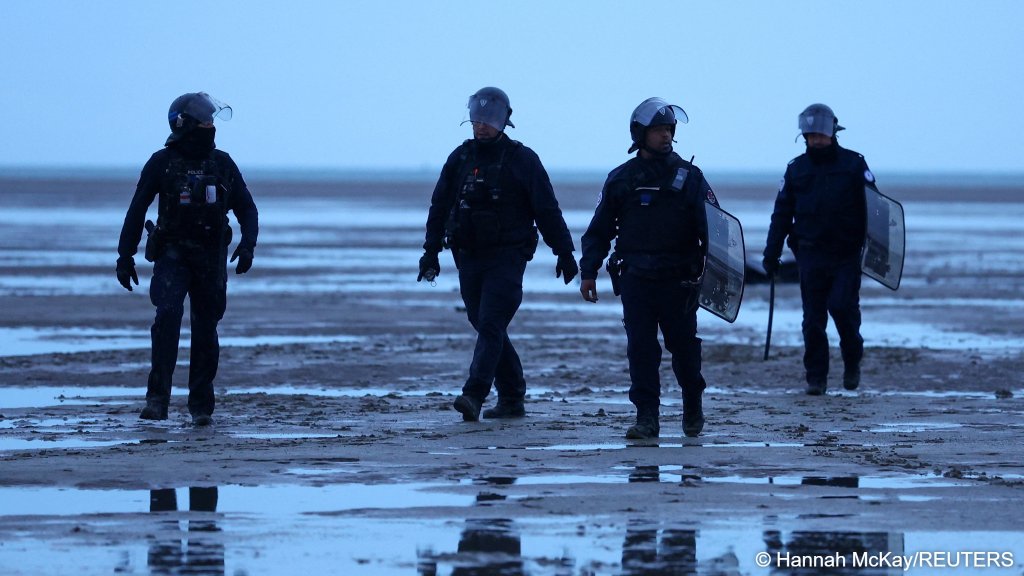
Inevitably, clashes between police and migrants are becoming increasingly frequent. "There's tear gas being fired, panic ensues…" says Marianne Bonnet, a member of Doctors Without Borders (MSF) on the northern coast. "Not only is this policy causing a lot of damage, but it has no impact whatsoever on crossings to England. That's what's incomprehensible. Look at the numbers!"
More than 200,000 migrants have entered England irregularly in the last eight years, according to the latest statistics from the British government. Furthermore, "the border has never been so deadly," adds Diane Léon of MdM. There have already been 22 deaths recorded since the beginning of the year. There were 29 of them in 2025.
'Not enough supplies, not enough food'
Over the years, the migrants' mental and physical health has also deteriorated. New problems have emerged. "Like the constant dilemmas: going to a food distribution point means taking the risk of not finding your tent destroyed by law enforcement when you return. You always have to sacrifice something," explains Diane Léon.
Today, aid organizations are worried about the future, the future of the migrants of course, but also their own. Because despite a "strong network of support" in the region, money is running out. "In 10 years, our needs have changed. There are so many dismantlings and destructions of property. We don't have enough clothing in stock, not enough food anymore," worries Alexandra Limousin of the Auberge des Migrants (Migrant Hostel), a long-established organization in Calais. "Not to mention the fines we get for illegal parking when we park our vehicles on the coast."
"It's truly a disaster," she laments. "If I had to sum it up, I would say that the mayors [of the coastal towns] are on the front line, alone, and that the associations are doing what they can, alone. Yet, there have been migrants here for 30 years. Good grief, when are we all going to sit down together around a table and finally talk?"