
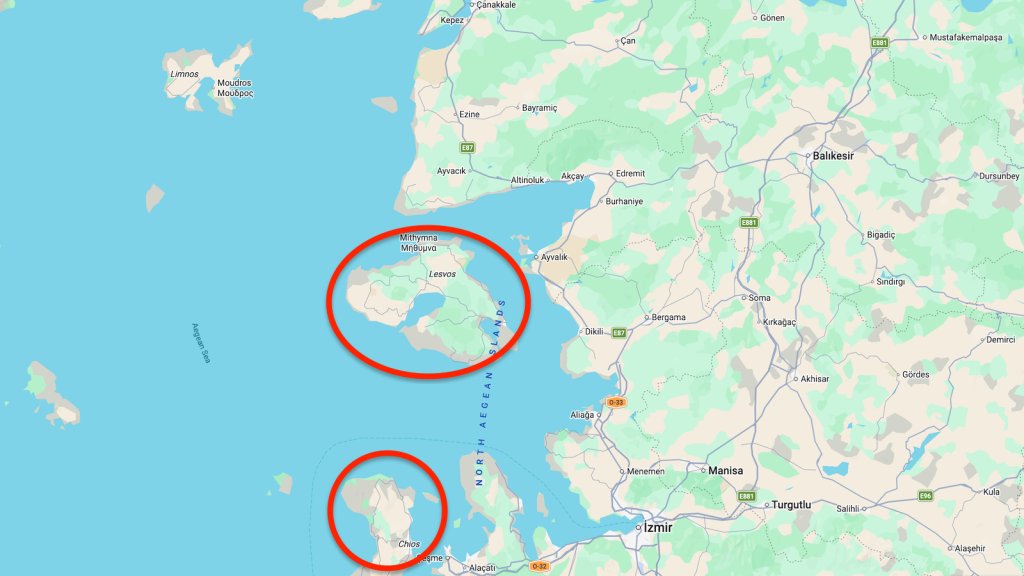
A total of 12 people, including one baby, died in the early hours of October 19 in the Aegean Sea, according to the Greek coast guard. Six people died near Lesbos after a migrant boat hit a coast guard vessel in the dark. Five men and one woman died off Samos when the speedboat on which they were traveling overturned following a "sudden maneuver."
Among those killed in the incident off Lesbos were four men, one woman and one baby, according to a report on the Greek news platform ekathimerini.
Eight migrants meanwhile were rescued from the incident just several kilometers away from the Aegean island — four men, two women and two children; they were all taken to hospital on Lesbos to receive medical treatment.
There were no further individuals unaccounted for. In this incident, a 37-year-old Turkish national was reportedly arrested on suspicion of migrant smuggling.
The nationalities of the passengers of the small vessels have not been made public at this point.
In a separate incident off the island of Samos, five men and one woman died after the speedboat on which they were traveling made a "sudden maneuver" and overturned. Both boats, reported the news agency Reuters, were being followed by the Greek coast guard at the time.
In this incident, 14 men are reported to have survived. One of them, an Iranian national, has reportedly been arrested on suspicion of migrant smuggling. A search and rescue mission is ongoing in this area, reported DW.
The Greek government has vowed zero tolerance towards migrant smugglers and blamed them for the deaths of the migrants.

'Sadness and anger'
According to reports, the migrant vessel off Lesbos was a speedboat, which had departed from the nearby Turkish coast.
After being discovered, a chase ensued, during which the small vessel collided with the much larger coast guard ship and then overturned, resulting in the casualties.
The migrant deaths are believed to have occurred as some of the passengers of the speed boat fell into the sea.
An investigation has been launched to establish the exact series of events that resulted in the deaths at sea.
The Minister of Shipping and Island Policy, Vassilis Kikilias, said on X that he felt "sadness and anger" over the incident at sea.
The event was the second deadly incident at sea this year, which involved the accidental ramming of a coast guard boat.
In the previous incident, 15 Afghan migrants died after their inflatable speedboat collided in the dark with a Greek near the Aegean island of Chios in February.
Read AlsoGreece: At least 15 migrants dead after boat collision off Chios
Man arrested on suspicion of people smuggling
A 37-year-old Turkish man was among the survivors from the incident near Lesbos, and is believed to have been in charge of maneuvring the boat, which Greek authorities say places him under suspicion of being a smuggler.
The man has since been taken into custody on those charges as well as for potentially causing the fatal accident at sea.
Last year, Greece introduced new laws under which migrant smugglers will face considerably harsher punishments if and when caught.
Read AlsoMigrants cross from Turkey to small Greek island on speedboat
Most irregular journeys fail in securing asylum
Each year, tens of thousands of migrants continue to embark on dangerous — and often deadly — sea journeys in the hope of reaching Europe.
People smugglers charge them steep sums to support their irregular journeys — in particular the final leg, which in most instances involves the crossing of the Mediterranean Sea.
Most irregular migrants hope to ultimately journey further into Western Europe; however, those found to have landed in Greece are placed under Greek jurisdiction for their asylum applications.
According to UNHCR data, more than 25,000 migrants have arrived in Greece via sea routes between January 1 and October 11 this year. More than 31,989 have arrived in total via sea and land routes.
Nationals from Sudan and Bangladesh make up the majority of arrivals by sea. Most of them arrive from Libya and tend to land on southern Greek islands like Crete and Gavdos. Afghan nationals make up the largest group of migrants who normally attempt to reach Greece from Turkey across the eastern Aegean. According to the UNHCR, Afghan nationals accounted for around 8.4 percent of arrivals by sea between the beginning of January and the end of August this year.
Read AlsoGreece: Government notes significant fall in sea arrivals
EU 'return hubs' likely to change migration patterns
Even those who cannot be sent back to their home countries — for example, due to a lack of a returns agreement between two states — find themselves in a difficult situation:
Typically, they are placed in detention centers with very little support and under conditions, which various NGOs and rights groups have described as "prison-like."

Read AlsoEU ministers mull new ways to curb irregular migration
Recent EU initiatives meanwhile include plans to move such people to so-called "returns hubs" in areas outside the bloc, with several member states currently leading talks with various countries outside Europe to host those migrants in exchange for cash; several EU countries hope that the first of these facilities will be operational by 2027.
The European Union hopes that this major policy change will discourage both migrants and their smugglers from embarking on dangerous journeys to the European continent.
Read AlsoEU pushes ahead with plans for migrant return hubs outside Europe
with Reuters and AFP