
As Syria enters a fragile post-Assad recovery, large-scale returns from neighboring countries contrast with comparatively low numbers from Europe -- where many Syrians still face uncertainty over their protection status. Nevertheless, the German government hopes to accelerate the returns.
Almost two years after the fall of Bashar al-Assad, Syria is undergoing a partial and uneven normalization. Nearly four million Syrian refugees and internally displaced people have returned since December 2024, but the UN warns that return is often the beginning of another struggle rather than the end of displacement. However, the number of returns from European countries remains much lower.
Between December 2024 and August 31, 2026, around 1.8 million Syrian refugees returned from neighboring countries, including Turkey, Lebanon, Jordan and Iraq, according to UNHCR. Over the same period, more than two million internally displaced people returned to their areas of origin. Almost 3.9 million Syrians remain refugees abroad, accoring to the UNHCR.
The UN has described the return movement as evidence of real recovery and of Syrians' determination to rebuild their lives. But earlier this week, Mohamed Yahya, the UN Assistant Secretary-General for Humanitarian Affairs, told the Security Council that "returns do not mean that humanitarian needs are over," adding that for many families return marks "a beginning of a new struggle."
Why return remains difficult
Many returnees face damaged or destroyed homes, scarce employment, damaged schools, hospitals, water systems and electricity networks, the UN said. There are also significant protection risks including disputes over housing, land and property and missing civil documentation. More than 5.5 million people remain displaced inside Syria, and more than 770,000 still live in camps, three-quarters of whom are women and children.
Explosive contamination remains a direct barrier to return and recovery. The United Nations Office for the Coordination of Humanitarian Affairs (OCHA) reported at least 2,500 casualties from mines and explosive ordnance since December 2024, including more than 900 deaths; children account for one in three deaths. Most incidents occur in areas of high return and on agricultural or grazing land.
"The goal must not be simply to help families return, but to concretely help them stay and rebuild their lives," Yahya said.
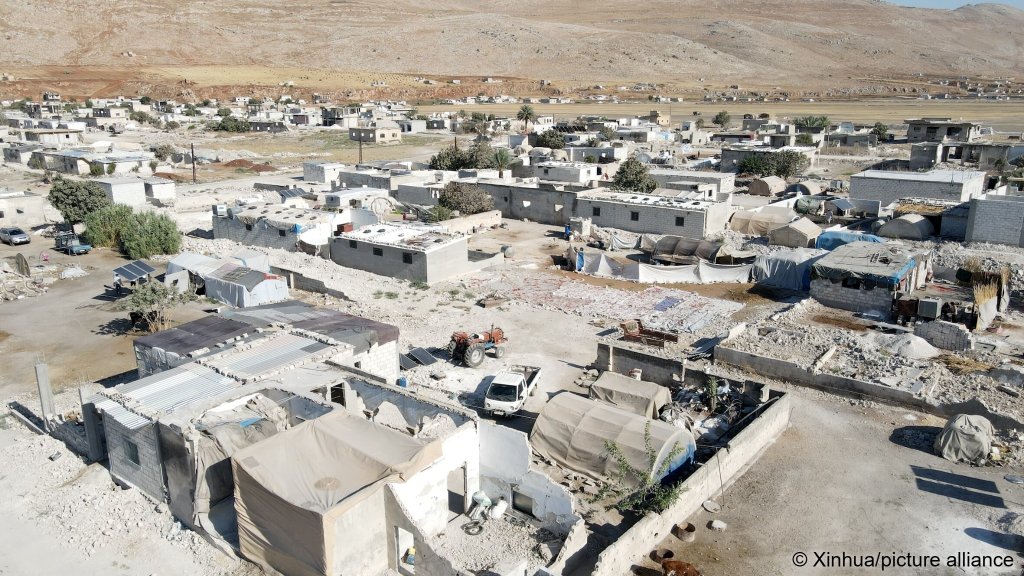
Climate related factors also play a major role in rebuilding the country's agricultural sector, as it faces its worst crop failures in 36 years due to drought-like conditions. The country’s main water resources are also affected, with over 10 million people struggling to access basic water needs.
Years of conflict have left Syria’s healthcare system severely strained. Many returnees also face limited access to basic services, difficulties finding work, missing or damaged documents, and the ongoing risk of explosive ordnance -- landmines, unexploded bombs etc. Therefore, according to the UN, humanitarian assistance is likely to remain essential for the foreseeable future.
Read AlsoSyria welcomes Belgian and German delegations to talk development and returns
Europe’s comparatively small contribution
Germany and Sweden have hosted the largest Syrian refugee populations in Europe since the conflict began in 2011, yet their official assisted-return figures remain modest. By late August 2026, Germany’s assisted-return figures stood in the low thousands, while Sweden’s were in the low hundreds.
Turkey previously hosted over 3.6 million Syrian refugees, this has now fallen to around 2.2 million while almost 900,000 are still in Lebanon, close to 350,000 in Jordan and over 300,000 in Iraq according to UNHCR figures. By the end of April 2026, 640,000 Syrians had returned from Turkey, 630,000 from Lebanon, and 285,000 from Jordan.
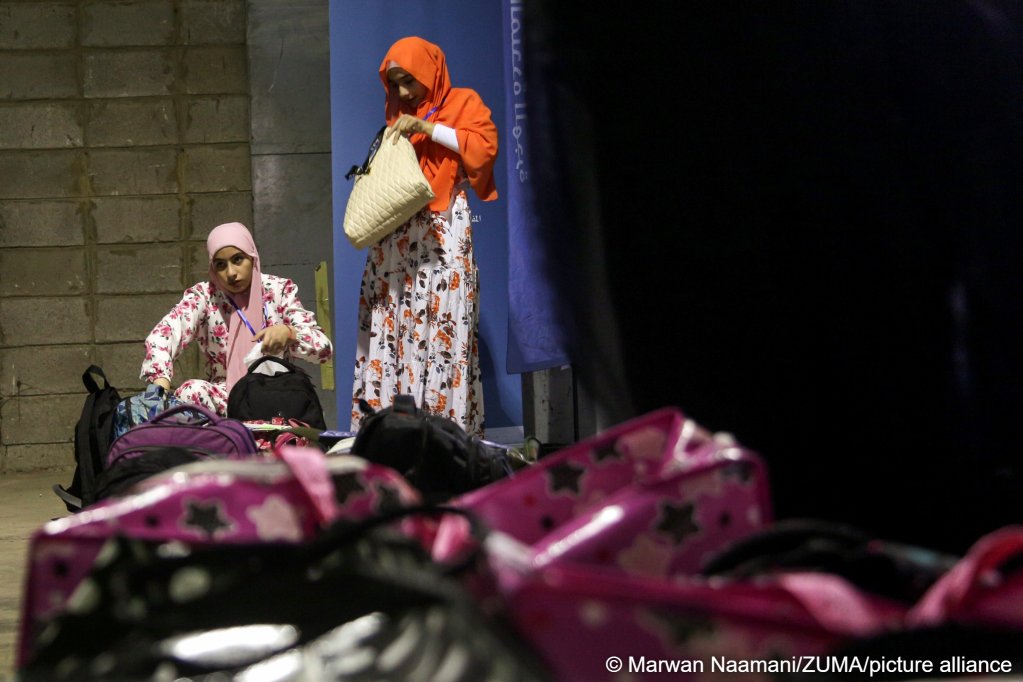
In Germany, the distinction between voluntary departures and state-supported returns is significant. A survey by the Neue Zürcher Zeitung of the relevant ministries in Germany's 16 federal states, found that 12,227 Syrian nationals had voluntarily left Germany for Syria between 2024 and October 2026: 1,355 in 2024, 6,243 in 2025 and 4,629 in 2026 to date.
By far the largest number of Syrians returned from Bavaria. Since 2024, the state has recorded a total of 4,125 voluntary returnees to Syria. By contrast, the fewest left Hamburg, with only 77 Syrian nationals departing since 2024.
That total is greater than the number of formally assisted returns because not every departure is registered and not every returnee claims government support. BAMF has supported voluntary returns with an average payment of 1,000 euros, while the government has considered raising the amount to 7,000 euros to strengthen the incentive to leave.
Read AlsoGermany: Interior Minister wants more deportations, especially of criminals
Germany’s protection review
This week in the German tabloid Bild, it was reported that the German government was attempting to send letters to "thousands of Syrians," potentially notifying them that their status might change now that Syria was no longer classified a dangerous place for them.
However, Germany's Federal Office for Migration and Refugees (BAMF) has rejected suggestions that it is conducting blanket or "cause-free" revocation reviews of Syrian protection status. It says all current or completed reviews are case-specific and triggered by particular grounds, such as requests from security or immigration authorities, travel to Syria, criminal offenses, or concerns relating to Islamist extremism.
"To date, there have been no cause-free revocation reviews, including for Syrian nationals," a spokesperson told InfoMigrants.
BAMF's September 2026 statistics show that 39,234 revocation or withdrawal proceedings were pending at the end of the month. Between January and September 2026, the agency made 36,614 revocation or withdrawal decisions across all nationalities; 9,795, or 26.8 per cent, resulted in revocation or withdrawal. Syrians accounted for the largest group, with 11,069 decisions.
The Syria-specific trend is sharper. Refugees International found that Germany reviewed 8,320 Syrian protection cases in the first half of 2026, with 23.2 per cent resulting in withdrawal or revocation of protection, compared with 3.7 per cent in 2025 and 3.1 per cent in 2024.
That does not mean however, that nearly a quarter of Syrians in Germany have lost protection: the percentage only concerns completed reviews, not the overall Syrian population. But it indicates that protection status has become materially less secure for those whose cases are examined.
Read AlsoGermany: Protection revoked in 1 in 6 reviews of Syrian asylum cases
A difficult choice
The combination of large-scale regional returns, persistent humanitarian needs and tighter protection reviews highlights the central tension in Europe’s approach. Syrians may be returning in large numbers from Turkey, Lebanon, Jordan and Iraq, but for those in Germany and Sweden who still depend on refugee status or temporary protection, the decision is more difficult: whether to return to a country where housing, services, livelihoods and security remain fragile, or remain abroad amid growing uncertainty over their legal status.
Refugees International warns that pressure to leave host countries is growing faster than Syria’s capacity to receive and reintegrate returnees. It argues that success should be measured not by the speed of returns, but by whether they are voluntary, safe, sustainable and permanent.
Read AlsoGermany: 10 years of 'Integration Act' for refugees
With KNA