
Sexual exploitation remains the most common form of trafficking. For the first time since data collection started, cases of organ trafficking were recorded. Overall, cases of human trafficking treated at special counselling centers are on the rise, indicates the latest report from German NGO Network against Trafficking in Human Beings (KOK).
A new human trafficking report shows an increased number of cases of human trafficking in 2025, a small but growing number of victims from South America, and the first recorded organ-trafficking cases in Germany. The cases highlighted in the new report come from case files from participating counselling centers and do not always tally with cases reported to the police.
The report, which was presented by the German NGO Network against Trafficking in Human Beings (KOK) during a briefing on Wednesday (October 14), documents how many of these people ended up being trafficked, often via recruitment through dating apps, modeling opportunities and false employment offers.
Data collection for the study covered January to December 2025 and drew on the voluntary submissions from 22 specialist counseling centers such as women's centers in Germany.
An increase in the number of cases
The report found that there were 999 registered cases of human trafficking dealt with by the centers in 2025, up from 868 the previous year.
- Nigeria remained the largest individual country of origin among victims, although the proportion fell from 24 percent to 16 percent
- South America accounted for five percent of cases, up from three percent the previous year
- Three organ-trafficking cases were recorded
- Trafficking classification: 74 percent of cases involved forced sex work and 81 percent human trafficking. Labor exploitation was identified in 13 percent and forced labor in seven percent of included cases (Multiple classifications of trafficking were possible. That means, a case classified as sexual exploitation can also be classified has having elements of forced labor)
- Gender split: Women and girls accounted for 80 percent of victims, men were listed at ten percent and gender-diverse people at one percent
- Age segmentation: Largest age group affected was people between 30–39 (35 percent) followed by people between 22–29 (33 percent)
- Cases that involved minors: 13 percent of the cases analyzed were minors
KOK explained that unlike police statistics, the dataset analyzed in the study includes people whose experiences have not resulted in completed investigations — or any investigation — and examines their access to protection and support.
In terms of general trends, West Africa accounted for 44 percent of cases. Alongside Nigeria, prominent countries of origin included Guinea and even people from Germany. In fact the proportion of trafficking cases originating from Germany rose from approximately eight to 11 percent.
"It has not registered with society that human trafficking happens here, on our doorstep," said Margarete Muresan, a KOK board member who heads counseling services in Berlin and Brandenburg.
KOK stressed that the findings are not nationally representative and that the increase in the number of recorded cases cannot be read as a measured nationwide rise in trafficking.
Read AlsoExplainer: The EU's anti-trafficking directive
Promises of work, followed by exploitation
The findings in the KOK study echo similar trends in the 2025 European Union report on trafficking.
The findings indicate that trafficking for the purpose of sexual exploitation continued to be the most prevalent form of exploitation in the EU during the reporting period 2021-2022 (49 percent) although it shows a slightly diminishing trend (from 51 percent).
The most common method to recruit young women and girls for sexual exploitation was the 'lover-boy method.' Traffickers pose as potential romantic interests on social media or dating apps to gain trust and later on develop emotional dependence to lure the victims into exploitation.
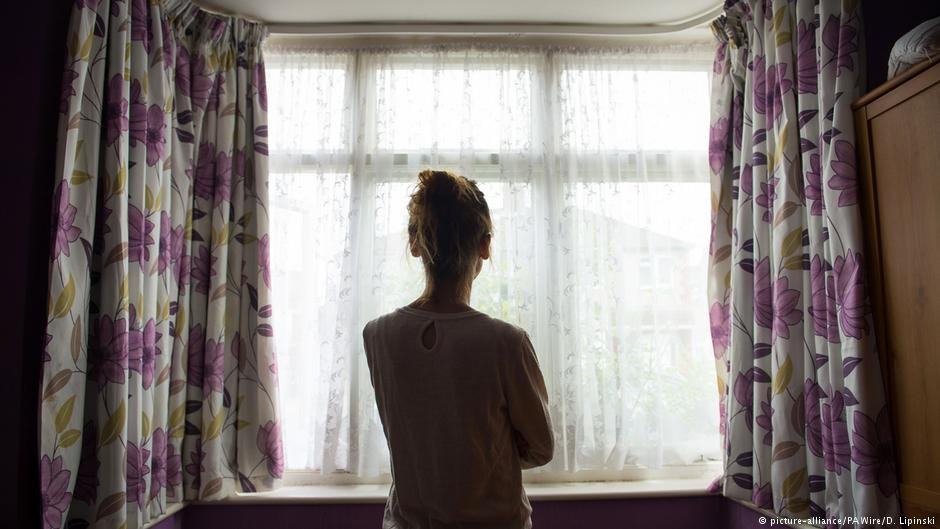
According to the report, most member states and Europol also noted that most recruitment for sexual exploitation took place in an online universe that included dating apps, escort sites and adult websites.
The EU also noted an increase in the number of women and transgender people from Latin America trafficked for sexual exploitation.
Victims from Latin America reportedly enter the EU from different entry points, sometimes taking advantage of visa liberalization regimes, and are then moved further to the locations where exploitation takes place.
The report highlighted Poland as a case study. Statistics in 2022 showed a 476 percent increase in identified victims of human trafficking from Latin America compared to 2021. Those recruited and trafficked were mostly from Colombia, Guatemala, Venezuela, Mexico and Peru. Victims of sexual exploitation from sub-Saharan African countries such as Nigeria, the Democratic Republic of Congo, Cameroon, Somalia, Ivory Coast and Kenya, were also reported in many member states.
Read AlsoEU to strengthen Europol against rising digital and cross-border crime
Exploiting trust
Meanwhile, case studies in the KOK study detail the recruitment tactics and movement of trafficking victims from one EU state to another.
One case study, for example, described two young Latin American women exploited as escorts in Germany. The perpetrator recruited one through Tinder, promising work in a nail salon. When he said he needed another employee, she recommended a friend.
After the friend arrived, both were told they owed substantial travel debts that could be repaid only through forced sex work. Their passports were withheld. Police referred them to specialist support after three months.
Another case study highlights the story of M. J., a Venezuelan woman recruited through school contacts by a modeling agency. Sent to Spain, she was forced into sex work to repay alleged debts. Subsequent attempts to find work led to further exploitation in Germany.
Although recognized as a trafficking victim in Spain, she later fell victim to another network. German police identified her in 2025, and Stuttgart’s Fraueninformationszentrum (Women's Information Center) secured shelter, benefits and support towards an apprenticeship.
In another case that involved a man, the report described a Moldovan man promised legitimate employment in Germany. Instead, he was confined and pressured to commit violent burglaries. He escaped by stopping a police patrol and subsequently received cross-border support from counseling organizations.
According to KOK, these case studies illustrate how gaps in protection can leave survivors exposed to repeated exploitation.
Read AlsoEU proposes sanctions against migrant smugglers
Protection before prosecution
Investigations were recorded in 36 percent of cases that were brought to the KOK network's attention, up from 31 percent. Amid an increasing number of cases, funding shortages forced some centers to restrict admissions. One center lost funding, reduced staff hours and closed a safe house.
KOK has called for reliable funding, earlier identification, national referral mechanisms and secure residence options independent of cooperation in criminal proceedings.
Read AlsoThe EU Pact on Migration and Asylum: Questions answered