
The north African Spanish enclave of Ceuta has been regarded as a beacon of religious coexistence among Muslim and Christian communities. But following mass arrivals of migrants at the end of July, tensions are surfacing among the multicultural residents of the enclave and also between Spain and neighbor Morocco.
Spain’s King Felipe VI and Queen Letizia are making an official visit to Ceuta today (October 13). An announcement from the government said that the royal couple was accompanied by the Minister for Territorial Policy and Democratic Memory, Ángel Víctor Torres and was met by Ceuta’s president, Juan Jesús Vivas.
The King and Queen are also scheduled to visit Vicente Aleixandre public school and its surrounding neighborhood, "where children are educated in a multicultural environment that respects different faiths."
The royal visit comes as the Spanish and Ceutan authorities scramble to manage their largest humanitarian crisis triggered by the mass arrival of more than 70,000 migrants, who crossed over to the Spanish enclave by swimming or climbing the fence from Morocco in July.
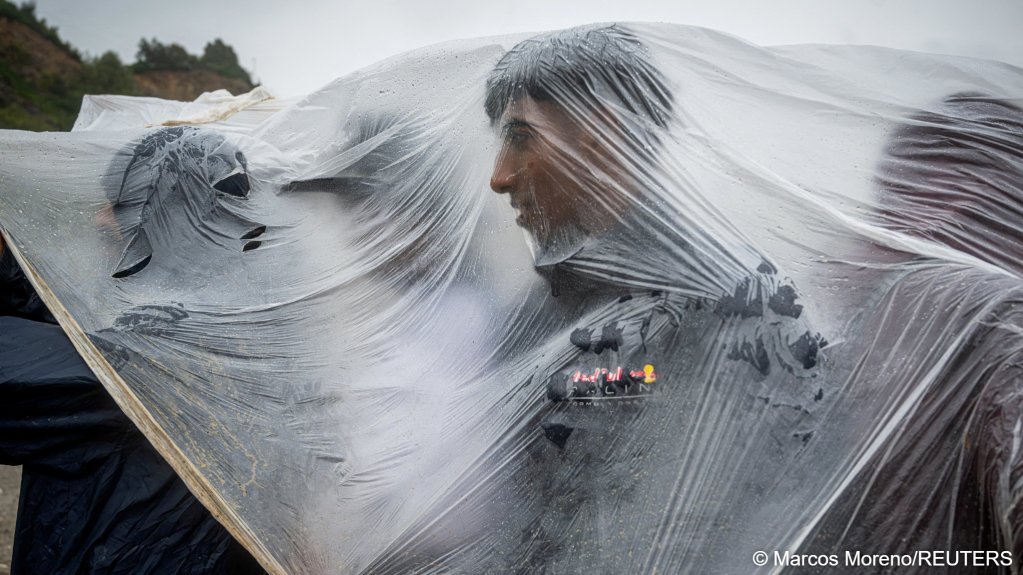
On Sunday (October 11), the police cleared the last major makeshift camp and informal settlement ahead of the royal visit. Most of those who arrived irregularly returned to Morocco within days following the mass arrival in late July. However, ten weeks on, thousands of migrants are reported to be sleeping on beaches and in public spaces.
Read Also
Ceuta: Last migrant camp cleared ahead of King's visit
Local tensions
Ceuta has long held a reputation for being a beacon of religious coexistence, with the Spanish enclave being home to Muslim and Christian communities of almost equal size, alongside smaller Jewish, Hindu and Roma populations. The strain on Ceuta's local resources has brought to the surface tensions amongst the multicultural residents.
A 2023 study by the University of Cádiz described coexistence in Ceuta and Melilla as generally peaceful, but identified residential segregation and limited participation across community boundaries. In Ceuta, some peripheral neighborhoods are populated almost entirely by Muslims, while Christians constitute most residents in the city center. Findings indicate that people of different nationalities, languages, beliefs and backgrounds made harmonious coexistence a practical necessity.
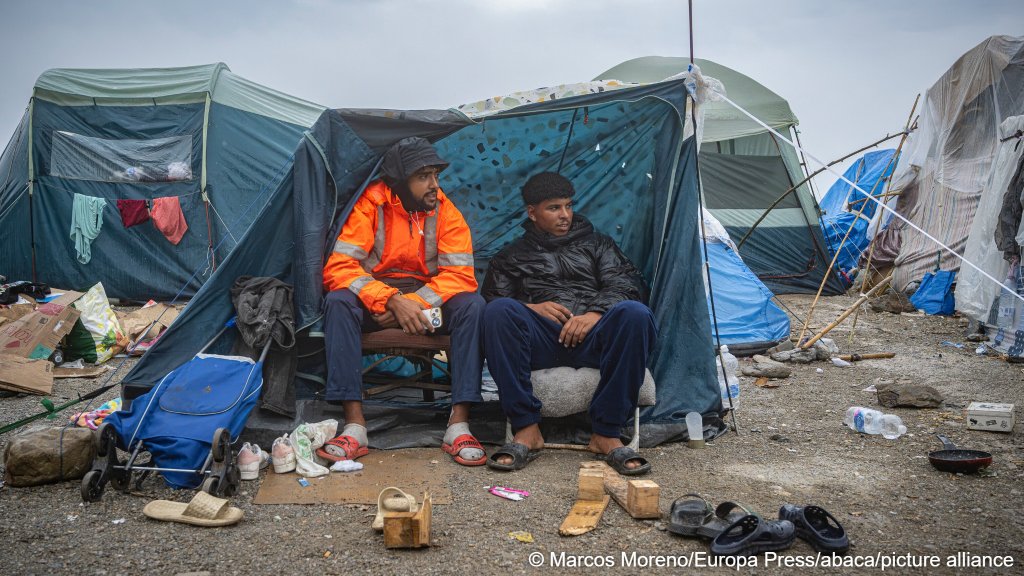
However, the research noted that there was little substantial cultural exchange or participation across communities. Their findings suggest that living peacefully alongside one another does not necessarily mean equal opportunities, close social relationships or integration throughout the city’s neighborhoods.
Economic inequality is adding another dimension to these social divisions. A Cáritas report published in December 2025 found that social exclusion affected 28.5 percent of Ceuta’s population, approximately 23,000 people, but that that social exclusion was greater in the Muslim population, where 44 percent of households were described as "marginalized." More than 15 percent experienced severe exclusion, almost twice the national rate, while 59.1 percent of people living in rented accommodation were at risk of poverty.
The study defined social exclusion as encompassing disadvantages beyond income and included barriers to housing, employment and participation in society. Yet the report also identified solidarity. A reported 16 percent of households provided help to others without receiving it themselves, placing Ceuta above the national average on that measure.
The two studies suggest a peaceful social life despite an underpinning of social exclusion by some sectors.
'The image of coexistence is a mirage'
Speaking to the French news agency Agence France Presse (AFP), local politician Mohamed Mustafa however explained that, in his opinion, the divisions have always been simmering just below the surface. The recent crisis has just exposed them and made them worse.
"The image of coexistence is a mirage," Mustafa said. "It’s a tourism slogan, but it doesn’t reflect reality."
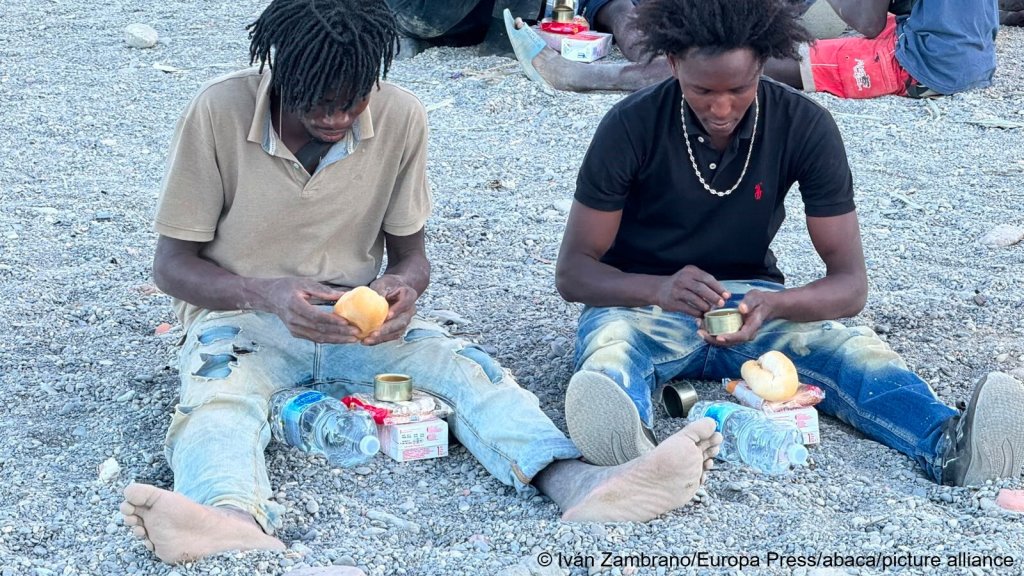
According to reports from the Associated Press (AP) news agency, many of the protests held by residents in Ceuta, to demand the Spanish authorities step up their efforts to clear the makeshift camps, have mostly been attended by those who trace their roots back to the Spanish mainland. Commenting on the feeling in the city since the end of July, the owner of an auto repair shop, Francisco Luna told AP he believed the atmosphere was "terrible" and that tensions between Muslims and Christians had increased.
Another local resident, Emilio Muñoz told AP he saw a "rift" in relations between the two communities since the end of July, but said he hoped residents could nevertheless move forward.
These tensions appear to be being mirrored at a national level too. On the eve of the Royal visit, Spanish broadsheet El Pais reported that according to unnamed sources, vessels from the Moroccan navy may have entered Spanish territorial waters at the height of the mass arrivals at the end of July. "Morocco's naval incursions continued during the first days of August, amid high tensions, and almost caused a collision between military boats from both countries," El Pais reported. The Spanish defense ministry has not yet commented these allegations, stated AFP.
However, a previous Royal visit to Ceuta by King Felipe's father in 2007 sparked a diplomatic crisis. Spain's current Prime Minister, Pedro Sanchez has sought to mend relations with Morocco during his eight years in power. However, last Friday, Morocco's King Mohammed VI hit out at what he called "the irresponsible statements made by certain political and media circles and their blatant instrumentalization of the situation," reported AFP. He wasn't responding to the most recent allegations published by El Pais but it is understood he was responding to more generalized Spanish claims, particularly from the right of the political spectrum, that Morocco somehow may have been behind the mass crossings.
Read AlsoCeuta: Allegations of excessive force used against migrants