
Nearly six million refugee children were out of school last year, the UN refugee agency has said, warning that funding cuts to UN agencies could worsen the situation. In Germany, EU asylum reforms intended to speed up refugee minors' access to regular classes are largely ignored, new research shows.
"When we left Sudan, I was worried that my education would stop," explained 19-year-old Jamila Mostafa to the UNHCR, while describing the difficulties that many children and young people face on the move. She was one of the estimated 13.1 million refugee children and teenagers of school age worldwide in 2025.
Luckily, for Jamila, with UNHCR support, she has been able to continue her high school education in Egypt. According to the UN, she has developed a particular interest in artificial intelligence (AI) and how it can help address social and economic challenges. She hopes to study technology at university.
"School gives me confidence," she said. "It reminds me that even though I lost my home because of the war, I have not lost my dreams."
Sadly, not everyone has been able to access education after being displaced. Close to half of displaced children, -- approximately 5.8 million -- were still out of school last year.
That's according to recent data from the UN refugee agency UNHCR, which is warning that funding cuts to UN agencies and mounting economic pressures threaten to reverse years of hard-won progress in refugee education.
In a press release published last week, UNHCR underscored that without sustained financial support and targeted policy measures, an entire generation risks being left behind.
"Education is protection. But it is also a pathway to opportunity and self-reliance," UNHCR chief Barham Salih is quoted as saying in UNHCR's latest annual report on education. "At a time of severe pressure on humanitarian and development financing, cuts to education risk reversing decades of collective investment and closing opportunities for a generation of young people."
Last month, UNHCR announced it was slashing its budget by 16 percent and reducing its headcount by 3,500 people.
Some 35.5 million refugees and others in need of international protection are under UNHCR's mandate. There are also nine million asylum seekers and roughly 69 million people displaced due to conflict or violence within their own country (IDPs).
Transition to secondary education
"We can't let our children stay like this without receiving education," says Zuhar, a Sudanese refugee and volunteer teacher at Ura refugee site in Ethiopia. "If we don't support them and help them to get education, who will do that?"
Before she fled to Ethiopia in search of safety and a future for her children, the mother of six worked as an English and geography teacher in Sudan. Arriving at Ura, she wanted to ensure that children fleeing the Sudan conflict wouldn't fall further behind in their schooling.
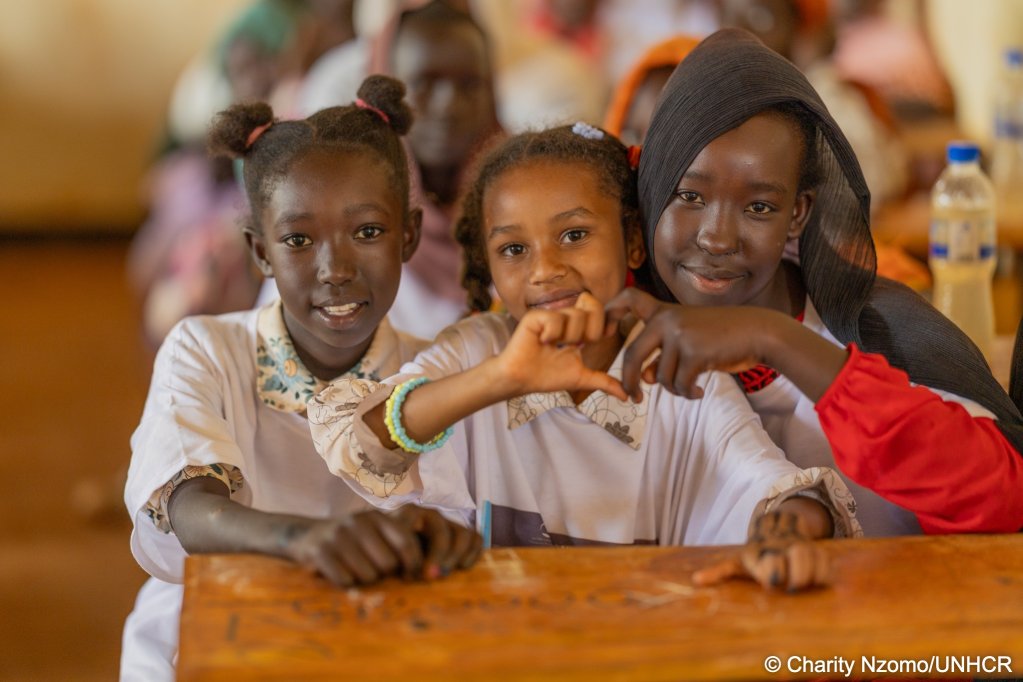
The UNHCR report on education highlights that while access to primary schooling has improved slightly over the years, the transition to secondary education remains a critical bottleneck for millions of young refugees. According to UNHCR data, enrollment rates plummet as children grow older, leaving a vast majority of refugee adolescents without access to secondary classrooms or vocational training.
Language barriers, the pressure to enter the workforce to support struggling families, and a severe shortage of qualified teachers and infrastructure in host communities further exacerbate the drop-out rates.
Beyond secondary level, the barriers to education become even more pronounced, with only a small fraction of refugees gaining access to higher education. Financial hardship, lack of legal documentation, and systemic discrimination often prevent young people from continuing their studies.
Both UNHCR and human rights organizations warn that without targeted investments, flexible learning options and structural support from international donors, millions of displaced youth will be deprived of the tools necessary to rebuild their lives and achieve self-reliance.
Read AlsoUNHCR resettlement report paints dire picture about refugee outlook globally
The German context: CEAS reforms and school attendance
Against the backdrop of the global refugee education crisis, domestic developments in Germany have brought the issue sharply into focus. With the implementation of the EU's Common European Asylum System (CEAS) framework, which came into effect in June, researchers and policymakers are scrutinizing what the new legal realities mean for children and families arriving in the country.
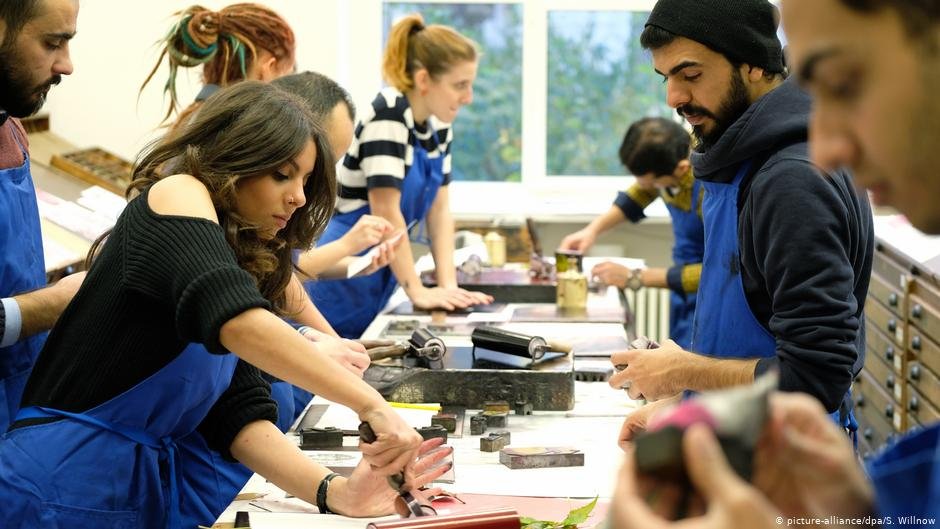
New research from the Migration Media Service (Mediendienst Integration) examines whether the CEAS asylum reforms will genuinely improve school attendance and educational pathways for migrant children in Germany, where education falls under the responsibility of the 16 federal states.
The research found that many federal states do not consider changes necessary, as replies by state ministries of education and cultural affairs show. So far, only North Rhine-Westphalia has implemented the new guidelines. Lower Saxony, Saxony-Anhalt, Hesse, and Thuringia are still reviewing possible changes. Importantly, the remaining federal states currently see no need for adjustments or consider their existing regulations to already be in compliance with CEAS.
Read AlsoGermany: New 'compass classes' aim to integrate migrant children in education system
What changes for migrant children's education under CEAS?
Under existing German rules, migrant children are supposed to start school within three months of arrival. In practice, however, compulsory schooling often only kicks in once families are assigned to a specific municipality -- a process that can take months longer than the target three.
The CEAS reform aims to fix this by requiring quicker municipal placements or ensuring children and adolescents can enroll in regular classes while they are still living in initial reception facilities -- but no later than two months after filing an asylum application, or three months in exceptional cases.
What's more, classes should generally be held alongside other students of the same age and meet comparable quality standards.
CEAS does not specify when compulsory schooling begins. "However, it requires member states to grant minors seeking protection access to the education system no later than two months after they file an asylum application," explains Pauline Endres de Oliveira, a professor of law and migration.
"It would be best if the same deadline applied to assignment to a municipality, the start of compulsory schooling and access to school," she's quoted as saying in the Migration Media Service analysis. This would help avoid delays in access to school.
Read AlsoStudy shows rising education levels among migrant communities in EU
Schooling in reception facilities
Back to the status quo. In many federal states, according to the research, children and adolescents receive instruction as early as their time in (initial) reception facilities. This may involve attending a regular school, a preparatory course, a German language course, or a school-like program. However, the scope, content and qualifications of the teachers often differ significantly from those of regular school instruction.
Of 203 reception facilities examined for school access for the purpose of a 2025 study, almost one in five of the facilities did not have any educational programs for children at all. At 40 percent of the facilities, children had partial access to a regular school, while 18 percent of the children were able to attend a regular school.
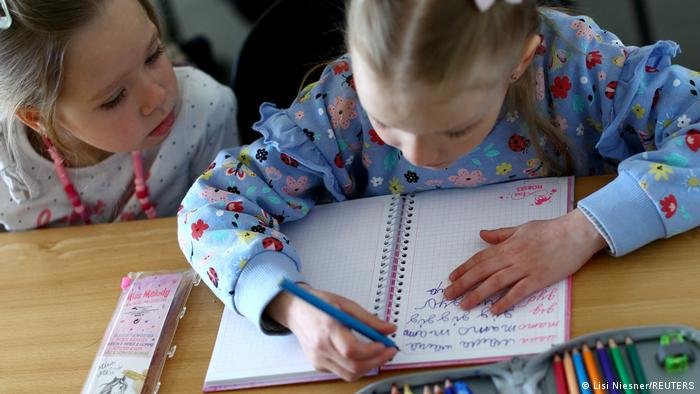
"If the guidelines are actually implemented nationwide, it would be a significant improvement," education researcher Johanna Funck from the University of Bremen is quoted saying in the report. "In the past, refugee children and adolescents were sometimes excluded from any formal education for months on end in several facilities."
Another bottleneck was and is the transition from (initial) reception facilities to regular schooling, the analysis found.
Moreover, before fully transitioning into regular classes, newly arrived students in regular schools have so far attended one or two years of preparatory or welcome classes in many federal states.
Read AlsoGerman refugee and migration spending falls by 3.2 billion euros
What needs to change?
As Germany and other EU countries navigate the complex realities of the CEAS framework, advocates are calling for explicit protections and guaranteed educational rights for minors, regardless of their legal status or administrative processing timeline.
Migrant and refugee students improve their German particularly well when they are taught alongside other German-speaking children, as several studies have shown.
"Schools are also a place for social participation, where friendships can form," says the education researcher Funck. This is important for the personal development of children and adolescents.
"If access to school is lacking for an extended period or if education is provided only in a limited and highly segregated manner, this has serious consequences for the children," she adds.
Read AlsoGermany: Government changes its stance on integration courses for some migrants