
The International Criminal Court (ICC) has unsealed several arrest warrants against senior Taliban figures in Afghanistan. The charges brought against four leaders are based on the specific crime against humanity of persecuting individuals on account of their gender and sexuality.
For the past five years, the Taliban regime in Afghanistan has stopped women from holding down jobs, entering most public spaces and receiving education beyond primary schooling — among numerous other rights violations.
The ICC has now responded to those developments by unsealing arrest warrants against four men who belong to Afghanistan's senior Taliban leadership; the specific demographics mentioned in the warrants also include members of the LGBTQ+ community, who have also been forced into the underground since the Taliban violently seized power in 2021.
"These warrants highlight the profound harm caused by the imposition of institutional systems of discrimination," the ICC said in a statement.
The act of unsealing an arrest warrant means that following its initial announcement, it becomes legally binding for all members of the ICC to deliver those people to justice, should they enter their country. It also means that the ICC has found sufficient proof to make a case against these violations even while investigation might still be ongoing.
Read AlsoAid to Afghanistan drops to record low, as more people are forced to return
'Severe violations'
The ICC said that the warrants were issued for the following individuals:
- Taliban supreme leader Haibatullah Akhundzada,
- Head of Afghanistan's Supreme Court Abdul Hakim Haqqani
- Education Minister Habibullah Agha
- Minister of Higher Education Neda Mohammad Nadim
The two ICC warrants against Akhundzada and Haqqani were already announced last year.
Read AlsoAfghan refugees and Iran's poorest bear the brunt of war
Among the many limitations imposed on and abuses committed against women in Afghanistan, Akhundzada last year banned buildings from having windows looking into spaces where women might sit or stand.
Former ICC chief prosecutor Karim Khan stated last year that those two warrants showed that "Afghan women and girls as well as the LGBTQI+ community are facing an unprecedented, unconscionable and ongoing persecution by the Taliban."
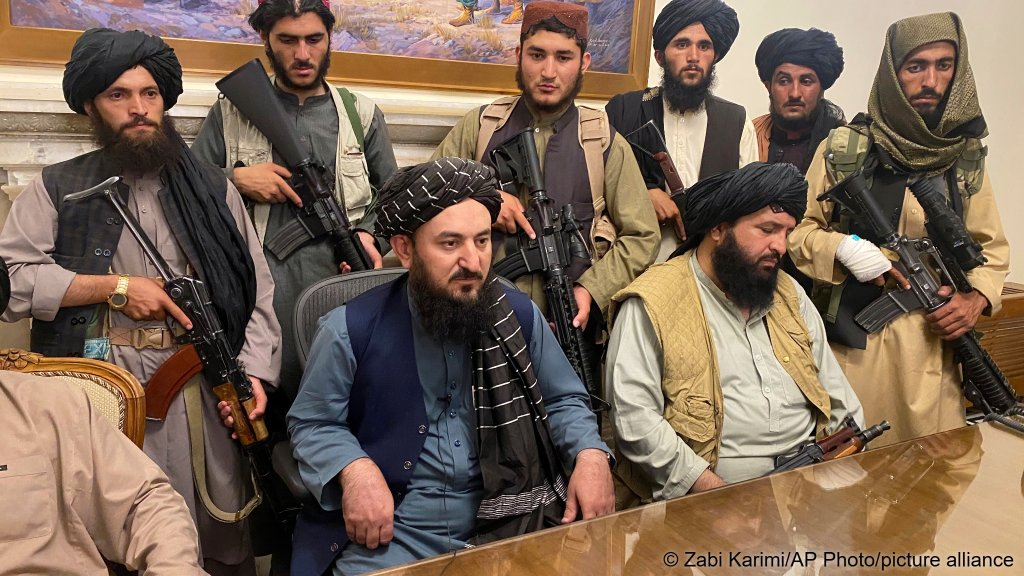
The judges in The Hague, where the ICC is based, who issued the new warrants said that the Taliban leaders had implemented policies that "resulted in severe violations of fundamental rights and freedoms of the civilian population of Afghanistan, in connection with conducts of murder, imprisonment, torture, rape and enforced disappearance."
"In addition, other persons were targeted because certain expressions of sexuality and/or gender identity were regarded as inconsistent with the Taliban's policy on gender," the statement read.
"The issuance of the two additional arrest warrants in the situation of Afghanistan is a further vindication of the rights of Afghan women and girls, particularly their right to education. Education is a fundamental human right that must be enjoyed by all. Afghan women and girls deserve accountability for the severe deprivation of their rights and freedoms," stated Deputy Prosecutor Nazhat Shameem Khan in a press release issued by the ICC.
On the same day as the disclosure of the warrants, the UN Human Rights Council urged the Taliban regime to repeal their "worsening" and "systematic oppression of all women and girls in Afghanistan."
Various rights groups welcomed both developments. The German pro-migrant association Pro Asyl has repeatedly spoken out against the German government's "technical talks" with members of the Taliban administration in order to facilitate deportations, even while Berlin does not officially recognize the regime. They have called this kind of negotiation "morally bankrupt" and accused the German government of departing from its moral values.
Helen Rezene, the leader of Pro Asyl said in July in a statement that in her opinion: "Human rights was no longer a consideration [since the German government was willing to deal directly with the Taliban and that those talks was helping to ] normalize a regime that didn't care about those rights."
Read AlsoGermany: Top court rules on Afghan migrant policy
Taliban squarely rejects ICC warrants
The government spokesman of the Taliban leadership, Zabihullah Mujahid, meanwhile stressed that the country would "not recognize any court under the title of the 'International Court,' nor does it attach any significance to its positions."
"We are bound by the rulings of Islamic Sharia and its courts, not by intelligence entities or so-called courts," he added.
None of the suspects however are likely to be arrested anyway, as the Taliban regime does not recognize the authority of the ICC; furthermore, the affected Taliban leaders are expected to avoid travel to any country whose jurisdictions are signed up to ICC orders.
The ICC does not have its own police force to pursue arrests either.
Read AlsoFive years of Taliban rule, displacement, migration, deportation and a human rights crisis
Afghans continue to flee their country
The developments of the past five years have resulted in a large exodus of Afghans from their home country. Hundreds of thousands of people have made their way to Europe via both regular and irregular journeys.
Some are still hoping to escape the brutal regime of the Taliban while others remain in hiding to avoid reprisals.
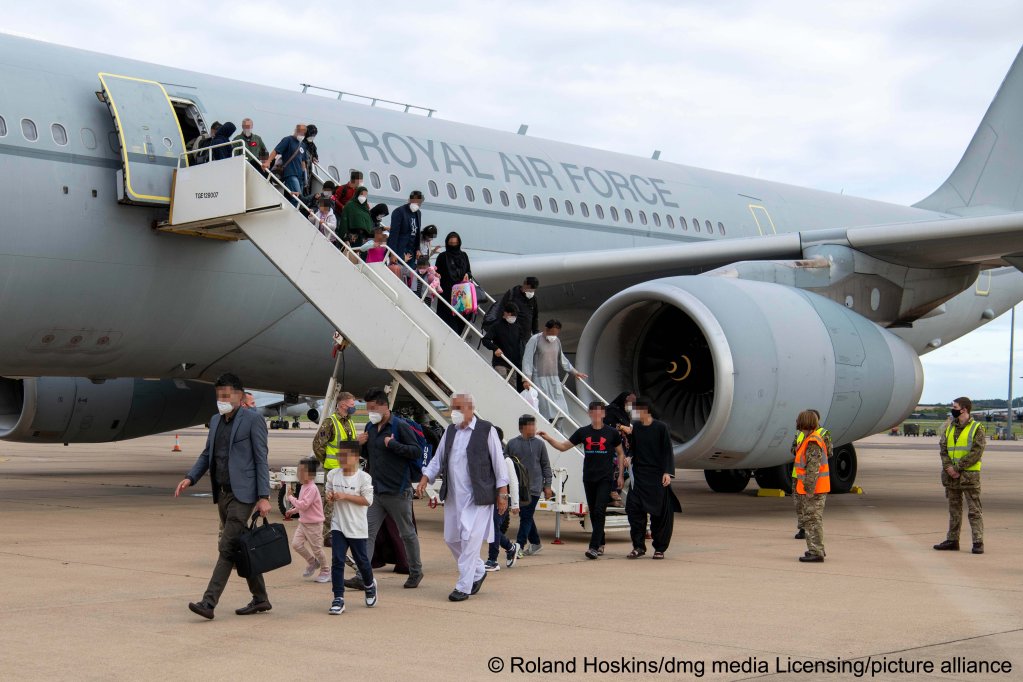
Read AlsoThousands of Afghans at risk of Taliban reprisals secretly brought to UK
A ruling by the European Court of Justice (ECJ) in October 2024 established that all women and girls fleeing the Taliban would be given blanket protection in Europe; at the same time, several EU member states have increased deportations of criminal Afghans — exclusively men — to the central Asian country.
According to data issued by the European Agency for Asylum (EUAA) in mid-2026, across Europe the overall positive protection recognition rate for Afghan citizens of both sexes stood at around 74 percent. The EUAA stated in a press release: "the positive recognition rate for Afghans remains broadly stable compared with recent months and still much higher than in the first half of 2025. Most positive decisions for Afghans continued to grant refugee status." The actual recognition rate varies across EU countries however. In Germany, according to the EUAA, the positive recognition rate stood at about 80 percent, whereas in France it stood at 68 percent and in Greece it was at 66 percent in mid-June.
Germany issued the largest volume of decisions concerning Afghans in the first half of 2026, according to the EUAA around 16,000 decisions, the vast majority of which were positive. At the beginning of 2023, Finland and Denmark began offering refugee status to all Afghan women and girls, based solely on their gender. In Germany in 2025, the Federal Office for Refugees and Migration BAMF confirmed that Afghan women and girls were "highly likely" to receive refugee status because of their gender. However, the fact remains that the majority of Afghans traveling to Europe via irregular routes are men.
A string of attacks in various European states committed by Afghans has also resulted in a change in attitudes: While many people welcomed Afghans fleeing the situation in their country in 2021, suspicion and anger towards Afghans has significantly increased more recently, with protests being held in many places, often following violent incidents and crimes committed.
Read AlsoGermany: Afghan women and girls almost guaranteed to receive asylum
with AP, AFP, dpa