
An increase in irregular migrant arrivals via Latvia has pushed Estonian authorities and child protection services to their limits as they have to evaluate dozens of detained migrants' claims of being underage. Meanwhile, law enforcement agencies continue targeting human smuggling networks operating via the Belarus route into the Baltic states.
Normally, Estonia has one of the lowest apprehension rates of migrants in the EU and often receives the fewest asylum applications per year, with the exception of Ukrainian refugees.
In recent weeks, however, Estonian police and border guard officials have observed a marked increase in irregular migrants crossing into the country, predominantly via Estonia's southern border with Latvia.
From the beginning of the year until October 7, Estonian police have detained 347 foreign nationals who entered Estonia irregularly, the Estonian Police and Border Guard Board (PPA) told InfoMigrants in writing.
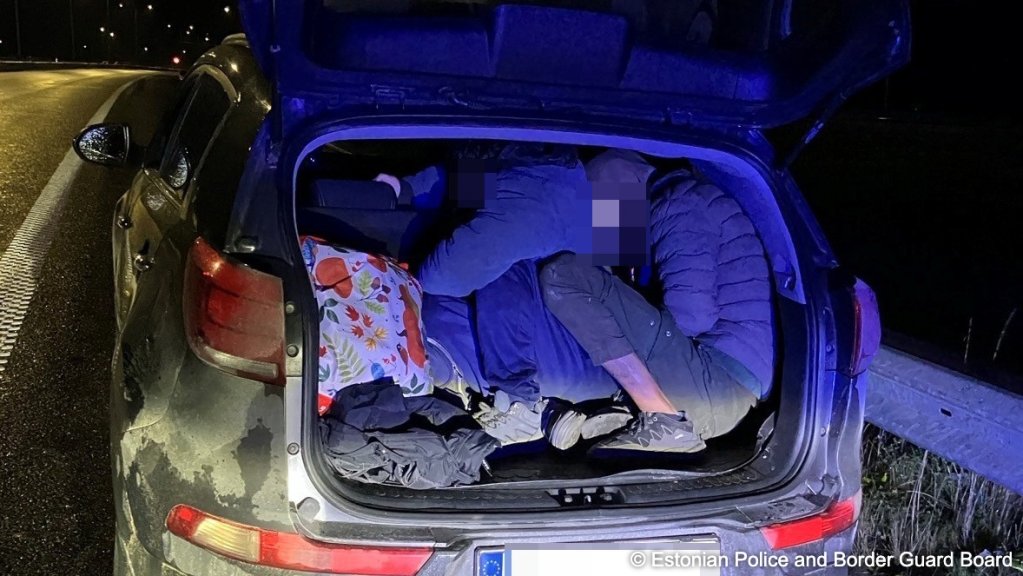
Of those 347 detentions, 303 took place since July, highlighting a marked increase in arrivals over the past 14 weeks.
Last year, the PPA detained 27 foreign nationals in connection with irregular entry, down from 70 irregular border crossings in 2024.
Read AlsoNearly one in four asylum applicants in the EU are minors
Many detained migrants claim they are minors
In addition to the significant increase in arrivals, police and local authorities in the small Baltic nation have also been grappling with an increase in the number of migrants claiming to be minors.
According to the PPA, almost half of the foreign nationals who arrived in Estonia in July and August and were detained across various regions said they were underage.
However, the PPA added that out of the more than 70 foreign nationals who initially claimed to be minors, "many of them later acknowledged their actual age and confirmed that they were adults."
When asked about the possibility of migrants allegedly making false claims intentionally, the Estonian Refugee Council said this shouldn't lead authorities to assume that everyone who says they're a minor is automatically an adult.
"Age assessment and other relevant procedures therefore need to be carried out carefully, consistently and without compromising the safeguards that apply to children," refugee council Director Eero Janson told InfoMigrants.
To verify age claims, the PPA says it formed a panel with experts in psychology, medicine, social work and migration as well as a representative of local government and a child protection specialist. Out of the 47 foreign nationals the panel interviewed so far (as of October 7), the PPA told InfoMigrants, the panel has so far confirmed that two individuals are minors ("approximately 16 to 18 years" of age).
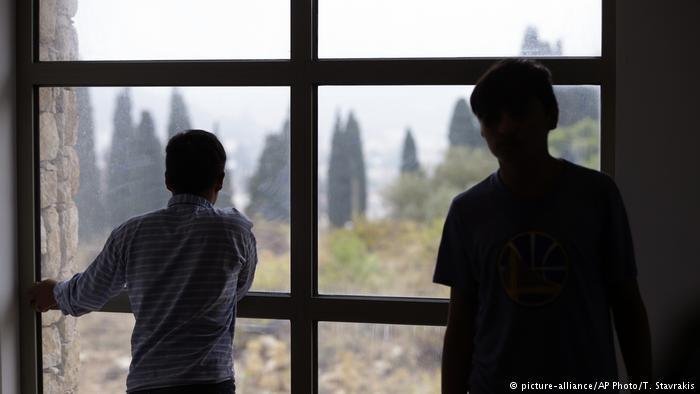
"In a further two cases, the individuals' actual age can only be established through a medical age assessment," the PPA added.
Under Estonian and EU law, individuals who declare themselves unaccompanied minors cannot be processed through standard detention or immediate deportation frameworks. Instead, they must be assigned temporary legal representation and placed under the care of municipal child protection services while age-assessment procedures and asylum applications are evaluated.
Read AlsoExplainer: How is a young migrant's age assessed in Germany?
'Fundamental obligations'
Local UNHCR representative Olga Sõtni stressed that child protection is a "fundamental obligation under international and national law."
"The best interests of the child must be a primary consideration throughout any age assessment, asylum or migration procedure," Sõtni told InfoMigrants. "An early age assessment can bring clarity on what reception placement and procedural safeguards should be provided for a particular individual."
Sõtni added that unaccompanied children should not be accommodated with adults, and that children should not be detained for immigration-related reasons.
According to Mayor Gerli Lehe the Mayor of Rae, one of the municipalities now being asked to process some of the newly arrived migrants, the Rae municipality's and the Social Insurance Board's child protection officers are legally required to act as guardians -- they attend interviews, prepare extensive court documentation and secure suitable accommodation when an irregular migrant claims to be under 18.
"In many respects, the municipality's role is comparable to that of a parent whose minor child is in the custody of the authorities and subject to official proceedings," says Lehe.
While her municipality is responsible for migrants arriving on weekdays, the Social Insurance Board is responsible for arrivals on weekends, Lehe explains.
Officials reportedly noted that verifying claims through medical examinations or document verification takes considerable time, during which municipal staff must maintain full legal responsibility for the individuals.
Read AlsoLatvia: Guards use tear gas, fire warning shot to prevent crossing from Belarus
Strain on local municipalities
The increase in arrivals and the many dozens of claims about being underage has placed acute stress on local administrative systems, particularly in municipalities responsible for processing social welfare and legal oversight for vulnerable individuals, as Estonia's public broadcaster ERR reported several times over the past few weeks.
Local authorities in places like Rae, a suburban municipality southeast of the capital Tallinn, say they are ill-equipped to handle these procedures rapidly.
According to Gerli Lehe, unaccompanied foreign nationals' claims to be minors requires both an "immediate response" and a "significant commitment of time and resources from our child protection and social welfare professionals."
"Our child protection specialists have to respond immediately whenever the detention center notifies us that [an] unaccompanied minor has arrived," Lehe told InfoMigrants in writing, adding that each claim takes a specialist roughly one and a half days to process.
ERR reported last week that the municipality has requested "significantly" more state support starting in October.
When asked about this request, Lehe stated that "migration-related responsibilities assigned to municipalities" are "exceptional tasks" that need to be "adequately funded and organized in a way that does not diminish local governments' ability to provide services to their residents."
In a Facebook post from Friday (October 2), Lehe wrote that a "clear agreement with the state, who is responsible for what and with what workforce and funding additional tasks will be covered" was "urgently" needed.
She also stated that the detention center is "filling up" as new people are arriving there.
According to the PPA, the facility, whose "regular capacity" is more than 250 places, currently houses more than 200 foreign nationals (as of Wednesday, October 7).
"The police have prepared for a scenario in which the center's regular capacity of more than 250 places is reached and additional accommodation measures need to be activated," a spokesperson told InfoMigrants.
A 2023 monitoring visit by the European Committee for the Prevention of Torture and Inhuman or Degrading Treatment or Punishment (CPT) attested the facility, which InfoMigrants visited in October of 2024, as having "very good material conditions".
Bottleneck in the judicial system
The sudden uptick in arrivals and claims has also created a bottleneck in the judicial system, ERR reported. What's more, courts tasked with approving guardianship requests and reviewing administrative detention orders face mounting backlogs.
Legal experts and local representatives emphasize that current administrative frameworks were designed for sporadic cases, rather than dozens of concurrent claims requiring urgent processing.
According to ERR, the uptick in arrivals has even been delaying other judicial proceedings. In the first nine months of this year, the PPA submitted over 400 applications to detain foreign nationals with no legal basis of staying in Estonia, 308 of them between July and September.
"Tallinn Administrative Court's capacity to deal with ordinary court cases has fallen sharply in recent months," a spokesperson for the court is quoted as saying in an ERR article from September 29.
According to the spokesperson, the detained migrants reportedly hail from countries of origin including Ethiopia, Eritrea, Somalia, Morocco, Egypt, Algeria, Yemen, Guinea, Mali, Burundi, Nepal, Pakistan, Sudan and India.
Read AlsoCouncil of Europe defends human rights court amid tensions over migrant returns
Crackdown on migrant smuggling
In recent days, law enforcement agencies have been cracking down on organized migrant smuggling rings facilitating passage via the Belarus route and through the Baltic countries, ERR reported.
So far this year, Estonian police have taken nine suspects accused of "organizing or facilitating the illegal transportation of migrants across the border" into custody. The PPA told InfoMigrants, six of them over the past few days, as ERR also reported on Tuesday (October 6).
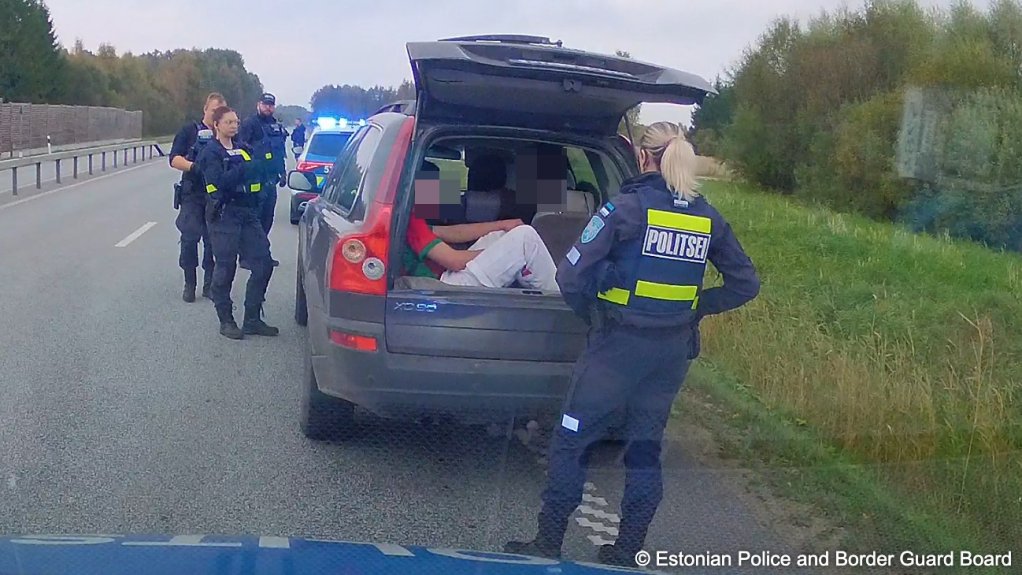
The suspects reportedly transported the people into Estonia by car, one of which allegedly had a Latvian license plate and had seven individuals in its cabin and trunk, according to ERR citing police sources. The driver, reportedly a 62‑year‑old German citizen, was detained.
The PPA also said that 50 criminal investigations linked to facilitating irregular crossings have been initiated so far this year. Investigators allege the syndicate coordinated transit routes bringing migrants through Belarus and the Baltic nations toward Western European destinations.
Together with border surveillance, preventing irregular migration "and the identification and prosecution of migrant smugglers remain key priorities for the police," the PPA told InfoMigrants.
Read AlsoLatvia: 'Belarus route' increasingly active, says border guard chief
Deportations to Latvia
Since 1995, Estonia, Latvia and Lithuania have operated under a readmission agreement regulating the return of persons residing illegally in one of the three countries. Under this framework, foreign nationals who entered Estonia unlawfully through Latvia can be returned there.
According to the PPA, Estonian authorities have to date transferred 93 individuals back to its southern neighbor after they had first crossed into the European Union via Belarus and Latvia and then entered Estonia irregularly.
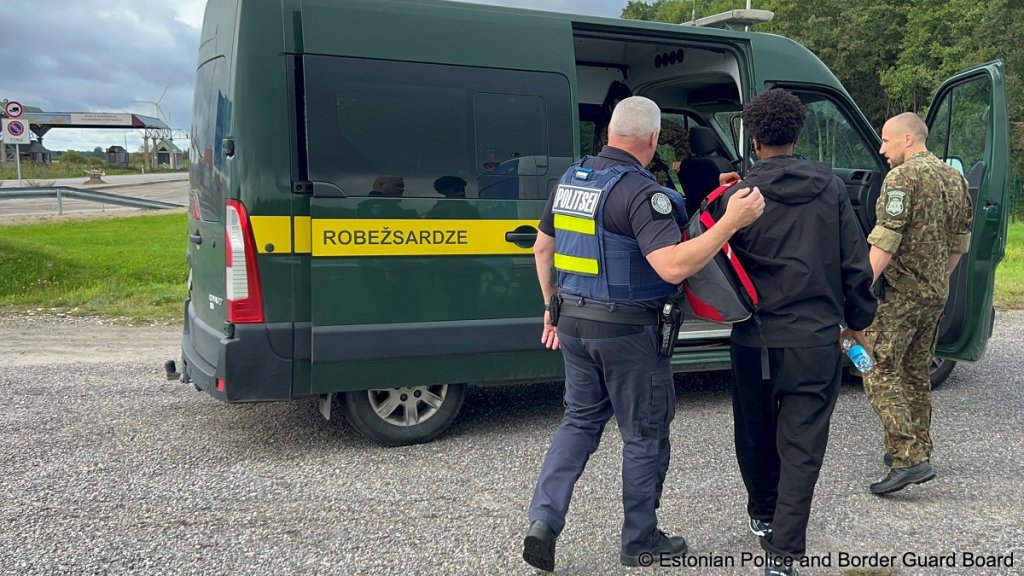
In an effort to curb this year's increase in arrivals, Estonia in early August returned the first migrants to Latvia under bilateral readmission agreements. According to ERR, eight male migrants from Ethiopia were handed over to Latvian border guards on August 5.
Estonia is also stepping up border checks at its border with Latvia. At the Valga-Valka border crossing, PPA has reportedly been checking trains, pedestrians and vehicles arriving from Latvia.
The Estonian Refugee Council's Janson stressed that the "legitimate need" to safeguard a nation's borders should not come at the expense of a fair and lawful treatment of migrants.
"A functioning asylum and migration system should be able to maintain effective border control while also identifying and protecting those who may be particularly vulnerable," Janson told InfoMigrants.
Under new EU rules expected to come into effect this month, individuals who enter illegally from neighboring EU member states without submitting immediate, valid protection claims are subject to expedited deportations where legally permissible. Aside from accelerating returns, the EU Return Regulation also aims at strengthening external borders and expanding surveillance.
Read AlsoLatvian authorities discover smuggling tunnel along Belarus border