
In Italy, the only migrant shelter in Oulx, the last stop before the French border and the crossing of the Alps, closed its doors on September 1. The Italian Red Cross, pro-migrant associations and citizens are taking turns to ensure the continuity of services. But, with winter approaching, they fear inadequate living conditions.
Volunteers from the Sentieri Solidali ("solidarity paths") association serve the evening meal under the dim light of a headlamp. The wind rushes under the pergola, wafting the steam rising from the hot pots into the fresh mountain air. A dozen people eat in silence, weary from the day's wait in the parking lot next to the Italian train station in Oulx, in the Susa Valley, about 15 kilometers from the French border, the next stop on their journey to find refuge in Europe.
Migrants have now taken to finding shelter in a parking lot, reclaimed by citizens and associations since the closure of the Fraternità Massi Refuge on September 1, 2026. The Refuge’s managers, the Talita Kum association, faced significant financial difficulties after 2023 public subsidy cuts.
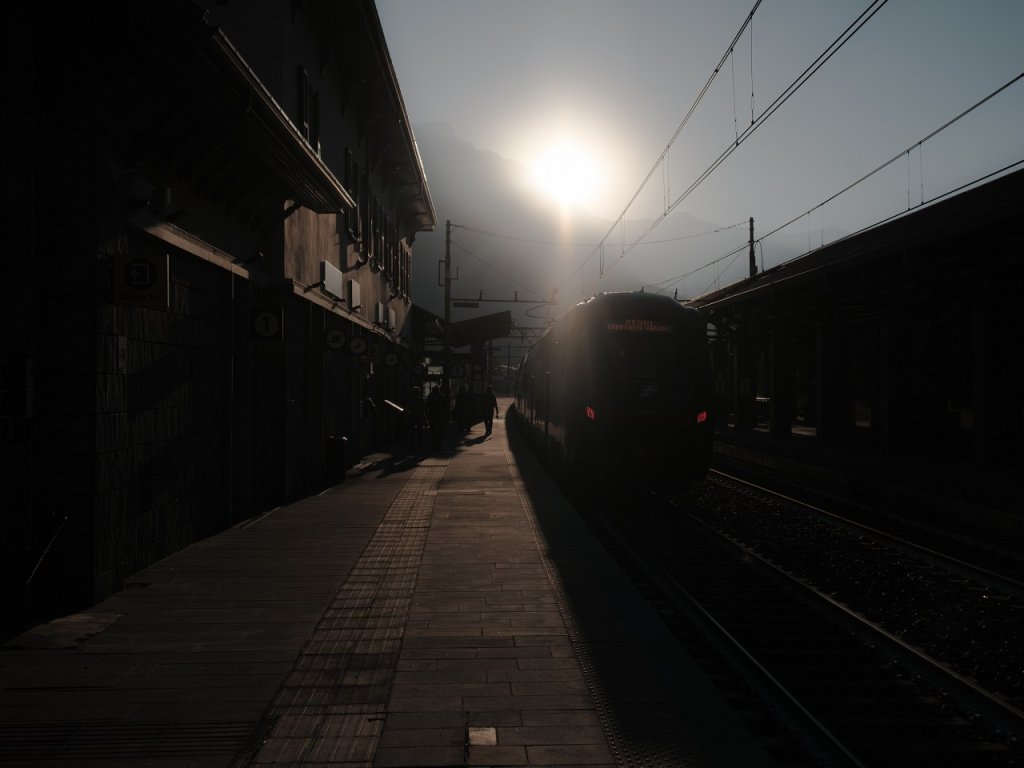
Since the beginning of September, an average of 35 people arrive daily in Oulx, according to estimates by Sentieri Solidali. In addition to these new arrivals, some come back after a failed crossing attempt, after their arrest in the mountains by the French border police (PAF) in Montgenèvre after which they are handed over to the Italian authorities.
They all spend their days in waiting, in the makeshift "refuge" on these few square meters of concrete, belonging to the Italian railway company (RFI).
Migrants without a refuge
"We're continuing to do as before, but everything is much more difficult," admits Marco Terragno, a volunteer with Sentieri Solidali, an association founded last August by citizens previously involved with the Fraternità Massi Refuge.
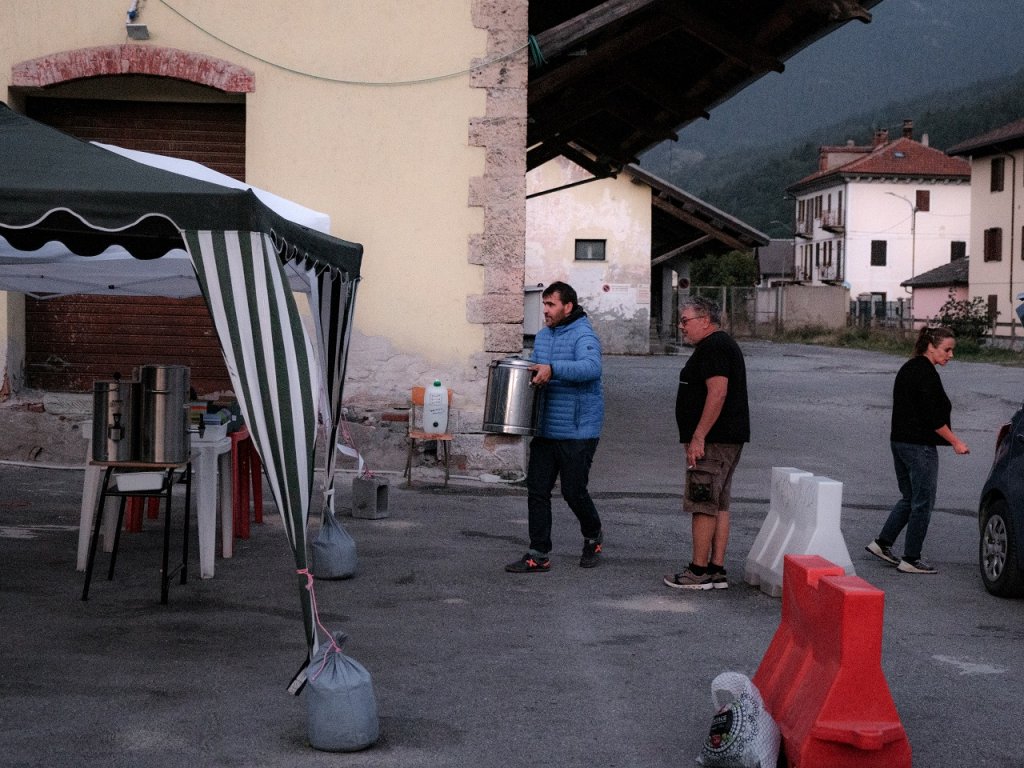
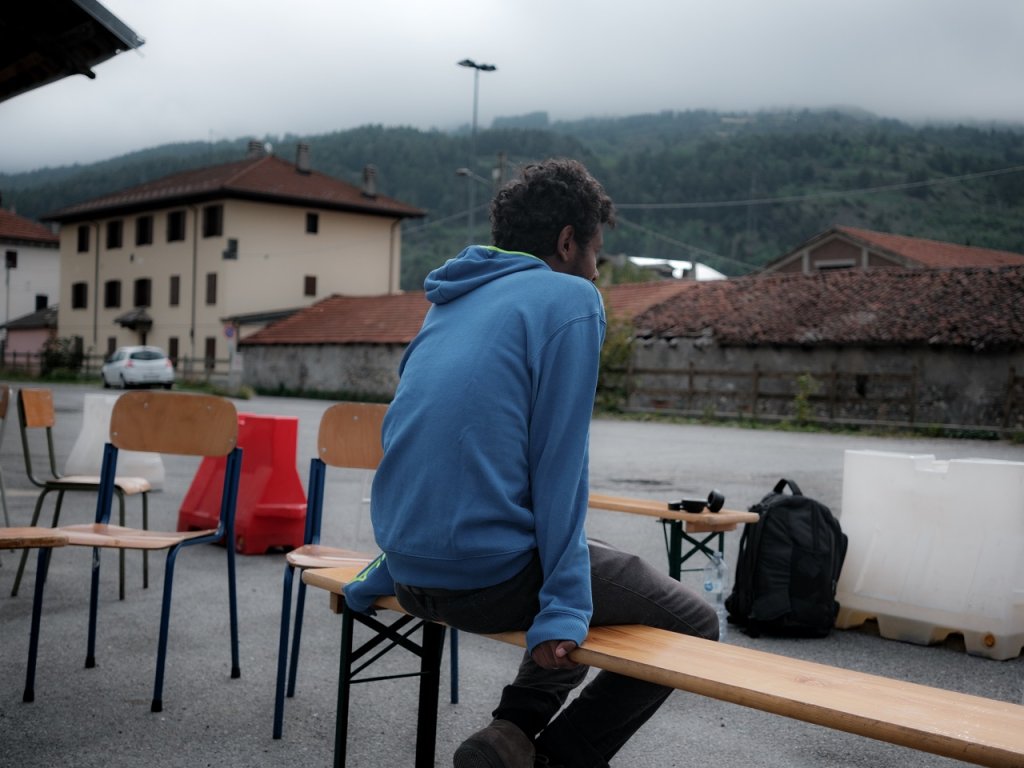
Legal aid, medical care, food and clothing distribution, the transmission of vital information about mountain safety… These services are now provided with the help of several associations — No Name Kitchen, On Borders, and Rainbows for Africa. All this takes place between two prefabricated units set up in the parking lot, a handful of plastic chairs and benches, and two tent canopies stretched over insulated stoves. The low clouds reflect the boredom that hangs over the site, hemmed in by the Alps as if between four walls.
The situation is "very uncomfortable," acknowledges Marco Terragno, who fears the effects of the lack of privacy on migrants and on their access to medical and psychological care.
The wait
Abdallah* will have to wait until tomorrow before continuing his journey. "My legs need rest," admits the young Sudanese man, his pride eroded by endless days spent walking from Greece. Six to eight hours of hiking in the high mountains, in the bitter cold of autumn at these altitudes, with the constant fear of being spotted by border police, still separate him from France.
Crossing the Alps is not the only route considered by migrants to enter France irregularly, but it is the most discreet. There are trains that leave from Oulx for France, but they are almost always checked by police.
Pardis Jalali, 27, has taken the opposite route: he says he left Belgium because of immigration problems, ruined by what he describes as his lawyer's stinginess. Rejected by France under the Dublin Regulation, he now hopes to be able to apply for asylum in Italy.
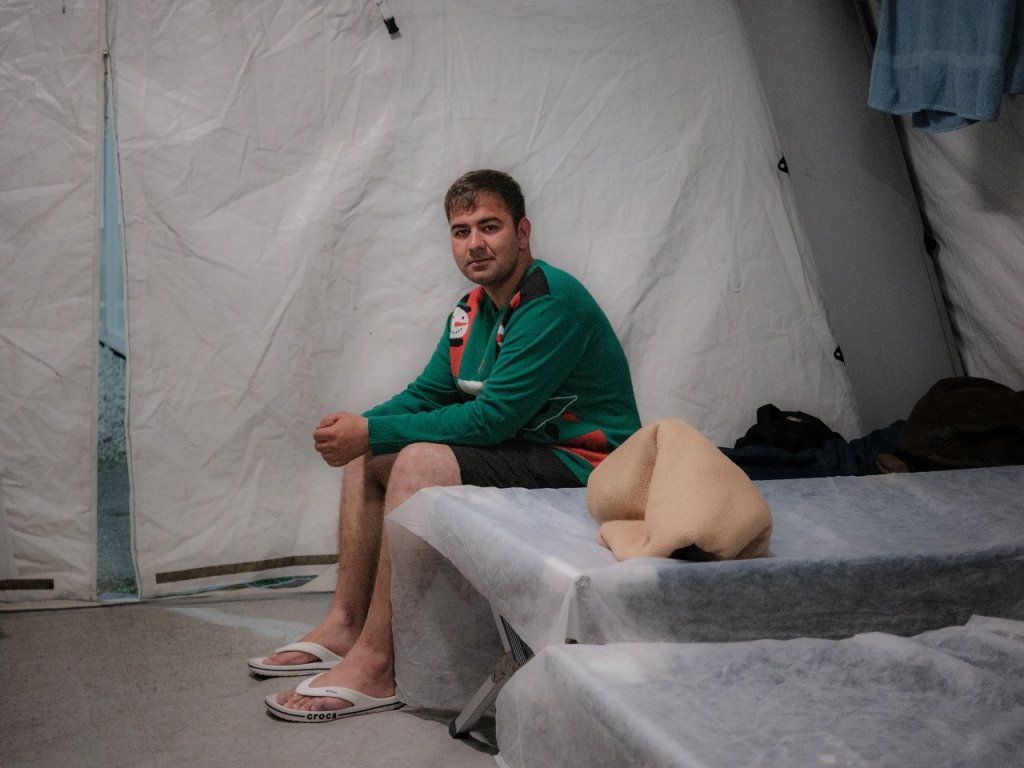
This former soldier, forced to flee Kabul after the withdrawal of American troops from Afghanistan in 2021, heard about the Fraternità Massi Refuge. There, he hoped to find shelter for a few days, enough time to regain his strength and sort out his immigration status.
Instead, Pardis passes the time chain-smoking, his eyes glued to a war game on his phone screen. Beneath the Christmas baubles decorating his fir-tree green sweater, Pardis says he has "a black heart. I've experienced too much racism in Europe." Between games, he acts as a whistleblower, "Don't go to France!" preaching to those determined to reach the United Kingdom, who are hoping to travel in the opposite direction from him.
Day and night
The imminent arrival of winter is undoubtedly the primary concern shared by all the people working on the ground interviewed by InfoMigrants. At the height of the season, temperatures can plummet to -12 degrees Celsius.
Nevertheless they all agree that the situation could have been worse: following the announcement of Fraternità Massi's closure, the Italian Red Cross was commissioned by the Turin prefecture to open an emergency shelter hub. Within three days, a 50-bed camp sprang up, open from 8.30 pm to 8.00 am – "for practically the same amount of money as the refuge cost," one of the activists comments.
The rooms there are heated, and dinner should be served shortly, says Fiorella happily, a Red Cross worker with a Vogue cigarette between two purple-gloved fingers at the end of the red sleeves of her uniform. She says the facility should remain open at least until 2028, "while a more permanent solution is found."
Coping with uncertainty
The building that housed the Refuge, a stone's throw from the Italian Red Cross hub, is being renovated: funding was granted to the Talita Kum association exclusively for bringing it up to the standards required for a multiple occupancy building. For the moment, its reopening under the management of another non-profit or humanitarian organization seems unlikely.
As September draws to a close, temperatures are dropping, and fatigue is mounting among the volunteers. Funding has been requested from the Turin prefecture to purchase a heated tent and a few additional modular units. Uncertainty is setting in, as is life in the parking lot.
Yared and Abera* take turns posing for the camera, with the towering peaks in the background. The young Tigrayan and his compatriot Ahmara, whom he met in Libya, will not be stopped a third time at the French border anymore; they have "changed their minds." In a few hours, they will take a train to Switzerland. "This is our last photo in Italy."
*Names have been changed.