
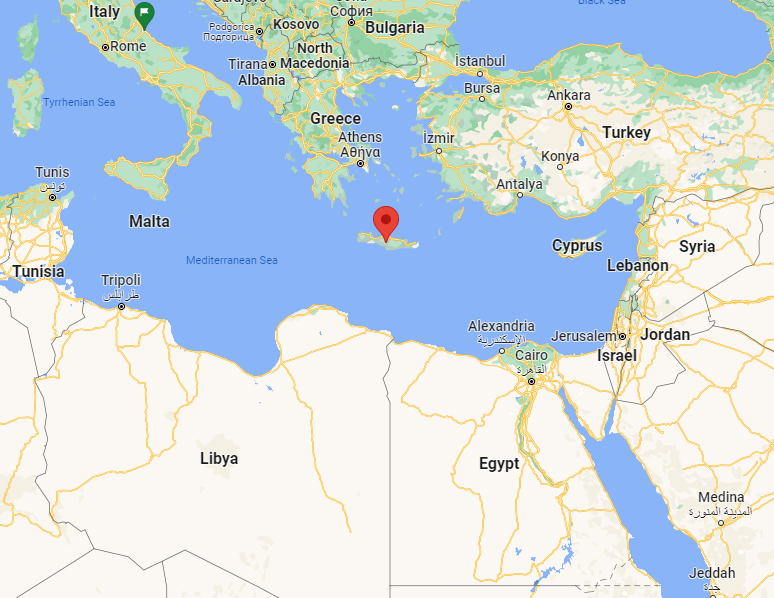
Close to 200 migrants were saved in the Mediterranean Sea on separate boats near the Greek island of Crete. The four rescues reportedly took place during and just after a severe storm south of the island.
Greek state broadcaster ERTNews said that earlier on October 6, several migrant vessels had to be rescued within hours of each other just south of the island of Crete.
According to the broadcaster, the first two operations saw 50 and 65 people brought to safety, respectively. This was followed by two more operations in which 40 people were rescued during each of the two rescues.
The rescues followed on from a whole week without any migrants landing on Crete, as stormy weather conditions had prevented migrants putting to sea.
According to statements from those rescued, the migrants had all set off from the Libyan coast.
Crete remains main EU point of arrival for irregular migrants
Since the beginning of 2026, over 16,000 migrants have managed to reach the southern Greek island of Crete, according to UNHCR — more than half of all arrivals in Greece during the same period.
Read AlsoGreece: 22 migrants die during weeklong journey
The large island has seen a major increase of landings in the past few years. Most of those arriving depart from countries in North Africa. In response to this, Greece has strengthened its cooperation with Libya over the past 12 months in an attempt to slow down the departure of migrants.
People risking lives to reach Greek soil
Earlier this year, Greek Migration Minister Thanos Plevris made comments claiming that over half a million people could be waiting to make irregular crossings to Europe from the Libyan coast; he didn’t specify, however, on what sources he based that number.
The Greek government has also tightened a number of its asylum laws over the past year in a bid to discourage people from embarking on irregular journeys. This makes qualifying for protection considerably more difficult while also threatening failed asylum seekers who refuse to cooperate on their return procedures with prison time.

Read AlsoDeath toll of migrants in the Mediterranean nears 1,000 in 2026
The sea route to Crete can be extremely dangerous, with challenging weather conditions repeatedly resulting in shipwrecks and deaths — in addition to engine failures on highly unseaworthy boats.
Migrants who attempt the crossing often have to travel at sea for several days or longer, since the distance between Libya and Crete roughly measures 300 kilometers.
Read AlsoTobruk-to-Crete migrant crossings intensify as Greece enforces strict sea patrols
with dpa