
The Council of the European Commission gave its final green light to new EU rules enabling more effective returns for those with no legal right to stay in the EU on Thursday (October 1). This will include strengthening external borders, expanding surveillance and accelerating returns.
The European Commission gave its final green light to new EU rules today (October 1), enabling more effective returns for those with no legal right to stay in the EU. The new rules are expected to come into force over the next weeks and will follow the proposals of a five-point plan to strengthen external borders, expand surveillance and accelerate returns.
The EU Return Regulation is the bloc’s flagship initiative to escalate deportations across the Union. Its aim is to establish a common system for the return of people without a legal right to remain in the EU.
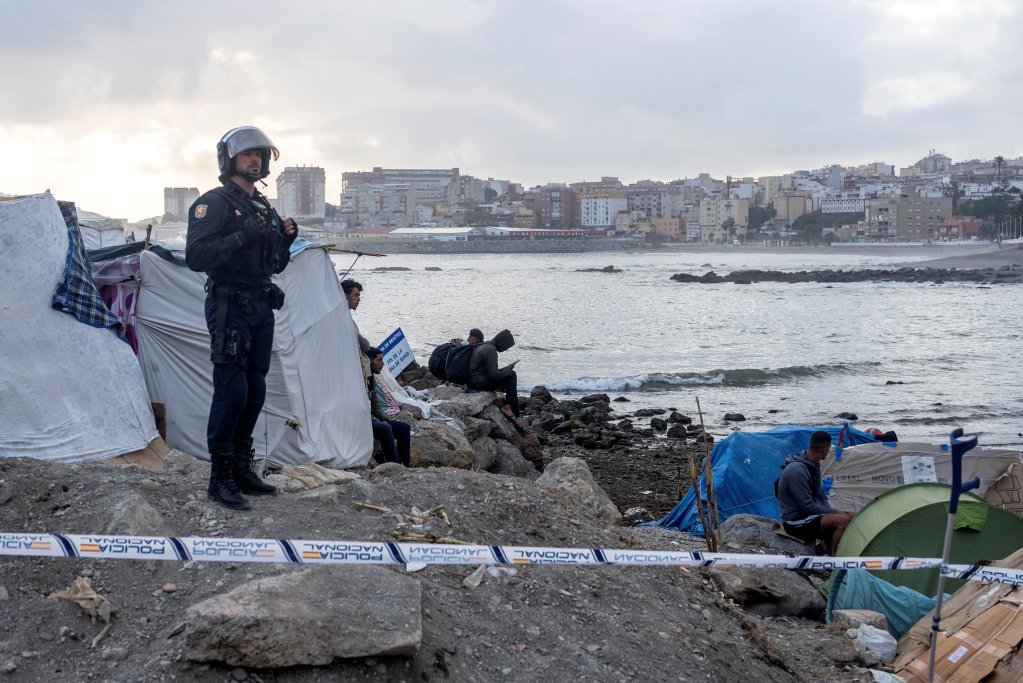
The Commission’s separate proposed plan, published on Tuesday (September 29), outlines a response to this summer’s mass arrivals in Ceuta. Recorded irregular crossings are at their lowest level since 2021, but policy makers at the Commission have argued that sudden emergencies require stronger European coordination.
"Good policy never stands still. Building on our five-year migration strategy, we are taking the next steps. We will reinforce our foundation of strong external borders, effective migration diplomacy, the Pact on Migration and Asylum, and credible returns by strengthening Frontex, proposing a new European emergency response framework, and deepening our partnerships with countries of origin and transit. Europe needs a system that is firm, fair and adaptable," Magnus Brunner, Commissioner for Internal Affairs and Migration, said in a statement.
The five pillars of the proposal cover partnerships, border operations, digital monitoring, anti-smuggling measures and returns.
1. Strengthen partnerships with origin and transit countries
This will involve closer cooperation with countries outside the EU, including early-warning mechanisms, intelligence exchange and crisis-management protocols.
A proposed Mediterranean Youth Skills and Jobs initiative would create opportunities in countries of origin, while Gateway Offices would promote legal and safe mobility to Europe.
In a State of our Union address, European Commission President Ursula von der Leyen presented the Mediterranean youth skills and jobs initiative saying it has the aim of offering young people meaningful prospects – so they are not compelled to gamble with their lives.
"The state of our Union is the strongest it has ever been. The state of our Union can also feel as precarious as it has ever been. These two statements may seem incompatible. But they are both true. And they reflect these exceptional times. This complex age of great possibilities and great perils which all countries are seeking to navigate," said von der Leyen.
Law enforcement agencies such as Frontex, the European Police Agency (Europol), and the European Union Agency for Criminal Justice Cooperation (Eurojust) will deepen cooperation with partner countries on migration routes and threats. Surveillance coordination centers would improve information exchange and risk assessments before people even reach EU borders.
2. Expand Frontex and emergency border operations
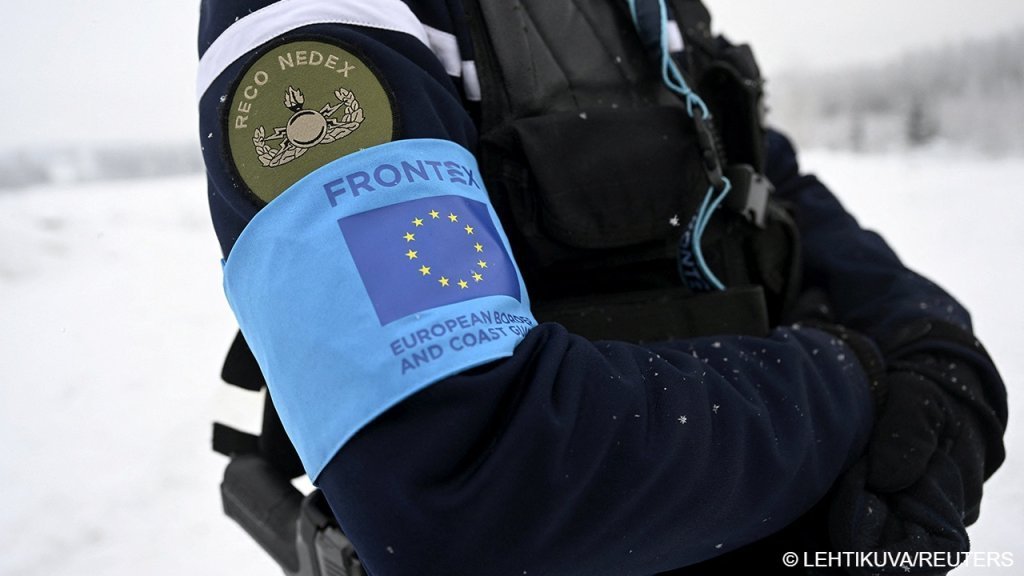
A proposed stronger Frontex mandate is set to include reinforcing the organization's capability of immediately deploying personnel and equipment, alongside greater involvement in returns and monitoring.
The Commission also plans a European Emergency Response Framework, particularly for situations where large-scale movements of people are suspected to be deliberately engineered or used as political pressure.
Member states would receive targeted support for sensitive border sections and could request assistance through the Union Civil Protection Mechanism which was established to improve prevention, preparedness, and response to disasters. Any country hit by a disaster, in Europe and beyond, can request emergency assistance through the mechanism.
The mechanism, established in 2001, outlines civil protection cooperation between the EU countries and 10 other participating states: Albania, Bosnia and Herzegovina, Iceland, Moldova, Montenegro, North Macedonia, Norway, Serbia, Turkey, and Ukraine.
3. Increase social media monitoring and early warnings
The third pillar would give Frontex powers to monitor social media for information relevant to border management.
National authorities would report significant developments promptly through the European Border Surveillance System the cooperation framework between Member States and Frontex to improve monitoring at the external borders.
The Commission also proposes faster responses to misinformation and changing migration patterns.
Protocols under the Digital Services Act would support cooperation with major online platforms, search engines and regulators. Digital partnerships with third countries would target online content encouraging irregular migration.
4. Target smuggling networks and financial flows
The Commission urges governments to adopt sanctions allowing asset freezes and travel bans against migrant smugglers, and accelerate negotiations on revised anti-smuggling legislation and Europol’s mandate.
Cooperation with online platforms, banks and digital payment providers would seek to detect smuggling activity and trace illicit money flows.

Europol’s European Center Against Migrant Smuggling, The European Center Against Migrant Smuggling (ECAMS) was set up by Europol in March 2026 as a result of the implementation of the new Pact on Migration and Asylum. This would also be strengthened under the new policy.
5. Accelerate returns and readmission
The final pillar calls for stronger readmission cooperation with third countries, drawing on trade, development and visa policies.
Frontex would take a greater operational role, while member states would make wider use of assistance for return, readmission and reintegration. Digitizing procedures would aim to reduce administrative delays.
Speaking on behalf of the EU, Irish Minister for Justice, Home Affairs and Migration, Jim O'Callaghan said: "Around two in three people ordered to leave the EU do not actually leave. The revised return rules adopted today will assist member states in implementing swift returns effectively. This is crucial to deliver a common approach to migration management under the pact on migration and asylum."
The press release for the EU Council stated: "The regulation will now be published in the EU official journal and will enter into force on the following day. A number of provisions, such as those on return hubs, will apply immediately. Other provisions requiring preparatory work will apply one year after entry into force."
Read AlsoEU to strengthen Europol against rising digital and cross-border crime
Advocates warn of increased detention
Ahead of the vote on the Return Regulation today, the Platform for Undocumented Migrants (PICUM)'s advocacy officer Chiara Catelli criticized the bloc's wider emphasis on detention and deportation.
"What happened in Ceuta showed how people can be turned into political leverage when Europe refuses to open safe and regular pathways," Catelli said in a statement shared with InfoMigrants.
Catelli argued that the regulation would expand detention, encourage action against undocumented people and permit transfers to unfamiliar countries. She warned that fear of detention or deportation would deter people from accessing public services or seeking protection.
"Ultimately, this regulation will create more, not less, irregularity," she said.