
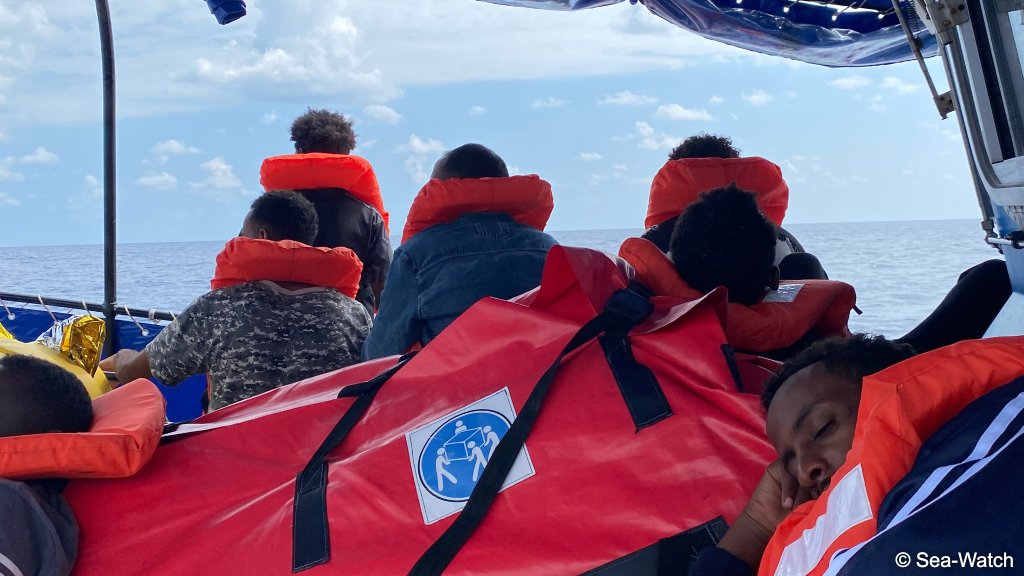
The private sea rescue organization Sea-Watch saved 28 people in the Mediterranean in the early hours of September 29. However, the crew also recovered bodies as several people remain missing. The group of migrants is believed to have departed from the Tunisian coast.
The migrant distress hotline Alarm Phone reportedly alerted Sea-Watch about the migrant boat having suffered a shipwreck, prompting its crew to set sail towards the site of the incident.
During the rescue, Sea-Watch found five people stuck on a rubber dinghy, which was nearly deflated at the time of the rescue, while 23 other survivors had managed to seek safety on the nearby Hasdrubal gas platform.
However, the crew of the NGO's Aurora vessel also recovered two bodies, including that of a child. There are thought to be at least another six people missing, including three children belonging to one family, stated the organization in a press release.
Read AlsoItaly: Criminal investigation launched against Sea-Watch captain
Sea-Watch spokesperson Giulia Messmer meanwhile confirmed that "our crew recovered the body of a child."
"Parents lost their child when all they wanted was to bring them to safety. Today, we are witnessing the cruelty of European politics first-hand," she stressed.
"We call for a European search and rescue program to be established immediately and to end the deliberate dying at sea."
Read AlsoTunisia: Deaths of 12 in migrant boat sinking spark protests
One child among gas platform rescuees
Upon rescuing the five survivors and recovering the two bodies from the dinghy, the Aurora obtained permission from the Tunisian maritime rescue coordination center to journey to the gas platform and bring the remaining migrants on board.
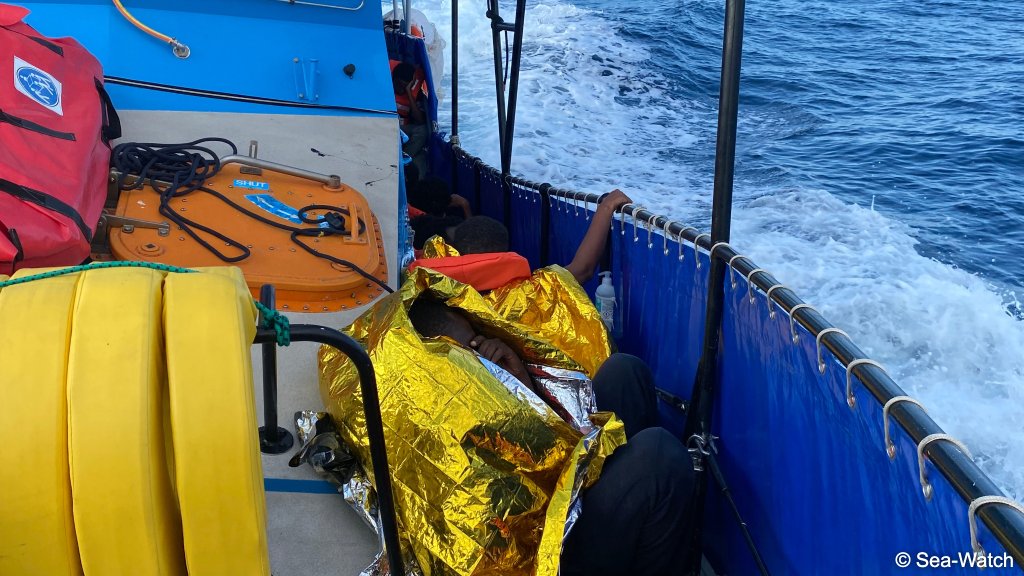
The Sea-Watch crew encountered one toddler among the stranded migrants, as it handed out life jackets and completed the transfer of the migrants to the Aurora.
The crew on the boat are now establishing initial information about the rescuees such as their names, their age and their country of origin.
In a statement, Sea-Watch pointed out that in 2026 alone, close to 2,000 people had died or gone missing while trying to make their way to Europe using irregular migration methods.
The NGO commented that they believe this serves as proof that "[r]escue is not a favor Europe grants, it is a duty Europe fails."
Read AlsoIOM warns that migration routes to Europe are becoming more dangerous
Aurora given permission to disembark on Lampedusa
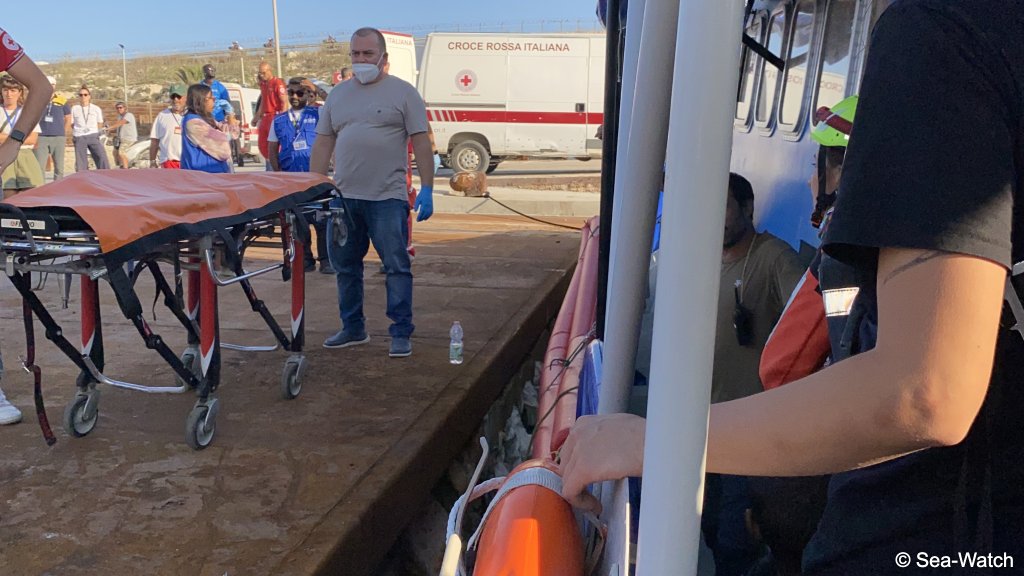
Italian authorities agreed to assign the closest port in Lampedusa as a safe harbor for the Aurora, following a plea by Sea-Watch about the severity of the situation. Sea-Watch said on their social media accounts that disembarkation had taken place safely.
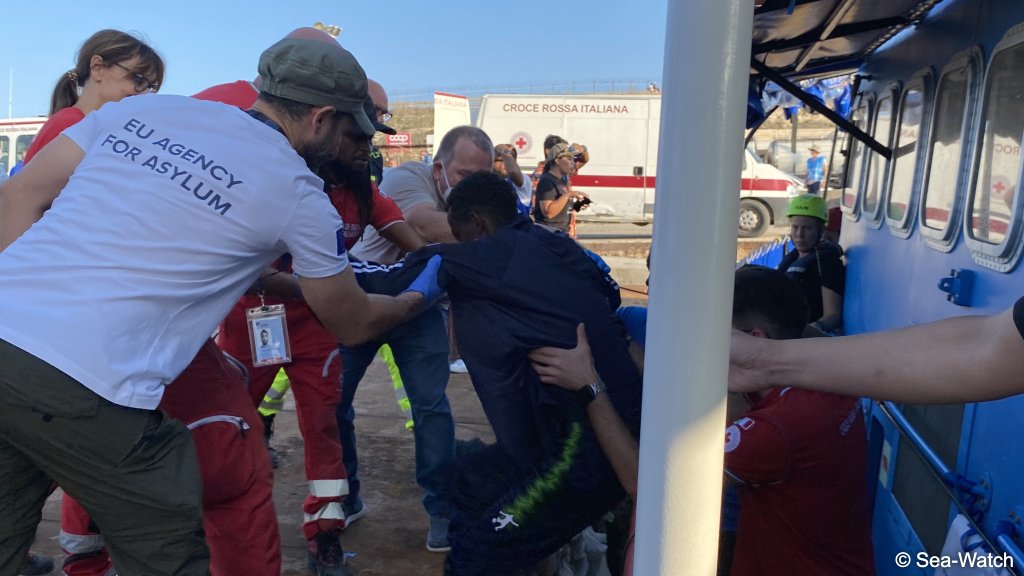
Italy's policy of assigning random and often-remote ports to offload migrants rescued at sea by NGOs and private groups often means that migrants have to travel on board these vessels for days on end after surviving the perilous journey across the Mediterranean.
Italy justifies this policy by saying that smugglers allegedly treat private rescue missions as "taxis" doing their bidding, factoring sea rescue operations into their business model.
Read Also'Using the term collusion is a lie': Sea-Watch rescue NGO denies contact with smugglers
By assigning remote ports, rescue groups are effectively disabled from operating in areas of Mediterranean where more migrants suffer shipwreck for days — as their rescue vessels have to travel to ports located hundreds of kilometers away from the original accident site.
The same law that allows authorities to assign distant ports also has a provision stipulating that private rescue ships have to travel to the assigned port immediately, and are not allowed to pick up any further migrants in distress at sea.
Organizations, which have rejected this notion on account of maritime law demanding that saving lives takes priority, have repeatedly had their vessels impounded by Italy for weeks at a time post-disembarkation.
Read AlsoSea-Watch 5 detained for 45 days, fined 7,500 euros
The high toll of irregular migration
According to Italy's Interior Ministry, more than 22,000 people have managed to arrive in Italy to date this year, which compares to more than 50,000 during the same period in 2025.
Taking the 2,000 fatalities to date this year into consideration, these numbers reflect an average of nearly one in every 11 migrants drowning while trying to cross the Mediterranean Sea.
Since 2014, at least 35,000 people are believed to have died during these dangerous irregular journeys across the Mediterranean, according to the IOM's Missing Migrants project.