
Five people believed to be migrants have drowned while attempting to cross a river on the border between Croatia and Slovenia, police have said.
Five people drowned on Friday (September 25) while trying to cross the Kupa river along the Croatia-Slovenia border, news agency AFP reported citing Croatian police.
Officers and members of the public managed to save five people, according to AFP, but another five died in the river, located about 90 kilometers southwest of Zagreb, Croatia's capital. One officer who arrived first at the scene reportedly jumped into the water to help rescue survivors.
In Slovenia, the river is known as the Kolpa.
In a statement, AFP reported, the police force said the group consisted of around 20 people believed to be migrants, but gave no further details about their origins or identities.
"14 of them managed to cross the river and are on Slovenia's territory," the statement read according to AFP.
Read AlsoCroatian authorities search for smuggling suspect related to migrant deaths
Balkan route less active
Croatia lies on the so-called Balkan land route used by undocumented migrants fleeing war and poverty in the Middle East, Asia, and Africa and trying to reach Western Europe.
More than 12,500 people were detected at various crossings along the route in 2025, according to European Union border agency Frontex, a 42 percent decrease from 2024. The number of detected crossings, however, doesn't always correspond to the number of people traveling on a specific route.
Migrants often report attempting to cross borders several times before they move on to the next border. Others are never detected at all. Testimony from groups that work with migrants further up the route, in Slovenia and Italy, gathered over the last couple of years, indicated that in 2025, the numbers of people using the route towards Italy appeared to be relatively stable, even though fewer crossings were actually detected.
Since 2014, more than 400 people have been reported dead or missing along the route, according to UN migration agency IOM.
Read AlsoOn patrol near the Italo-Slovenian border
Trilateral cooperation
Of late, Croatia has intensified its border control measures, including plans to build a migrant reception center at a former military airbase near the border with Bosnia Herzegovina, InfoMigrants reported in May.
The Western Balkans are considered a major migrant smuggling and trafficking corridor into Western Europe. Geographically, the area is strategically significant to smugglers because it connects established migration entry points in the Balkans to destinations in the European Union.
Last week, according to a press release from Slovenia's Ministry of the Interior, Franci Matoz, the Slovenian Minister of the Interior and Public Administration, attended a trilateral meeting in the Italian city of Pordenone with Matteo Piantedosi, the Italian Minister of the Interior, and Dr Davor Božinović, the Croatian Deputy Prime Minister of Croatia and Minister of the Interior.
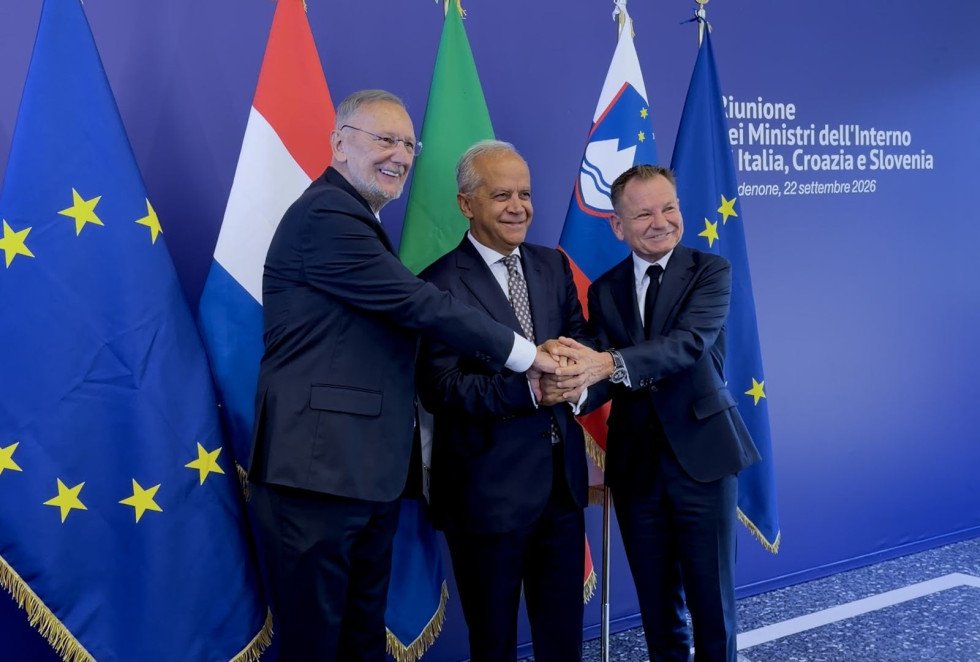
"The ministers discussed the situation regarding migration flows in the Western Balkans, the implementation of the Pact on Migration and Asylum (the Pact), and how to further strengthen cooperation between the law enforcement authorities of the three countries." In addition, they spooke about Frontex activity in the region and how they can better combat human trafficking through trilateral cooperation.
According to the press release, Minister Matoz told his counterparts that "Slovenia is experiencing an increase in irregular migration. We therefore emphasise the need for consistent registration in the Eurodac system, as this is the only way to determine which country was the country of entry and to ensure that all countries take up their share of responsibility."
Since 2023, the trilateral meetings between the Ministers of the Interior of Slovenia, Italy and Croatia have provided an important forum for coordinating joint activities in the fields of internal security, migration management, and combating cross-border crime.
with AFP, AP