
18 European interior ministers held talks over the weekend to strengthen border controls, improve emergency response times and establish fast-track procedures for returning some migrants. Germany's Interior Minister Dobrindt called for more powers for EU border agency Frontex.
German Interior Minister Alexander Dobrindt has called for significantly expanding the powers of European border agency Frontex during crisis situations and for migrant returns.
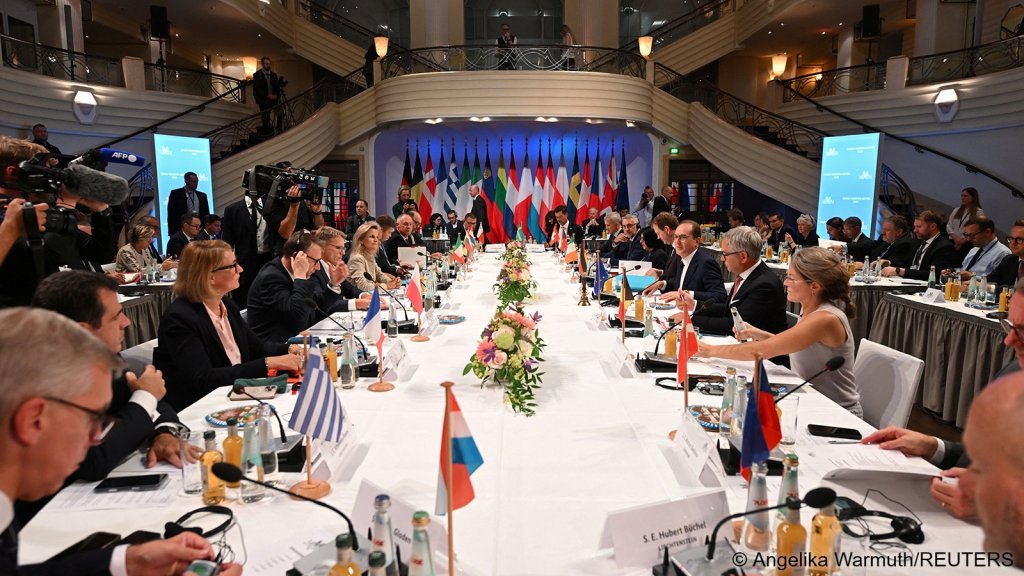
Ahead of a meeting with 16 fellow European interior ministers in Munich on Saturday (September 26), the conservative politician pushed to broaden Frontex's mandate to handle mass arrivals, such as those seen in Ceuta in July. Specifically, he advocated for establishing a dedicated Frontex rapid response unit for such events.
Such a rapid Frontex intervention force should be capable of deploying within 24 hours to manage extreme situations in support of border states, he argued.
Ceuta 'not a humanitarian emergency'
In situations like Ceuta, which Dobrindt noted was not a humanitarian emergency, the German minister argued that a mechanism should trigger accelerated deportations.
Dobrindt moreover welcomed European Commission President Ursula von der Leyen's recent proposal for a crisis response framework, stating, "We need a new European migration crisis mechanism."
Dobrindt urged a broader mandate for the agency beyond emergency responses: "We are convinced that we can deploy Frontex more effectively in return procedures," he said at the conference.
He pointed to deportations from transit countries as an example, stressing this would only occur with the host country's consent.
EU Commissioner for Home Affairs and Migration Magnus Brunner, who was also present, confirmed plans to expand Frontex' competencies "so that the agency can act faster, can act more flexibly, before events actually turn into crises." He noted this will require additional staff and an expanded role in returns.
Read AlsoThe return of the Rwanda plan – rights concerns and past failures
At the gathering dubbed the 'Munich Migration Meeting', Dobrindt also announced further discussions on deportation centers located outside the EU known as "return hubs". Germany and several member states have been pushing for this plan for some time.
Earlier this month, five EU states agreed on a common model for these offshore facilities. They reportedly aim to sign a first deal with a non‑EU country this year, but rights groups and past failures in Rwanda and Albania raise sharp legal, financial and human rights questions about any possible deals.
Asylum applications hit 14-year low
At the same time, the number of people applying for asylum in Germany has maintained a steady downward trend.
A spokesperson for the Federal Ministry of the Interior confirmed a report published by the German daily tabloid Bild, which stated that initial asylum applications dropped by 65 percent in September compared to the same month last year. This reportedly marks the lowest overall monthly figure recorded in the country since 2012.
Read AlsoGermany: Fewer asylum applications, higher approval rate
According to the report, 9,126 initial asylum applications were filed during the month of September last year, compared to 18,113 in September 2024.
Interior Minister Dobrindt attributed the decline to the federal government's stricter immigration policy, as he told the newspaper. He said the low number was the result of what he calls "immigration turnaround" (Migrationswende).
with dpa, AFP