
This week, a flurry of social media messages appeared to be calling for a second mass crossing into Ceuta, thought to be scheduled for September 23, the same day as the Moroccan elections. It led to Spain sending more police to the border as authorities are struggling to cope with the thousands of migrants still present in the Spanish enclave.
The rumors turned out not to have substance to them. More police and military personnel were sent to the border that Spain's enclave Ceuta shares with Morocco, but the feared mass crossings did not materialize. The crossing reportedly was planned to coincide with Moroccan elections.
Although Morocco is currently experiencing an economic boom, many of its young people are struggling to find work, or imagine a future for themselves in the country. Ahead of the elections, news reporters conducted interviews with many of those young people as they looked longingly out across the Mediterranean sea, or just across the border to European territory and imagined the lives they believed they could have, if only they could get to Europe.
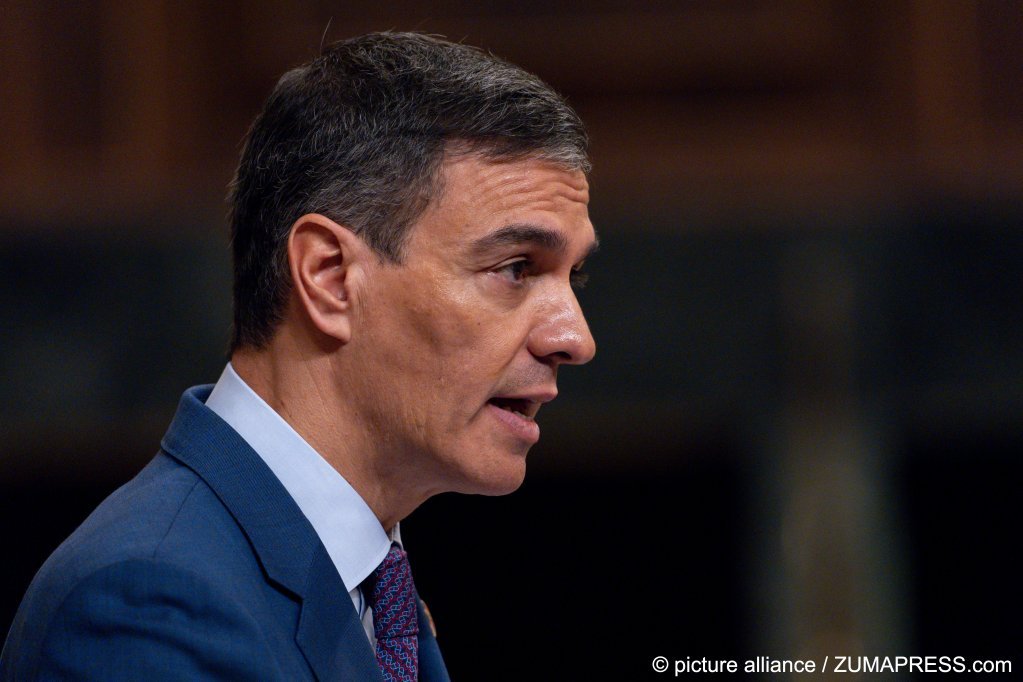
On Wednesday (September 23), Spanish Prime Minister Pedro Sanchez praised the Moroccan authorities for responding to reported renewed calls to cross over from Morocco to Cueta by bolstering border security on their side too.
Addressing the United Nations General Assembly in New York on Wednesday, Sanchez said, "In Morocco, yesterday, for example, we saw a very significant police deployment at both the Ceuta and Melilla borders. That should also be acknowledged."
Spanish news agency, EFE Verifica, reported an increase in messages circulating on social media calling for people to cross into Cueta on September 23. Some people were reportedly sharing videos that encourage migration on that date, and some referred to a "surprise attack."
EFE Verifica also monitored a WhatApp Group, called "The great assault of September 23" with more than 200 members. The group is said to be divided between those who want to attempt a crossing and those who are proposing an alternative entry point via Melilla. Some reportedly posted dissuading the others saying, "Brothers, go to sleep, there’s nothing happening on the 23rd."
Read Also
Moroccan families travel to Ceuta border in search of missing loved ones
Mass arrivals and humanitarian crisis
In July, more than 70,000 people were reported to have irregularly crossed from Morocco to Cueta, plunging Spain’s north African territory into a humanitarian crisis.
While the two governments have organized the return of tens of thousands of people, who had arrived in Ceuta, several thousand people continue to make the streets of the small territory their home.
The vast majority had been sleeping rough on the streets and beaches of the enclave, with a major informal camp having sprung up on the beach of Trampolin. However, in the last couple of weeks, two large temporary camps have been built to house up to 6,000 migrants, including minors.
The Spanish government has also increased maritime controls since late July to prevent further entries.
Read AlsoCeuta: Hundreds of migrants relocated to new center
Election turn out and youth disillusionment
The news comes as Morocco's ruling coalition dominated parliamentary elections in a poll marked by low turnout. The government announced the center-right Authenticity and Modernity Party (PAM) won 97 out of 395 seats in the House of Representatives, with the National Rally of Independents (RNI), which heads the outgoing coalition, came in second with 66 seats.
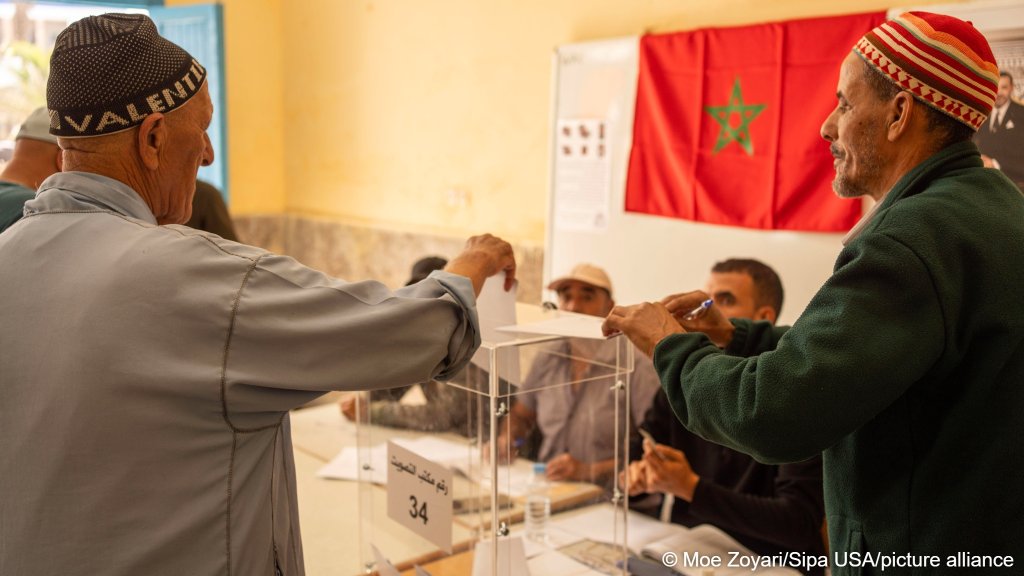
Turnout, especially among young Moroccans, was low at an estimated 38 percent from 16 million registered voters. Voter turn out was the lowest since 2007 when the figure was 37 percent.
Speaking to German public broadcaster DW, political commentator, Mehdi Sabiq, explained the low voter turn out from the Gen Z group who he described as being about "rejecting current political parties."
Looking for hope and a future
Youssef, a 20-year-old Moroccan who lives in Rabat, is one of those who have little faith in government institutions. Youssef was among those who tried to cross into Ceuta last July --his third attempt to try and enter Europe.
Government statistics indicate that from 2024 to 2025, the unemployment rate fell from 13.3 to 13 nationally. Unemployment however remains high among young people aged 15 to 24 (37 percent), graduates (19 percent), and women (21 percent).
The number of underemployed people increased during the same period, rising from 1,082,000 to 1,190,000 nationally.
Meanwhile, state data show that the economy reached five percent in 2025 compared to four percent the year before.
The numbers suggest a country that is growing economically, but a sense of exclusion for many youth persists.
"This country doesn't offer you anything if you stay here. It needs to do something for us so that we can see that our country is really trying to help us. Why do people go out to sea and die there?" said Youssef.
Read AlsoMorocco: Migrants caught between Ceuta dreams and reality