
Successive boat arrivals over the last few days are fanning anti-migrant protests and sentiment in the UK. Research shows that the on-line groups amplifying the hate across borders are doing it for ideology and profit.
Ten small boats carrying 781 people arrived in the United Kingdom on Wednesday (September 23), according to the latest data released by the Home Office. The number is the highest number of daily arrivals recorded this year so far.
This week, there were an estimated 1,085 people who arrived by small boat into the UK. Home Office figures showed 150 people on 3 boats arriving on Monday (September 21), 154 people also on 3 boats on Tuesday (September 22) with the largest number of 781 arriving on 10 boats on Wednesday (September 23).
In a statement about the crossing on Tuesday, the Royal National Lifeboat Institution (RNLI) said the Coastguard sent two lifeboats on a rescue mission after the boat had been at sea for 36 hours. The Coastguard then reportedly directed lifeboat crews to take people off the dinghy because of concerns for their safety and deteriorating health. They were subsequently transferred to a Border Force vessel. The RNLI said it would rescue anyone in trouble at sea "without judgement or preference."
Triggering tensions and protests
The news of the separate but successive crossings on Monday and Tuesday triggered protests in Gosport and Portsmouth, southern England where one of the boats arriving on Tuesday was expected to dock. A proportion of the protesters were men dressed in black, some wearing face-coverings, despite recent bans.

In a statement, the Hampshire and Isle of Wight Constabulary, responsible for patroling the area around Portsmouth and Gosport, explained that they told the protesters the boat was due to dock elsewhere, but some of the people who remained in Gosport reportedly "became hostile towards officers," police said.
Arrests
Six people were arrested on charges that included aggravated trespass, racially aggravated public order, and assaulting an emergency worker. Information released indicate that the suspects were:
- Two men from Salisbury, aged 19 and 36 arrested on suspicion of aggravated trespassing
- A 67-year-old man, from Gosport arrested on suspicion of careless driving and assaulting an emergency worker
- A 32-year-old woman, a 31-year-old woman and a 33-year-old man, all from Gosport, arrested on suspicion of assaulting an emergency worker.
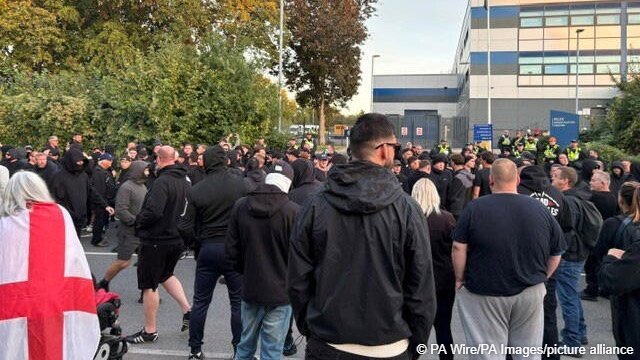
Law enforcement authorities have also arrested far-right activist Daniel Thomas, known online as Danny Tommo, following a video that appeared to show Thomas allegedly slashing a migrant boat in the Channel while an emergency responder was on board. Local UK media has reported several hundred supporters of Daniel Thomas gathered outside a police investigation center on Thursday (September 24), chanting for his release.
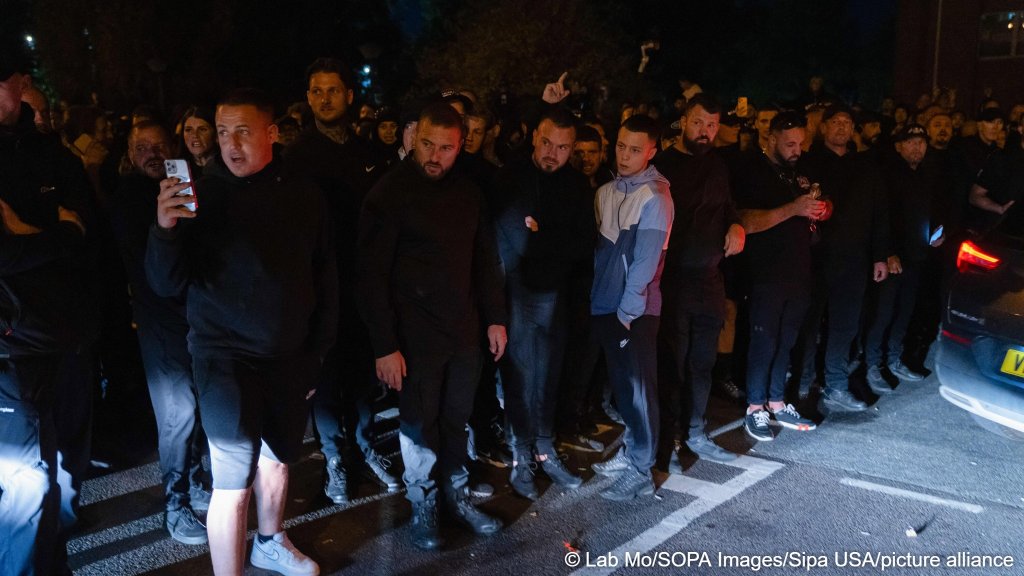
"Our prosecutors have worked to establish that there is sufficient evidence to bring the case to court and that it is in the public interest to pursue criminal proceedings," The Crown Prosecution Service announced on Thursday.
The BBC reported on Friday (September 25) that Thomas has pleaded not guilty to criminal damage and failing to disclose the PIN to his phone. Thomas's next court appearance is set for September 29.
Anti-migrant hate spreads across borders
Research has shown the role of anti-migrant messages circulating in Europe in amplifying hostility towards migrants and the motivations of the different actors behind them.
One type of message is from promoters of a far-right ideology seeking to catalyze online support and mobilize it into street presence. Another is from overseas operators profiting from spreading hate and dislocation in societies.
The Institute for Strategic Dialogue (ISD), an independent, non-profit "think and do" tank that fights hate, extremism, and misinformation analyzed the unrest in Southampton and Belfast in June 2026 this year, following stabbing incidents that allegedly involved migrants.
Their findings showed how far-right accounts framed the stabbing incidents online as evidence that migrants are endangering the public. Accounts blamed entire communities, repeated calls for "remigration," a term coined by the far-right term to call for mass deportation, and accused police of favoring migrants over White people.
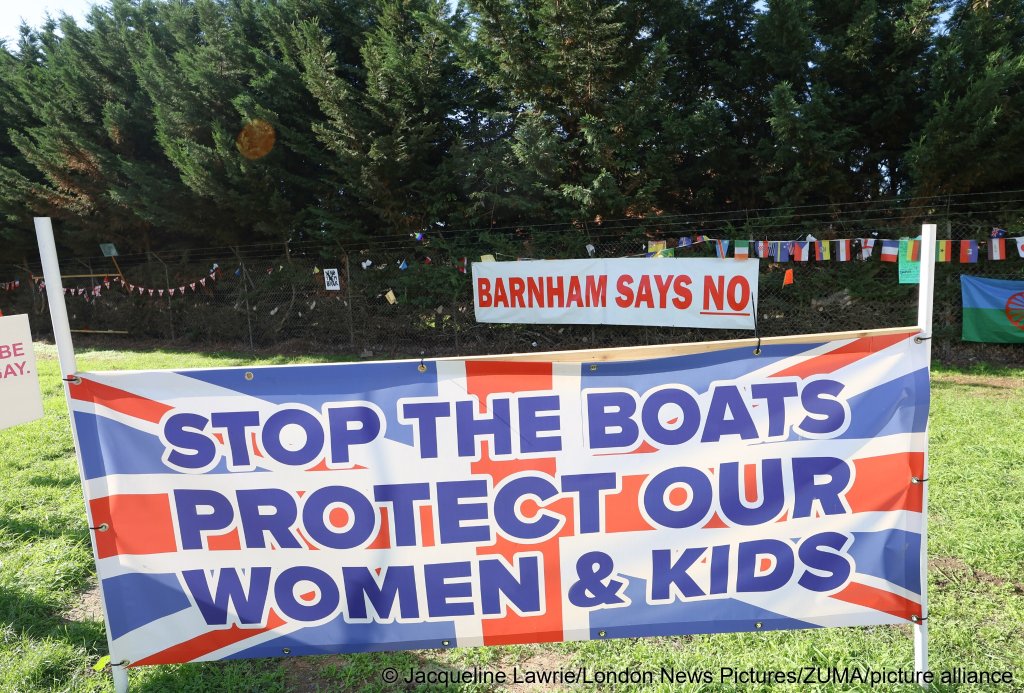
ISD found that accounts outside the UK helped amplify the two incidents, while prominent figures shared claims across X, Telegram and other platforms. Six of the ten most-liked posts linking the cases to calls for "remigration" came from accounts abroad, according to the study’s detailed analysis. Researchers also documented AI-generated protest imagery and a manipulated image of a police officer. Such material gave familiar claims new (false or manipulated) visuals that could be circulated rapidly as events unfolded.
This is one route by which anti-migrant ideology travels: activists use local events to recruit attention, build solidarity across borders and encourage people to protest. A second route appears to have a financial incentive.
Making money from hate
Meanwhile, investigations by ISD, Reset Tech and the Bureau of Investigative Journalism shows how some may be profiting from the spread of inflammatory posts.
The joint investigation by ISD and the Bureau of Investigative Journalism showed 89 Facebook pages and 39 groups linked to an operation based in Sri Lanka and Pakistan aimed largely at British audiences made up of "young, entrepreneurial men." Their output included AI-generated anti-migrant images, false claims and calls for protests. ISD said the available evidence pointed to a commercial operation, even though its posts carried political messages.
"They tend to have zero interest in UK politics, but the content they create often boosts far-right talking points in Britain and contributes to the increasingly hostile atmosphere for immigrants and British Muslims. They’re part of a booming cottage industry producing commercial AI slop," read the report.
Some of the creators told researchers from the Bureau of Investigative Journalism that they could make as much as 1,500 dollars (around 1,300 euros) per month on passive income from their content creation.
Reset Tech’s wider investigation, entitled "Monetized Slopaganda" found the model extended beyond one network with material that ranged from anti-immigration posts to fabricated news and deepfakes. Reset Tech concluded that platform payments and advertising incentives reward high engagement, while limited disclosure makes creators' actual earnings difficult to establish.
"Social media monetization programs are incentivizing a new industry of AI-generated political clickbait targeting audiences in Europe and globally. Profit-motivated creators use easily accessible AI tools to flood users' feeds with deepfakes of politicians and journalists, fabricated news impersonations, and political clickbait and spam — all of it incentivized by the platforms themselves," read the report.