
The migration route between the Spanish Balearic Islands and Algeria has overtaken the Canary Islands route since September, with at least 161 migrants arriving in the Balearic Islands between September 21 and 22.
The sea route from Algeria to the Balearic Islands is becoming an increasingly important migration pathway into the European Union. As the route gains prominence, the Spanish Civil Guard intercepted at least 161 migrants aboard more than 10 vessels between September 22 and 23.
Most of the interceptions of North and Sub-Saharan African migrants were at night, according to the local government authorities.
The Spanish press has described an uptick in migrant arrivals in the Balearic Islands in recent weeks. On September 16, 168 migrants were intercepted aboard 11 vessels which arrived in various Balearic Islands, reported the Spanish website Infobae.
Read AlsoSpain: Migrant death toll nears 100 this week, en route to Ceuta and Balearic Islands
The Spanish Civil Guard also intercepted 180 other migrants last week while they were trying to reach Spain from the Algerian coast.
Balearic Islands register more arrivals
The Balearic route has now surpassed the Canary Islands route for the first time in terms of irregular migrant arrivals.
This shift comes from a major decrease in arrivals to the Canary Islands. A total of 5,592 people arrived in the Canary Islands between January 1 and September 15, 2026, compared to a total of 12,453 during the equivalent period in 2025. This represents a decrease of 55 percent.
In contrast, irregular arrivals to the Balearic Islands have been increasing. The Interior Ministry recorded a total of 5,627 migrants who arrived by mid-September 2026, compared to a total of 5,483 over an equivalent period in 2025, an increase of 2.6 percent.
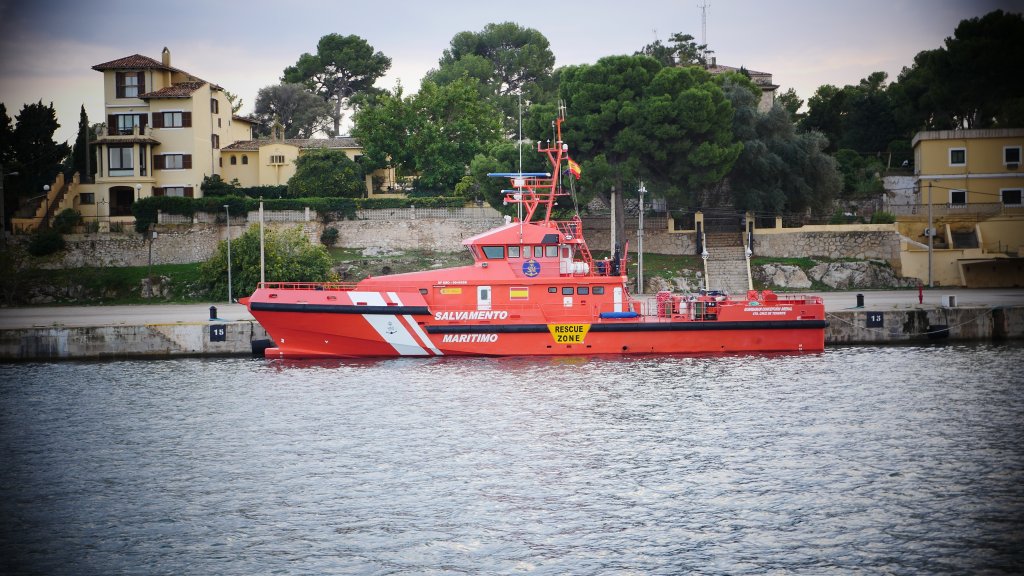
Yet according to the press agency EFE, the gap between the two migration routes is even bigger because the Interior Ministry didn’t take into account the most recent arrivals to the Balearic Islands. Using figures provided by the Interior Ministry and the Government Delegation of the Balearic Islands, EFE concluded that over 6,000 migrants arrived on the Spanish archipelago since the beginning of the year. The figure represents 500 more migrants than the statistics provided by the Interior Ministry.
'The situation is unsustainable'
While visiting a site where migrant boats were being stored earlier this week, the President of the Island Council of Mallorca Llorenç Galmés announced that he had alerted Madrid about the arrivals. "The situation is unsustainable, and Mallorca cannot continue to deal alone with the consequences of being an external border of Spain and the European Union," he wrote in a letter sent to Spanish Prime Minister Pedro Sanchez.
In the document, he requested Madrid to provide urgent and concrete measures ahead of a high-level meeting between Spainish and Algerian officials scheduled for October.
Galmés also raised the alarm over the situation in housing centers for unaccompanied minors, which are "operating at 1000 percent capacity." Over 500 unaccompanied minors had been taken in charge by the social services of the Balearic Island, according to the island’s official in charge of social affairs.
"The Algerian route to the Balearics is the fastest-growing in Europe and also, unfortunately, the deadliest," he concluded, reiterating his request for the European Commission to deploy the EU agency Frontex in the Balearics.
The number of deaths along the Balearic route increased during the first five months of 2026, according to the Spanish non-governmental organization Caminando Fronteras. At least 507 migrants died along this route between January and May 2026, a 54.6 percent increase compared to the same period last year.
Read AlsoAlgeria: IOM signs partnership with government expanding voluntary return partnership