
The UN Refugee Agency in Germany says that Syrian war refugees should be allowed to keep their protection status at least for the time being. The comments come in response to German government plans to revoke the status and return increasing numbers of Syrians to their country of origin two years after the fall of the authoritarian Assad regime.
UNHCR continues to point out that the conditions for Syrian to return to their country in a safe and sustainable manner are not in place yet, and that Germany should not start planning their return just two years after the end of the civil war there.
Katharina Thote, UNHCR's representative in Germany, acknowledged that "[w]hile conditions in Syria have changed since the change in government" at the end of 2024, "developments in the security and human rights situation are not yet fundamental, stable, or lasting enough to justify such a step" as demanding the return of Syrians en masse.
"Thus, the conditions for revocation [of protection] have not been met," Thote added in an official statement released on September 22.
Read AlsoUNHCR chief meets Syrian president to discuss returns
Syria: A country in ruin
Thote highlighted the fact that as a result of nearly 14 years of war, nine out of ten Syrians continued to live in poverty, with millions still displaced in the country.
"Schools, health centers, and other vital infrastructure have been destroyed in many places," Thote explained.
Instances of sectarian violence in parts of the country also remained a cause for concern, she added.
Read AlsoSyria: Millions return to poor infrastructure
According to the UN Refugee Agency (UNHCR), 132,000 Syrians meanwhile have fled to neighboring Lebanon since the fall of Syrian leader Bashar al-Assad almost two years ago.
Among them are Alawites, Shiites, Druze, Christians and other minorities, according to Karolina Lindholm Billing, the UNHCR representative in Lebanon.
"Many still do not have the confidence that they can return permanently and sustainably," Lindholm Billing said.
Read AlsoThe uncertain future of the Kurds in the new Syria
Many Syrians now integrated into Germany
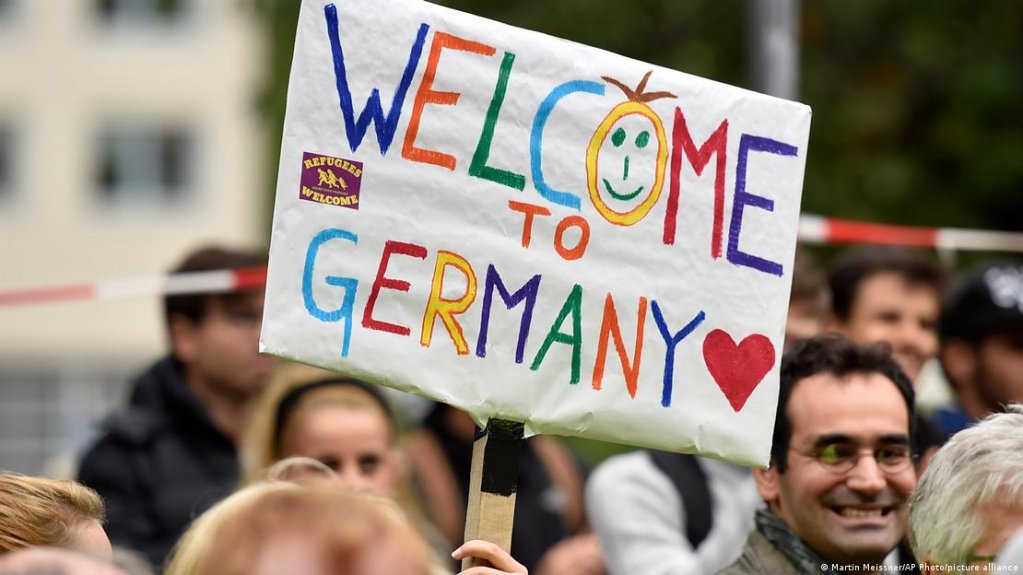
Simultaneously, UNHCR's German representative also called for the German government to consider the significant efforts that hundreds of thousands of Syrians had made to integrate in Germany:
"Many Syrians are now firmly established in Germany, both socially and professionally, and make an important contribution to society. It is in everyone's interest to offer them clear prospects," she stressed.
Thote reiterated the official UNHCR position that refugees who have been living in Germany for a long time should be allowed to remain in the country on account of their economic investment.
She said their protection status should also be converted to a different kind of long-term leave to remain legally.
Read AlsoHow recent Syrian communal violence is impacting Germany
Interior Ministry working on returns offensive
Her comments come in response to plans shared by Germany's Interior Minister Alexander Dobrindt who, according to various media reports, said the government was planning to revoke the protection status of numerous Syrians in the future.
Dobrindt said earlier in the week that Germany was soon going to start issuing orders to certain Syrians to leave the country — in particular "young men" who had arrived in Germany alone and without any family.
The minister said that this demographic "will presumably be able to support themselves in Syria."
He added that a growing number of Syrians will therefore have their protected status revoked.
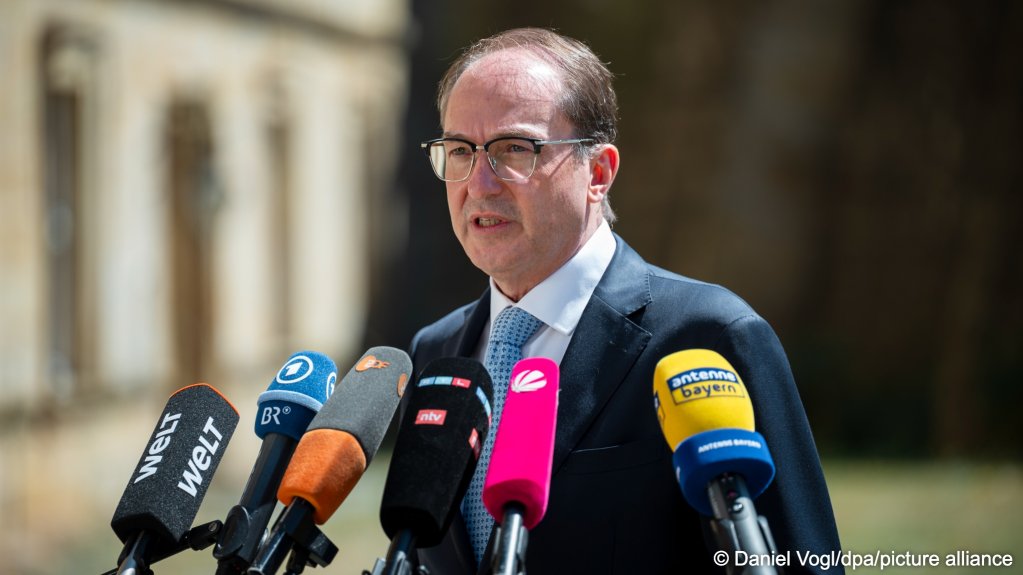
Other voices from within his party bloc, which consists of the Christian Democrats and the Christian Socialists, such as Alexander Throm, domestic policy spokesperson for the parliamentary group in the Bundestag, took the plans a step further.
Throm suggested that young Syrian men who currently are not employed but on government benefits in Germany should be among the first to be sent back.
He added that skilled people, "[p]eople such as doctors or nurses, who are working, should have the option of switching to a work-based residence permit."
Germany increasing deportations and reassessments
A spokeswoman for the Federal Ministry of the Interior meanwhile said "that a protection status can only remain in effect as long as there is a corresponding need for protection."
With the situation in Syria continuing to stabilize, this need — and the related residence permits based on that need — would be "reviewed in the medium term to determine whether the grounds for protection still exist."
She added that the Federal Office for Migration and Refugees (BAMF) had in general begun to reassess asylum cases more closely and to "gradually expand its revocation activities" to include Syrians.
German chancellor under fire after election losses
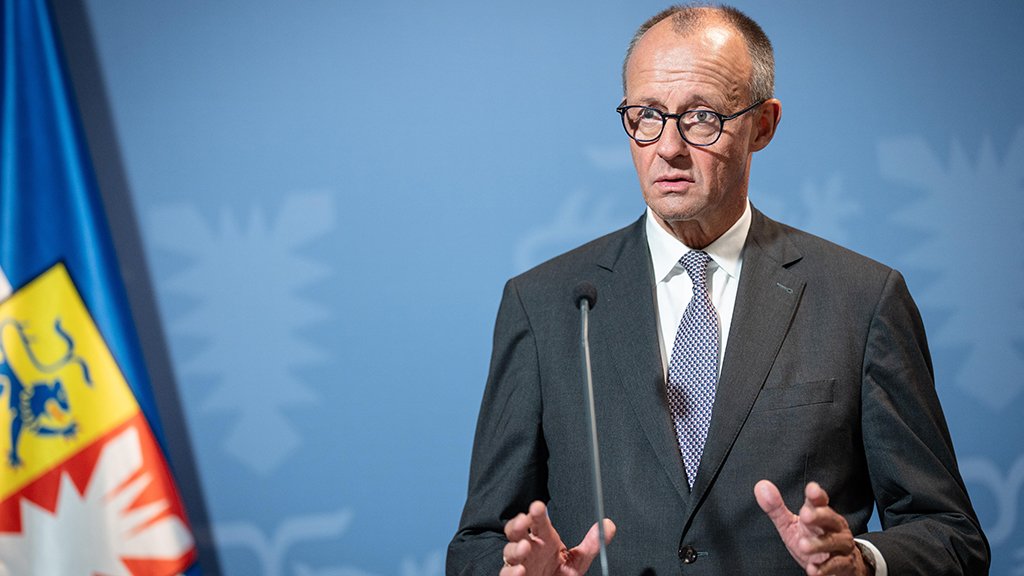
Earlier this year, German Chancellor Friedrich Merz held a meeting with Syrian President Ahmed al-Sharaa during which the German leader stated that he ultimately expected about 80 percent of Syrian war refugees to return to their country within the next three years, and that the German government would support this.
Dobrindt's statements this week supported the chancellor's position, highlighting that the government was "working to significantly increase not only forced returns but also assisted returns."
Read AlsoGermany: Chancellor Merz attracts sharp criticism over '80 percent Syria returns' comment
Throm also called for the creation of "a better program to encourage the voluntary return of Syrian refugees," adding that every voluntary departure "costs the German government considerably less than a forced deportation."
Chancellor Merz meanwhile continues to face significant domestic pressure after his party, the Christian Democrats, suffered heavy losses in state elections in recent weeks.
With majorities voting for the hard-right AfD (Alternative for Germany) party, Merz' political course seems to be taking his party increasingly to the right in the hopes of gaining back support from some of the voters lost to the AfD.
with AFP, EPD, KNA