
Italy intends to limit the number of foreign students per class, according to Prime Minister Giorgia Meloni. The government also plans to ban head coverings such as Muslim burqas and niqabs from the classroom. The integration of migrants from Muslim-majority countries remains a major political issue in Italy ahead of elections slated for 2027.
Italy remains a major frontline country in the EU for the arrival of irregular migrants due to its location on the Mediterranean Sea. Each year, tens of thousands of migrants, mainly from the Middle East, Africa and Asia, make their way to the southern European country in the hopes of being granted asylum and building a better life for the future.
However, the issue of their integration remains a major talking point, as public opinion in Italy has increasingly been turning against migrants, ahead of elections due to be held next year.
Prime Minister Giorgia Meloni has now announced a series of measures to counteract the perceived lack of willingness to integrate among foreigners, starting with schools.
"A measure will soon be presented to cabinet to legally establish a maximum number of foreign students per class," Meloni announced during a meeting of the youth wing of her Brothers of Italy party.
"It will also require parents of foreign students, who are facing serious difficulties with integrating into the school system, to learn Italian," she said, adding on X that "[i]ntegration comes through knowledge of our language, respect for our rules."
"If there is only one child in a class who doesn't understand Italian, that child will likely be able to learn the language and integrate quickly with the help of classmates and teachers. However, if the number of children who don't understand the language becomes large — or even the majority — that is no longer integration; it is neglect," Meloni explained.
Read AlsoMuslims in Germany: Religion not a good gauge of integration
Existing law already limits number of foreign students
The announcement, however, caused some confusion, as there already is a limit on the number of foreign students per class under a 2010 Italian law.
Since then, the number of foreign students has been limited to 30 percent of any class as well as of a school's total enrolment. This limit can be raised in certain cases involving foreign students with sufficient Italian language skills — and lowered in instances where foreign students are found to have a poor command of the language.
However, according to a report in the Italian daily Corriere della Sera (Evening Post), the circular issued in 2010 was rarely applied, due to a "lack of coordination" or because of "various exemptions." By issuing it as a new law, Meloni's government hopes that it will force school authorities and schools to make sure foreign students are "distributed" equally across classes and schools in a particular region.
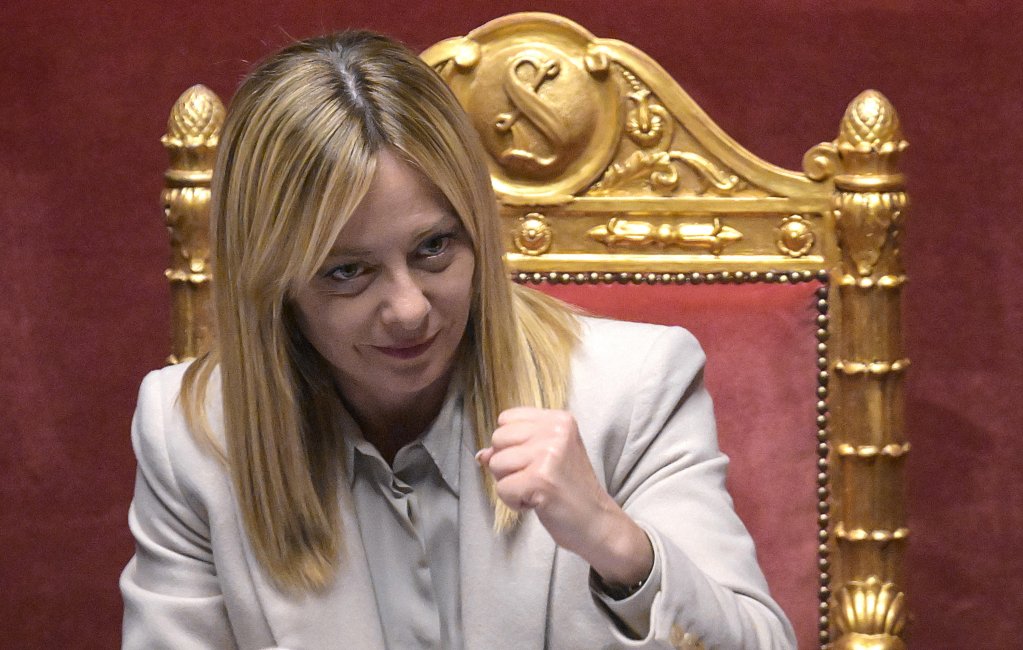
At the same time, foreign pupils account for under 12 percent of all children enrolled in Italian schools, according to the National Statistics Institute (ISTAT) — keeping numbers well below the 30 percent threshold.
A time-frame for the introduction of these proposals has not yet been given. However, the minister for education Giuseppe Valditara explained to journalists that the rule would not apply to children of parents from the EU, since EU law means that all EU citizens must be treated equally. Nor was it likely to apply to children born in Italy and who could speak Italian fluently, whether or not the passport they hold might be non-Italian. Valditara added that the law was more to remove the "obstacle" to education, rather than treat some children differently, reported Corriere della Sera. To that end, the government expects to add special language and integration classes for those children who might need them in certain schools.
Statistics for context
According to Corriere della Sera, citing the latest statisics for the 2024-25 scolastic year provided by the Fondazione ISMU (a foundation studying human migration), the total foreign population stood at 931,323, or around 11.6 percent of the total school student population. The percentage of foreign students was slightly greater in primary, infants and middle schools and slightly lower in secondary schools, ranging from 13,7 percent of the population in primary schools to just nine percent of the population in higher schools.
The newspaper added, that two thirds of these children were classified as "second generation" migrants and had been born in Italy and most probably attended Italian nursery and infant schools from the beginning of their educational career.
A little under half of the non-Italian school population come from within the EU, with Romanian children making up the majority of that group. In fact, around 40 percent, noted Corriere della Sera, of the school population are made up of children born to Romanian, Albanian, Egyptian and Moroccan parents.
The newspaper added, that around 1,000 classes in Italy had been identified as holding a concentration of more than 20 percent first generation migrant children, and that is out of around 300,000 classes across the country, "to give readers an idea of the scale of the phenomenon we are dealing with," noted the report's authors.
What makes it slightly more complicated though, is that many children of migrants tend to be concentrated around the north's big cities, Milan, Bologna and in the region Veneto. In the south of Italy, many classes don't even have a five percent presence of non-Italians in their classes.
Read AlsoMuslim migrants in Monfalcone look for a place to pray
Hijab-ban also part of proposed changes
Meloni also declared that the government will introduce "bans [on] burqas and niqabs in schools," doubling down on her plans to push immigrants to integrate more into a traditionally Italian society.
"You must go to school with your face uncovered, and in Italy no one, in the name of a real or supposed tradition, can decide that a young woman must hide herself," Meloni said.
Read AlsoAustria bans Muslim headscarf in primary schools
To date, there has been no legislation in Italy overtly banning such head coverings, although in practice, authorities have repeatedly used a law dating back to 1975, which prohibits the wearing of any garment that would make a positive identification of a person difficult, to stop women from covering up.
However, the application of that law can be challenged with a 2008 court decision, in which Italy's highest administrative court issued a decision saying that full-face coverings, including veils, may be used for religious reasons — as long as people do not hesitate to show their face if and when this might be required to verify someone's identity.
A similar ban for Muslim girls on wearing a headscarf in primary schools was introduced in 2019.
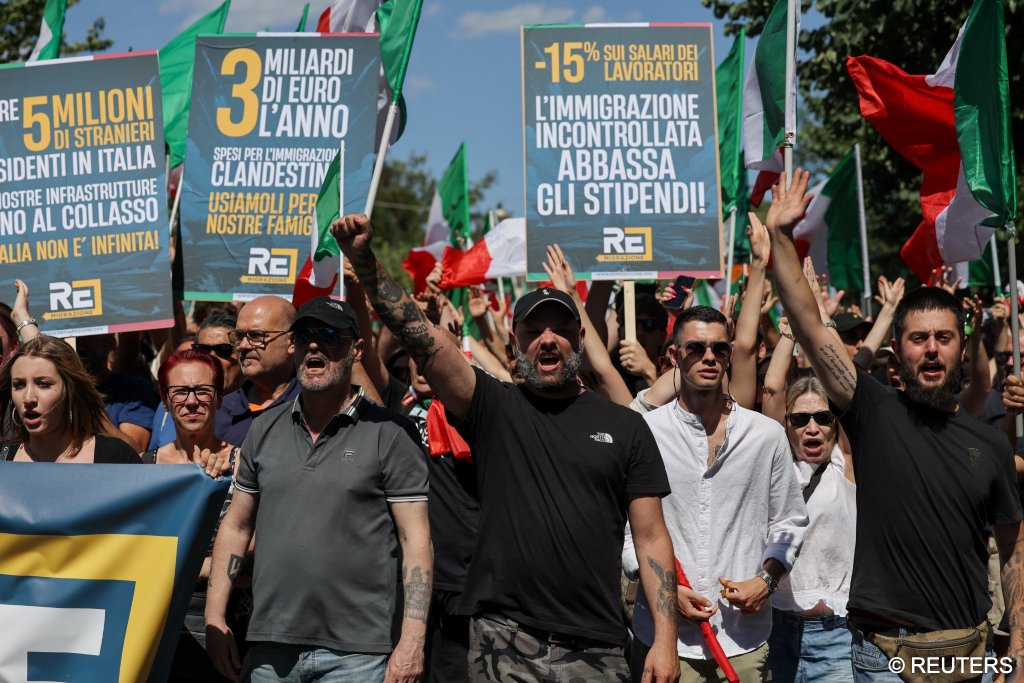
Read AlsoDutch 'burqa ban' comes into force
Political motivations behind announcement
Meloni's move to advocate for a ban on head coverings in school might also be due to political pressure:
The National Future (FN) party had already demanded a ban on veils in school back in July. The party, which is not part of Meloni's coalition, has risen in popularity ahead of elections due to be held next year.
Meloni's move is seen as an attempt to stop more voters from defecting to the extremely far-right FN, as the new party, which was only launched in February, is increasingly being regarded as a challenger to Meloni's crown.
Read AlsoCould Italy's migration debate divide the political right?
with Reuters, AFP