
Reports from Italy indicate that some doctors in the country are being investigated on suspicion of having 'helped' migrants avoid being sent to detention centers — by falsely certifying them to be ill. Investigations have been launched looking into allegations involving at least 23 medical professionals.
Rights groups in Italy have voiced concern about the investigation examining 21 Italian infectious disease specialists as well as two psychiatrists.
All are suspected of having certified certain migrants with medical certificates to keep them from being sent to a detention center — though only one of them currently is facing criminal charges of engaging in a "criminal conspiracy involving ideological forgery," according to the Italian daily newspaper Il Fatto Quotidiano.
The newspaper cited legal documents issued by authorities in Ravenna, which indicated that they believed the matter was not a series of "individual, unrelated phenomena," but rather "an associative structure with a division of roles and responsibilities" involving various medical practitioners.
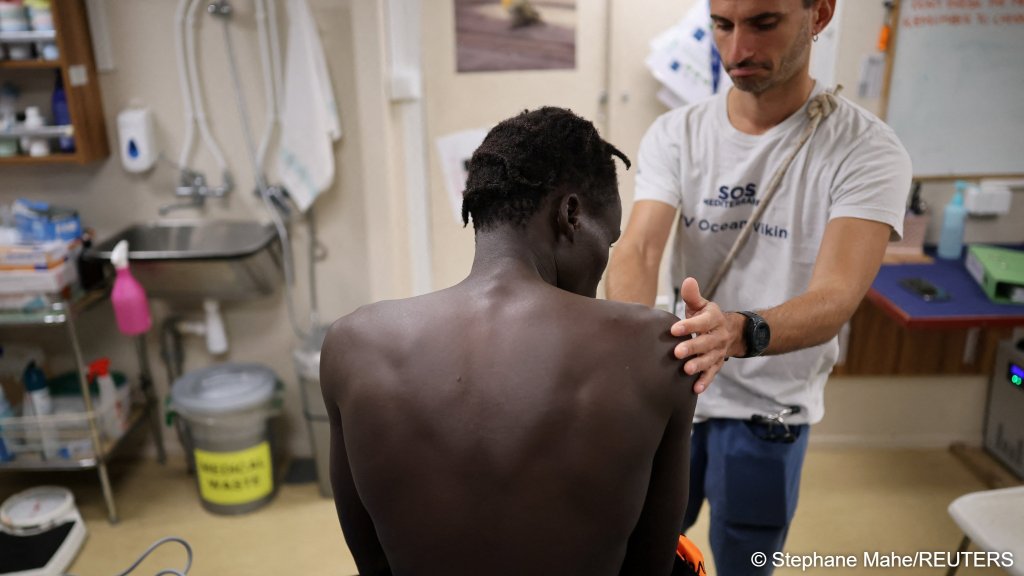
Pre-deportation medical examinations
Migrants without the legal right to remain in Italy, who are deemed too weak medically, cannot be housed and processed for deportation in Italy's detention facilities, known as CPRs — those with psychiatric vulnerabilities and infectious diseases being the main arguments used in such contexts.
In most instances, such medical backgrounds could ultimately prevent the migrant bearing such a diagnosis from being deported.
In addition, in 2025, the World Health Organization (WHO) issued a warning that the conditions at some pre-deportation detention facilities were akin to a breeding ground for infectious diseases, and that the environment could perpetuate traumas and cause "serious psychiatric disorders."
Read AlsoAccess denied: Undocumented migrants across Europe missing out on healthcare services
'Pathogenic' facilities
According to reports in the Italian press, prosecutors in Ravenna allege that some doctors have falsified documents in at least 34 migrant cases, with instances allegedly involving medical examinations of migrants housed in cities across Italy, including the major metropoles of Rome, Milan, Bologna and Florence.
Earlier this year, courts already banned three of the doctors under investigation from practising for ten months, while another five were removed from handling deportation cases, also for ten months.

Italy's far-right Deputy Prime Minister Matteo Salvini from the League party meanwhile commented that the doctors should face harsh longterm sanctions if the charges ultimately are confirmed:
"If found guilty, they would be struck off the medical register and pay damages, out of their own pockets, for the failure to expel all the illegal immigrants they allegedly protected," he told reporters.
Meanwhile, the Italian investigative magazine La Via Libera said that the instances under investigation involved examinations at detention facilities where doctors may have felt pressure from the police to issue authorizations to have migrants deported, and that the conditions to conduct full medical examinations had been inadequate at these centers, if not unsanitary.
The Italian Society of Migration Medicine (SIMM) has previously described CPRs as highly "pathogenic" locations, as reported by the Italian Catholic daily publication Avvenire.
Read AlsoItaly: New healthcare agreement aims to help migrants
Doctors treated 'like mafia criminals"
A lawyer representing five doctors who were searched as part of the investigation, lambasted the conduct of officials during the searches.
"I'm shocked and appalled," said lawyer Fabio Anselmo to the Italian news agency ANSA. "People who are not under investigation are treated like mafia criminals."
"We don't blame the police, but the Ravenna Prosecutor's Office is responsible for these procedures," he added, explaining the doctors' homes were raided in the early hours of the morning, and that they were taken to police stations to have their mobile phones and laptop computers seized as part of the investigation.
Read AlsoItaly: Medical charity's clinic in Tuscany closes due to funding cuts
Sharp criticism from various groups and associations
The National Federation of Medical Associations (Fnomceo) meanwhile responded to the developments, calling for respect while the investigation continues.
"The falsification of a medical certificate, if proven, constitutes serious misconduct," said Fnomceo president Filippo Anelli, adding however that "politics or media hype cannot preempt judgments and sanctions."
Annelli added that regardless of the outcome of the inquiry, doctors should not ever be regarded as "auxiliaries of security policies," but rather as professionals entrusted with protecting the health and dignity of individuals.
Doctors Without Borders (MSF) meanwhile stressed that medical professionals operate under the Hippocratic Oath, and informed the investigating authorities in Ravenna that this needed to be taken into account as part of the principles of independence and responsibility that guide the medical profession.
Read AlsoAmnesty criticizes detention and asylum procedures under Italy-Albania migration deal
The Immigration lawyers' association ASGI has joined the ranks of those critical of the investigation, arguing the nuanced nature of medical professions.
ASGI said that doctors consulted for migration cases ran the risk of being reduced to "mere bureaucrats" used by authorities to justify and rubber-stamp migrant detentions.
ASGI told the AFP news agency that several homes had been searched as part of the latest stage of the operation on September 16, adding that several doctors' phones were also seized, even those not directly under investigation.
Read AlsoCouncil of Europe: Externalized asylum policies must align with international human rights law
Doctors' protest in Bologna
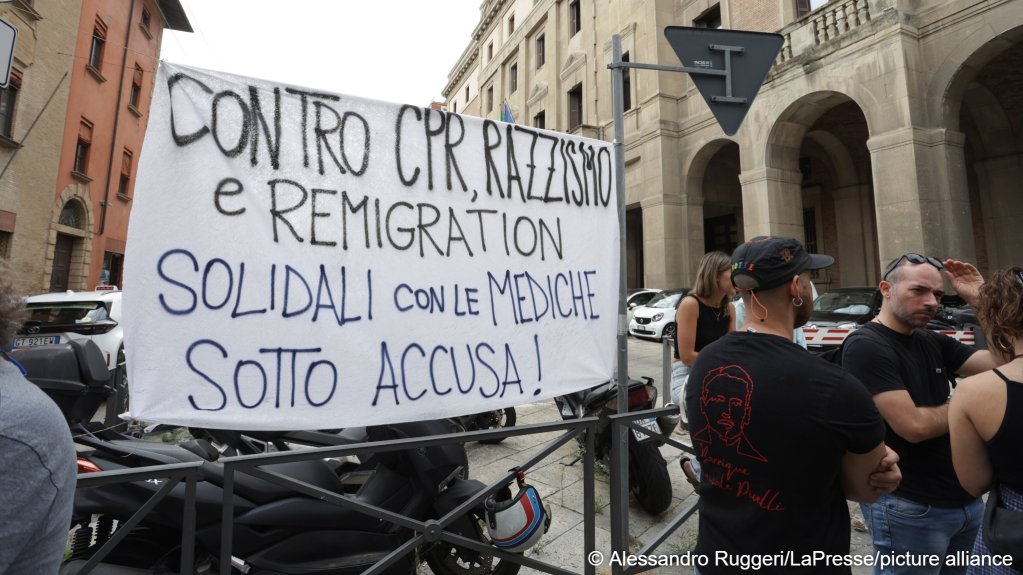
In the northern city of Bologna, medical professionals and citizens took to the streets in protest of these recent developments.
During a rally held outside the city's police headquarters, supporters came together to express solidarity with the medical professionals under investigation.
Several associations meanwhile launched a campaign titled, "Care is not a crime," reaching out to the Ministry of Health to intervene, which according to Lia Via Libera is yet to comment.
A local healthcare provider Laboratorio di salute popolare (Laboratory of health for the people), set up so that healthcare can be accessed by all in Bologna, shared a post on Instagram, in which it stressed its support for the doctors under investigation.
"We stand alongside our colleagues to reiterate that our profession, the care we provide, cannot be bent to the demands of a state that seeks our consent to confine people in places that [have already been defined as] pathogenic and deadly."
Read AlsoCould Italy's migration debate divide the political right?
Support for detention centers — across EU
As part of its increasingly hardline immigration policy, Italy already operates nine detention centers, where migrants mainly are held for processing prior to the return to their home countries.
The Italian government continues to invest heavily in these centers, focusing a big portion of its current migration approach on pre-deportation detention and related methods.
Italy is also a staunch supporter of opening more such facilities outside the EU — to keep migrants from reaching the bloc.
Following a series of legal changes in Brussels, Italy would be permitted to launch and run such detention centers with partner countries in non-EU countries, for which it has also garnered support from several EU members.