
Some EU lawmakers have criticized Spain's migration policies following the mass crossings into Ceuta, warning that they could encourage further irregular migration. They are also calling for stronger border protection, closer cooperation with Morocco on migrant returns, and full use of the EU’s new Migration and Asylum pact.
A text proposed by mostly right-wing members of the European Parliament has criticized Spain's "large-scale" regularization policy pursued by the Madrid government, arguing that it "acts as a pull factor and sends the wrong signal to potential migrants and smuggling networks."
The criticism comes as reports of tussels and "chaos" breaking out amid Spanish police attempts to transfer migrants from makeshift encampments in Ceuta to temporary centers set up to try and accommodate migrants still on the territory whose claims or migration status need processing. Reports on the BBC and the Moroccan news and information site Hespress reported police firing rubber bullets in the air and in some cases "using batons" to quell migrants during the transfers.
Some members of parliament (MEPs) want the European Commission to check whether such national policies could encourage migrants to move to other EU countries and affect how the Schengen Area works. These accusations come amid a row between the socialist-led coalition in Spain with the right-wing coalition in Italy about migration policy, which has led to a tit-for-tat addition of controls for travelers flying between the two countries, following the mass arrivals of migrants in Ceuta at the end of July.
MEPs raising the issue in parliament said migrants who have no legal rights to remain in the EU, including unaccompanied children, should be returned immediately in ways that comply with EU and international law.
Read AlsoEU to propose new emergency framework to tackle 'engineered and weaponized' migration
'Hybrid warfare' against EU
The text, proposed by members of the Christian Democrat (EPP) parliamentary group in the parliament, and passed with the support of lawmakers from right-wing parties such as the AfD and France's Rassemblement National also called on the Spanish government to "make full and effective use of EU emergency funding, granted by the Commission, and of operational support from EU agencies. It should also cooperate fully with and support the ongoing judicial investigation at national level into the July events."
The text referred to the EU’s Pact on Migration and Asylum, which became applicable on June 12, 2026, with MEPs stressing Spain’s responsibility to make full use of the legal and operational framework provided by the pact.
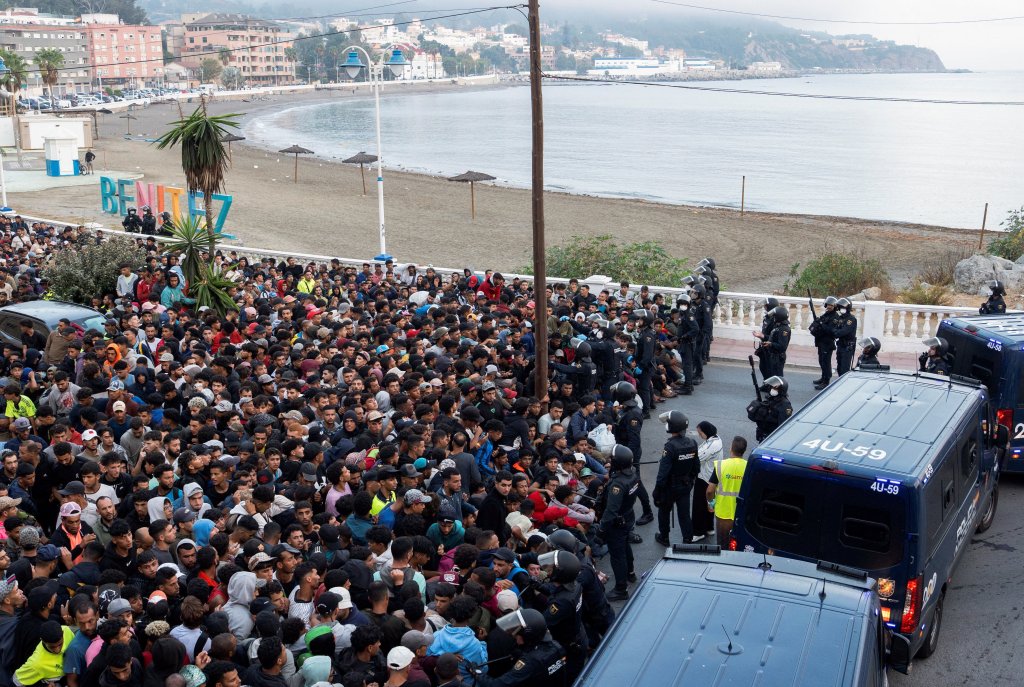
The statement described July’s mass migration into Ceuta as "the instrumentalization of irregular migration as a tool of hybrid warfare against the territorial integrity of an EU country."
Read AlsoCeuta: 21 returned to Morocco 'voluntarily' after stone throwing incident
Far-right push for tougher migration management
As a result of the text, the Parliament adopted a non-binding resolution on Thursday (September 17) by 339 votes to 225, with 16 abstentions.
The resolution followed the events of July 30 and 31, 2026, when more than 70,000 people temporarily entered Ceuta from Morocco, and approximately 141 people are estimated to have died. Most of those who crossed returned to Morocco within hours, but an estimated 5,000 to 15,000 people remained in the North African enclave. The events have prompted a wider debate over the protection of the EU’s external borders, Spain’s responsibilities in managing migration, and territorial claims over Ceuta.
Read AlsoMigrant arrivals in Ceuta: What does the Schengen Agreement say about border protection?
Morocco must do more to manage borders, states parliamentary text
Protection of the EU’s external borders as a shared responsibility among member states was also discussed, with some parliamentarians arguing that failing to act decisively could undermine the integrity of the Schengen Area.
MEPs called for more funding for external border protection infrastructure and for stronger capabilities for Frontex, the EU agency responsible for supporting the management of the bloc’s external borders.
They also want the EU to be able to respond quickly to similar future migration situations and appealed to all member countries to step up efforts to stop migrant smuggling.
The resolution condemned acts of violence being recorded in Ceuta since the end of July and called for more reinforcement of police and security forces to prevent tensions between locals and migrants.
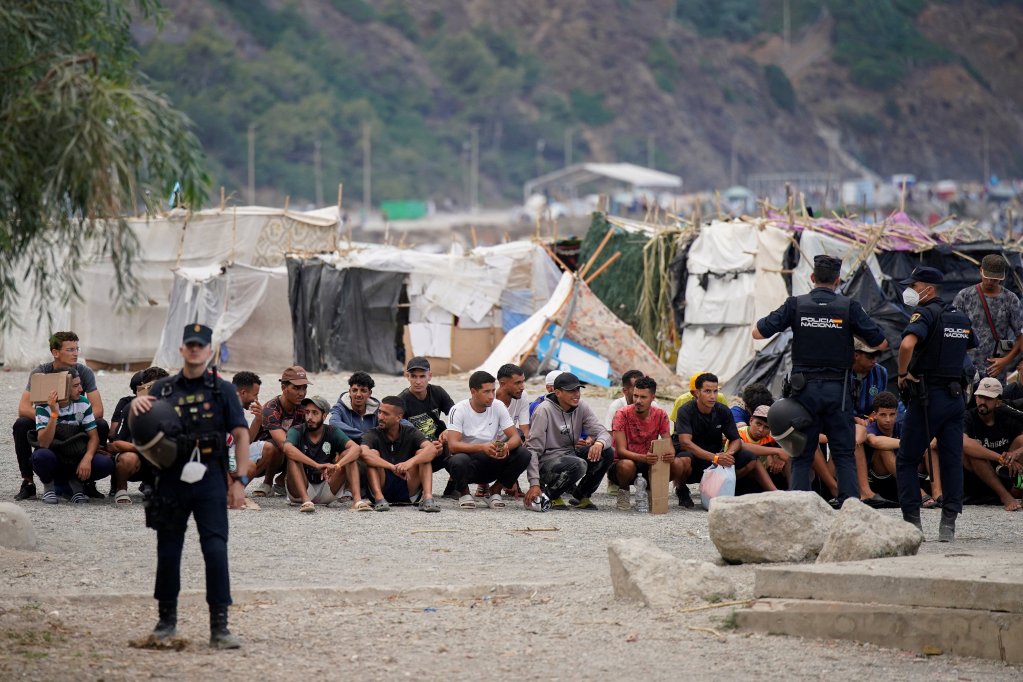
Following the vote, the EU Parliament also made clear that members viewed the North African cities of Ceuta and Melilla as Spanish and European territories whose sovereignty and territorial integrity are "beyond question."
"MEPs demand unconditional respect for the territorial integrity of EU countries…Any statement calling Spanish sovereignty into question is unacceptable and incompatible with the obligations of a partner country," the Parliament said in its statement.
It called on Morocco to do more to manage its borders, help with migrant returns, and cooperate with the EU on migration. MEPs also specifically called on Rabat and Madrid to speed up cooperation on the returns and readmissions of irregular migrants who arrived during the mass crossing at the end of July.
Despite criticisms for Spain’s migration policy, MEPs praised local volunteers and authorities in Ceuta, including Spain’s Policia Nacional, Guardia Civil, armed forces, NGOs and civil society groups in responding to the emergency.