
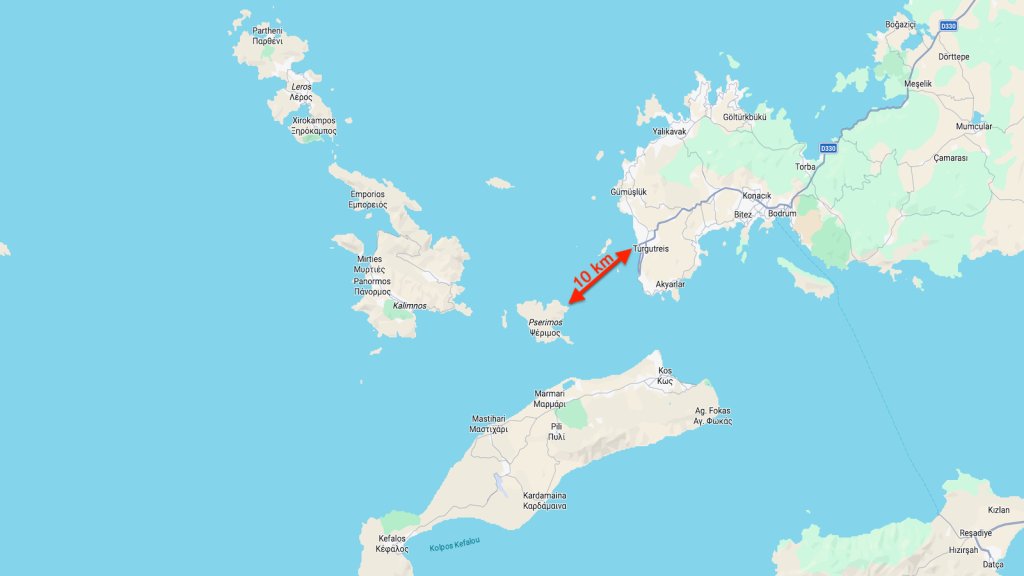
A group of 13 migrants had to be rescued from the northern coast of the small Greek island of Pserimos on September 16. Arrivals in this part of Greece have largely been declining in recent years, as irregular journeys to other regions have been on the rise.
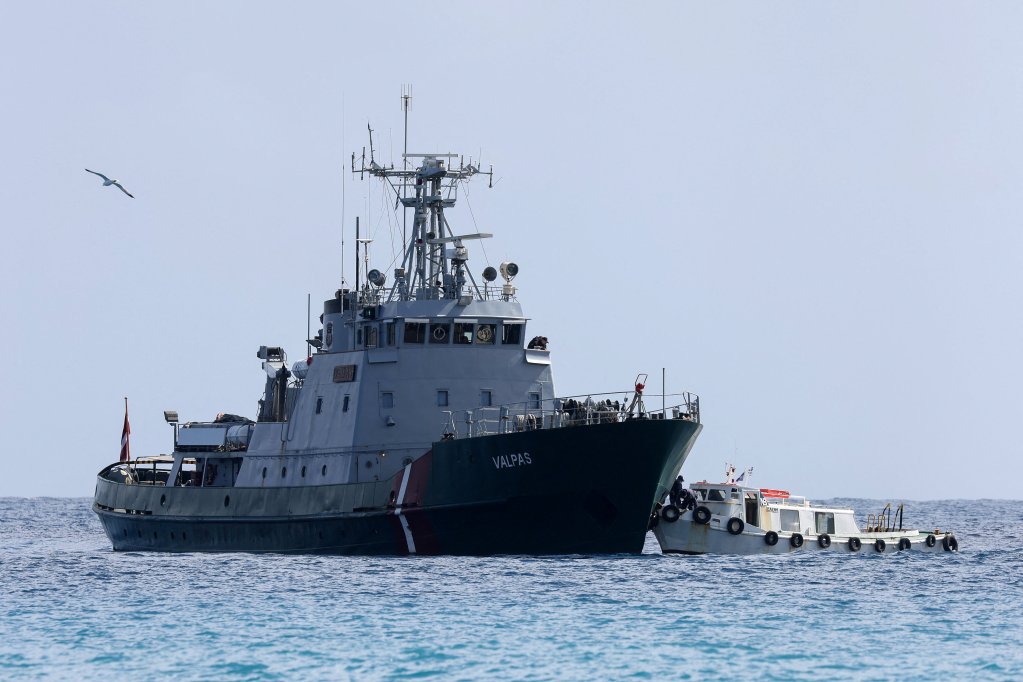
A Greek coast guard vessel located the four men, two women, and seven minors in the northern part of Pserimos, taking the group to safety to the nearby port of Kalymnos, which is the next Aegean island to the west.
Port Authorities had reportedly been alerted to the presence of an unidentified speedboat in the area, which was involved in the irregular transport of the group.
The person captaining the speedboat reportedly dropped the migrants off on Pserimos and immediately fled back towards Turkey, according to reports on the Greek news platform Ekathimerini.
Pserimos is only about 10 kilometers away from the Turkish coast but has historically not been a major arrival point for irregular migrants. The nearby island of Kos has witnessed far higher migrant arrivals in the past decade.
Read AlsoGreece: Government notes significant fall in sea arrivals
7,500 euros for 10 kilometers
According to official statements given to Greek authorities, the group had departed early on the same day from Turgutreis in Turkey — a small town near to the popular resort city of Bodrum.
The migrants told authorities that each person had to pay 7,500 euros for the irregular journey to Greece.
Other migrants have previously told authorities that they had to pay upwards of 30,000 euros to people smugglers for irregular journeys to Greece.
Arrivals in Greece
As a member of the European Union, Greece remains a major gateway for migrants trying to reach Europe in search of a better life.
Most migrants reaching the country come from the Middle East, Africa and parts of Asia, with many intending to move to more affluent countries in Central and Western Europe eventually.
Due to the small distances between Turkey and the Greek islands, interceptions at sea rarely result in returns to Turkey, as the vast majority of the Aegean Sea is considered to be Greek territorial waters.
Once migrants reach this part of the sea, Greek authorities take over responsibility for them, which means rescuing those in distress, providing medical care and affording every arrival a regular asylum process.
Read AlsoTurkey: Several dozen migrants intercepted near various border positions
In addition to the Greek coast guard, the European external border agency Frontex also operates a number of vessels and unmanned aircraft in Greek waters to intercept and save the lives of migrants.
However, both the coast guard and Frontex have faced repeated accusations of engaging in pushbacks at sea.
Read AlsoCrete and Gavdos among Greek Islands with highest migrant sea arrivals
New routes, fewer arrivals, more dangers
For many years, neighboring Turkey was the main departure point for irregular journeys across the Aegean Sea; however, as part of a close cooperation between the European Union and the Turkish government, departures from the Turkish coast have dropped significantly.
At the same time, smugglers have shifted their operations to northern Libya, from where they have been launching the majority of migrant boats in recent years.
The journey from the Libyan coast takes significantly longer — up to two days — while exposing irregular migrants to more danger. Those succeeding with this journey typically reach the island of Crete — the biggest Greek island located in the south of the country — or the neighboring island of Gavdos.
Read AlsoTobruk-to-Crete migrant crossings intensify as Greece enforces strict sea patrols
Over the years, thousands of migrants have died while trying to reach Greece. Conservative estimates by the International Organization for Migration (IOM) and the UN Refugee Agency (UNHCR) estimate that more than 3,000 migrants have perished during these sea journeys in the Aegean and eastern Mediterranean, though rights groups believe that the number of unrecorded shipwrecks takes this tally much higher.
According to the UNHCR, more than 14,800 migrants meanwhile have reached Crete alone since the beginning of the year — accounting for just over half of all migrants landing on Greek soil in 2026. UNHCR data last updated the figures on September 13, when they found that 21,331 migrants had arrived by sea in Greece since the beginning of the year.
On Tuesday, more than 230 migrants reached Crete, reported the Ekathimerini. More arrived subsquently, with the Hellenic coast guard detailing several different arrivals in press releases on Wednesday and Thursday.
This compares to a total of 49,000 people who managed to enter Greece by irregular means in 2025.
Read AlsoIOM warns that migration routes to Europe are becoming more dangerous