
European Commission President Ursula von der Leyen has said that the European Union will propose a new emergency framework to help deal with sudden, large-scale movements of migrants, following the tens of thousands of migrants who arrived in the Spanish North African enclave of Ceuta at the end of July. She said election campaigns influenced by foreign propaganda and conspiracy narratives could be considered "cognitive warfare."
European Commission President Ursula von der Leyen announced on Wednesday (September 16) that the European Union will propose an emergency framework to prevent sudden arrivals of irregular migrants into the bloc.
Speaking to EU lawmakers in the French city of Strasbourg during her annual state of the union speech, von der Leyen said the proposed European Emergency Response Framework would be activated only under what she described as a "strictly defined set of criteria," and would allow "time-limited and strictly defined flexibility in standard procedures" in exceptional circumstances. She did not elaborate on the criteria or the procedures that could be amended.
Read AlsoFive EU states target 2027 for first migrant 'return hubs' outside bloc
EU needs new border management tools in 'emergencies'
According to von der Leyen, the framework is intended to provide protection under clearly defined circumstances against "engineered and weaponized" mass movements of migrants.
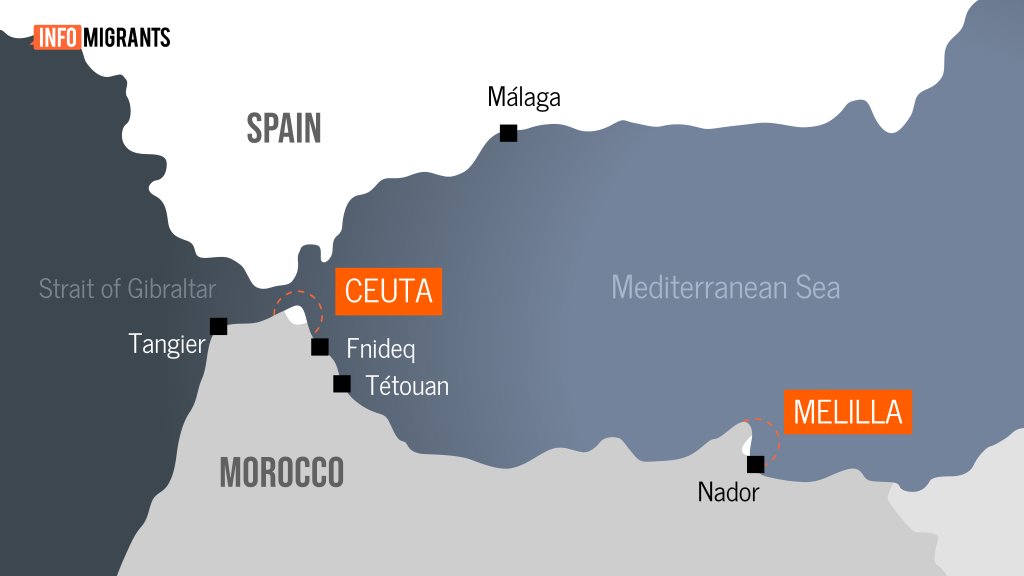
Referring to events in Ceuta at the end of July, von der Leyen said that existing European tools needed to evolve, particularly in "emergencies."
"The events of this summer show that our tools need to evolve, especially for emergency situations. Europe needs the means to protect its borders at all times," von der Leyen said.
"Europe needs the means to protect its borders at all times. Especially in scenarios when mass movements are engineered and weaponized. This is why we will propose a new European Emergency Response Framework," she added.
During her speech, von der Leyen said that the EU would "always comply with our values and fundamental rights" but would "never compromise on protecting our borders."
"It is we, Europeans, who decide who comes to our union and under what circumstances. And not the smugglers and the traffickers," she added.
Read AlsoCeuta: Hundreds of migrants relocated to new center
Von der Leyen pledges to strengthen Frontex and speed up deportations
Over 70,000 migrants crossed into Ceuta from Morocco on July 30 and 31, estimates from Spanish and Moroccan NGOs suggest that between 80 and more than 140 people died, most by drowning as people tried to swim around a breakwater. The majority of the migrants who entered the Spanish territory returned to Morocco within hours, while several thousand, mostly unaccompanied minors, remained in Ceuta. Estimates vary, but a few thousand are still in present in the enclave.
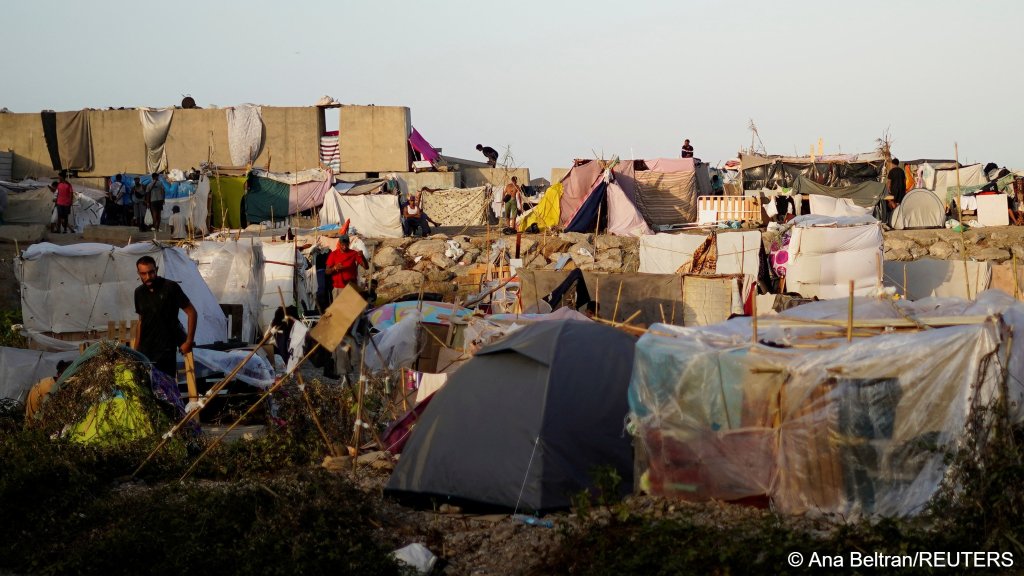
The Ceutan authorities have now opened two new camps, which are expected to house up to 6,000 migrants when fully operational, yet still some migrants are sleeping rough on the streets and beaches.
Though irregular migration into the EU has declined over the past two years, von der Leyen argued that Ceuta revealed that new mechanisms were needed to respond better to emergency scenarios.
Alongside the emergency framework, von der Leyen vowed to bolster the EU's border agency Frontex, including efforts to speed up migrant deportations and improve Europe's "early-warning systems" through partnerships with third countries, citing Ceuta as a learning curve.
Von der Leyen also announced a Mediterranean initiative as part of attempts to address the root causes of migration by giving young people in their home countries skills and employment opportunities, this is particularly relevant in the case of arrivals from Morocco, where migrants were mostly motivated to cross into Ceuta due to economic instability.
Read AlsoCeuta: Fires destroy makeshift migrant homes
'Cognitive warfare'
Von der Leyen’s speech also addressed threats posed by disinformation and foreign interference. She said election campaigns influenced by foreign propaganda and conspiracy narratives amounted to "cognitive warfare", arguing that Europe needed a common capacity to identify such developments early and respond to them. She also said anti-democratic and anti-European forces were gaining strength within the EU, but did not elaborate. The EU "will ensure that we can detect and anticipate developments online," she said.
On August 31, Spanish Prime Minister Pedro Sanchez accused networks linked to Russia, Israel and the far right of spreading disinformation surrounding migration into Ceuta. Both Russia and Israel rejected Spain's allegations.
However, a wave of online misinformation and disinformation contributed to the arrival of migrants into Ceuta in July, with viral videos and misleading social media posts falsely claiming that the EU border was open, accommodation was available, and migrants would be transported to mainland Spain. Many of the estimated 72,000 people who crossed from Morocco said they had been influenced or misled by information shared online, including videos of influencers swimming toward Ceuta.
European, Spanish, and Moroccan authorities said platforms such as TikTok, Telegram, and Meta contributed to the spread of misinformation, which has now prompted EU officials to call for stronger monitoring and cooperation with fact-checkers during emergencies. Misinformation and the Ceuta migration surge has also prompted the EU to prioritize early-warning systems and better monitoring of social media to respond more effectively to sudden, large-scale migration movements.
With AFP, Reuters, and KNA