
Poland is one of the European countries where demographic changes appear to be outpacing the means taken to mitigate them. Migration is hardly going to change the trend — especially amid a climate across much of the political spectrum that focuses on introducing greater immigration controls. But some economists are warning that without migration, Poland's economy and employment market could be affected.
Poland seems to be heading towards demographic difficulties, which can hardly be prevented at a policy level. Current trajectories predict a decline by 2.1 million workers — and thereby taxpayers — by 2035, according to the Polish Economic Institute (PIE).
Birth rates meanwhile appear to be plummeting at the same time. For 13 years running, the central European country has been observing a natural decrease, which might be set to soon outnumber each birth by two deaths.
In 2025, there were only 238,000 people born — against 406,000 deaths.
According to Eurostat, the EU's statistics agency, the Polish population is projected to shrink by nearly a third by the year 2100 — from its current size of about 37.5 million to 25.6 million.
"Fewer workers mean slower growth and less tax coming in, while an older population costs more in pensions and health," said Marcin Tomaszewski of the European Bank for Reconstruction and Development.
Poland's retirement age of 60 for women and 65 for men adds further to the dilemma, and any proposed change to raise the retirement age would probably cause a major backlash.
Read AlsoMigrants fuel Poland's economy, while politicians vow to crack down on them
More babies hardly a solution
The Polish government has tried to incentivize families to have more babies — among other things by raising the monthly child allowance. However, this policy has barely made a dent in birth rates.
On the contrary, the policy resulted in a net loss, as more mothers quit the workforce to raise children than the replacement rate, according to an OECD study.
According to Poland's national broadcaster TVP, the political focus on making more babies might also create further problems for the foreseeable future, as "a baby boom beginning tomorrow supplies schoolchildren first, and Poland needs workers now."
Poland increasingly less attractive to foreigners
One of the policies applied throughout Europe to try and mitigate at least some degree of this trend is to attract migrant workers, in particular qualified ones.
In fact in 2025, foreign workers from outside the EU generated close to 11 percent of Poland's total economic output, according to a report published by Deloitte, Ipsos and the Institute of Public Affairs in Warsaw.
However,despite a rapidly growing economy, Polish companies pay notoriously low wages, especially when compared to other European states.
In order to attract foreign nationals, the country would effectively have to outbid other nations, such as Germany and the United Kingdom, in a bid to also vie for more qualified migrants — a prospect that the government can hardly afford.
At the same time, growing automation and AI mean that fewer job positions will be required in multiple industries. While machines cannot replace all workers, some professions, such as IT, might suffer a decline in the coming years.
Read AlsoPoland: Over one million migrants employed in 2025
Anti-migrant mood across multiple sections of society
Statistics meanwhile speak volumes about Poland's dilemma: So far in 2026, Poland issued roughly 70,000 new work permits for foreign nationals, according to figures given by the interior ministry. This is slightly less than half of the permits issued in the same period last year.
At the same time, there's a lack of political will to work on luring more foreign nationals to the central European nation. Political leaders of various parties appear to be following populist demands to implement tighter immigration controls, as the country is about a year away from holding parliamentary elections.
Read AlsoPoland rocked by anti-immigration protests as demographics evolve
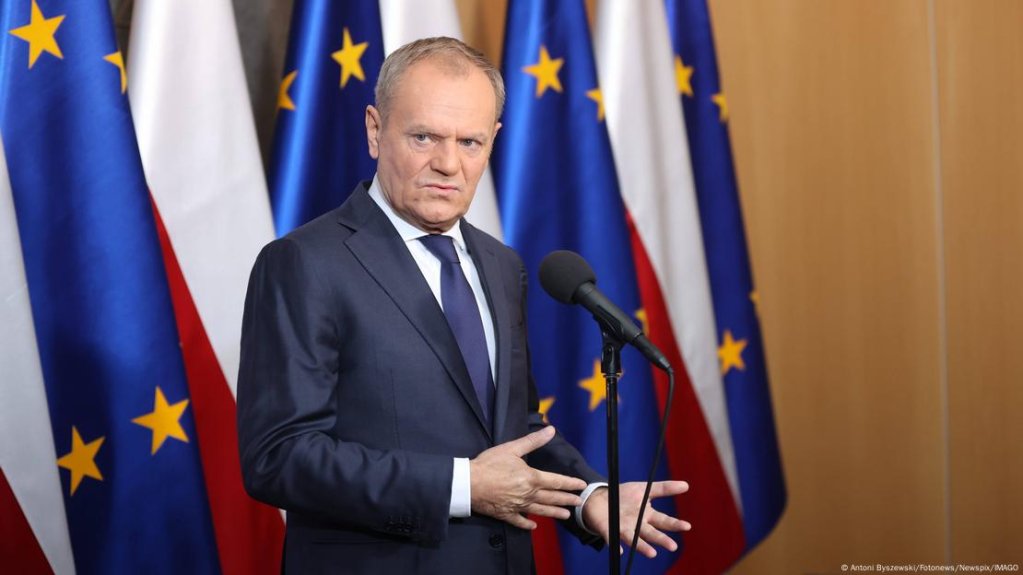
That approach is pursued even by centrist Prime Minister Donald Tusk from the Civic Coalition (KO) party — one of the more moderate voices in Poland, whose migration policy states that the consequences of "demographic and social changes in the labor market should not be countered through immigration policy."
President Karol Nawrocki, from the conservative PiS party, even went as far as declaring that using migrants to mitigate demographic changes "is not, and will not be, the Polish path."
"We will not replace the demographic crisis by succumbing to migration pressure."
Read AlsoRefugees and migrants should not be exploited as political tools in campaigns, warns UN
Ukrainians longing to return home
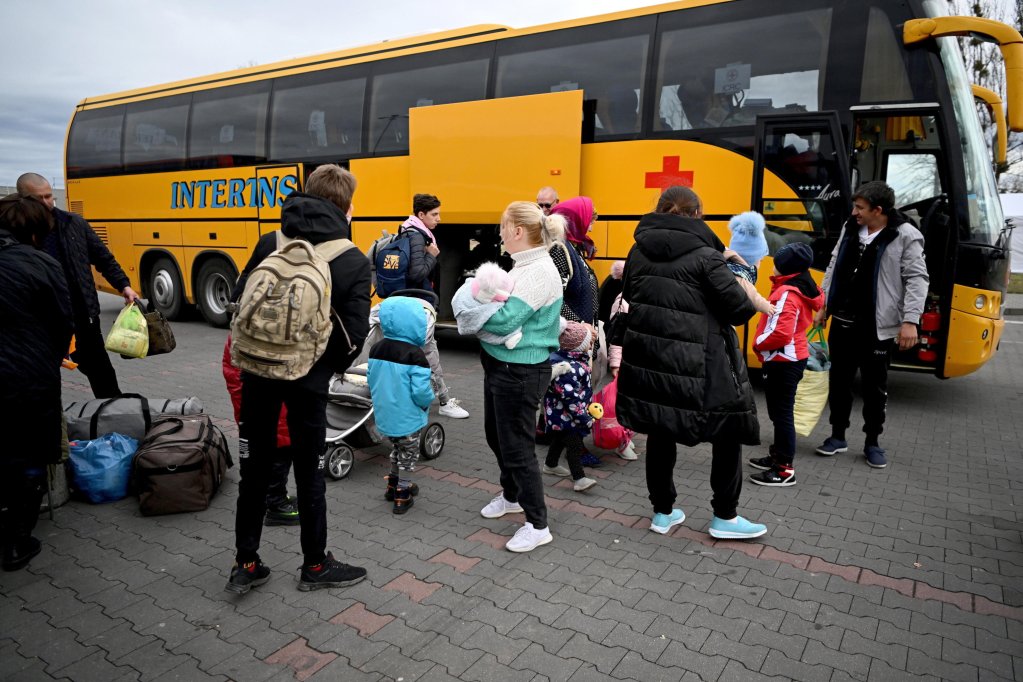
At the same time, many of the foreigners in the country are increasingly choosing to leave — in particular Ukrainian war refugees.
A recent survey conducted by Rating Group found that half of all Ukrainians in Poland were planning to return home — though less than ten percent said that this move would be imminent before an end to the Russian war of aggression.
More worryingly, a third of Ukrainians in Poland said that they had witnessed discrimination in the past year, which might encourage more people to return to Ukraine if this trend continues.
Read AlsoPolish Prime Minister warns of rising anti-Ukrainian sentiment following attack
With around 1.5 million Ukrainians currently residing in Poland, making up the largest foreign national group in the country, these numbers could spell a major demographic change as soon as the war ends.
These statistics aren't even factoring in the views and motivations of other foreign nationals in Poland, who, amid an increasingly anti-migrant climate, may also increasingly choose to leave the country and look for greener pastures elsewhere.