
The German welfare organization AWO (Arbeiterwohlfahrt) has sounded the alarm about the potential impact of a possible mass departure of migrants and its consequences for the care sector. The warning comes in response to the landslide election success of the anti-migrant Alternative for Germany (AfD) party in the state of Saxony-Anhalt.
The AfD's major electoral success in Saxony-Anhalt earlier this month is causing increased worry not only among migrants in the eastern state. The welfare organization AWO says that migrants might leave the state in numbers and move elsewhere in Germany because of fears of feeling increasingly unwelcome under a regional government or parliament dominated by the AfD.
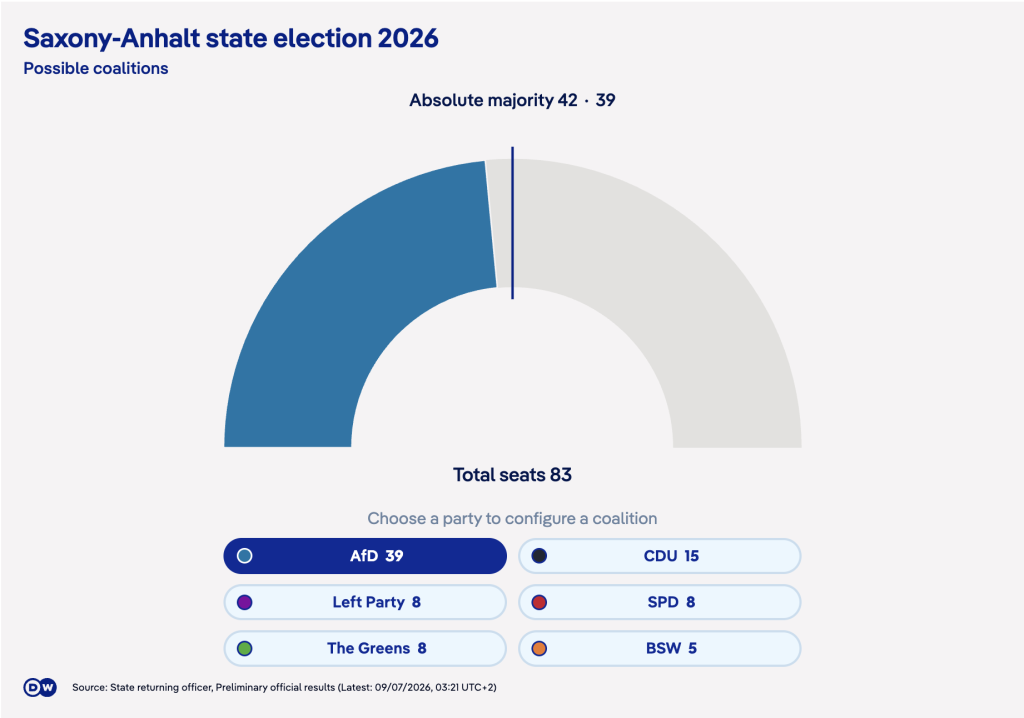
The AfD emerged as the strongest party in the September 6 election, but its landslide gains fell shy of reaching an overall majority. This means that in order to govern in Saxony-Anhalt, it would need a junior coalition partner.
However, nearly all other parties that have entered the state government in this election have announced that they would not enter any coalition with the far-right party, leaving the state's political future, for now, in limbo. What is sure though is that the dominance of the AfD in the elections will have an influence on the policies pursued by anyone in government.
Major concern about future of care professions
Organizations like AWO fear that the AfD's new dominance in the state, irrespective of whether or not they can form a government could lead to creating an environment that feels unwelcoming and unsafe for foreign nationals — many of whom work in the state's care and health sectors; now there are mounting fears that such an atmosphere would directly result in many foreigners opting to leave Saxony-Anhalt and settle somewhere else in Germany.
Read AlsoAnalysis: The legal limits of an AfD government in Saxony-Anhalt
Barbara Höckmann, chair of the executive board of the AWO state association of Saxony-Anhalt, said that this would have a major impact on the care sector and consequences throughout the region.
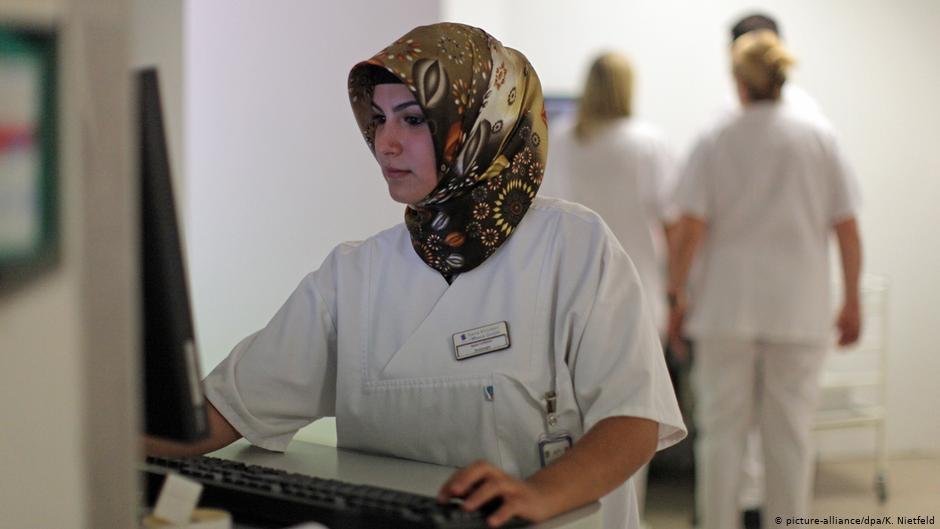
"If the state is no longer open to the world, then we will see a collapse in long-term care," she said, highlighting that in some of the facilities operated by AWO, up to 25 percent of the staff are migrants.
In the current nursing training program, the numbers of foreign-born students meanwhile accounts for as many as 40 percent.
Doctors with 'packed bags'
Annett Flachshaar, the deputy managing director of the ver.di service workers' union in the eastern state, also stressed that "a quarter of the doctors who currently work in Saxony-Anhalt have no German passport."
She added that the rising anti-migrant sentiment throughout the region now meant that some of those "doctors have had to work with security guards for months now" amid incidents of overt hostility becoming increasingly frequent.
Undra Dressler, the executive director of the migrant support network Lamsa, even went further and said that among foreign-born doctors, there were many whose "bags are practically packed" following the AfD victory at the ballot box.
She even mentioned that she knew of one pediatrician, who had already accepted a job offer from another part of Germany in response to the recent political developments in Saxony-Anhalt.
Read AlsoAfter AfD's record result: Voices from Saxony-Anhalt
Worries beyond Saxony-Anhalt
Dressler added that she knew of many more migrants in other professions as well, who had equally expressed tentative plans to move to another part of Germany in order to avoid repercussions.
She stressed that since the election, the number of distressed inquiries by migrants had risen sharply at Lamsa, with many contacting the social network with worries about their residency status and future prospects elsewhere.
In her view, there has already been a notable increase in casual racism, which has chiefly expressed itself in "migration repeatedly being linked to crime, political shortcomings, and other grievances" with migrants being used as scapegoats for social ills.
This kind of anxiety and uncertainty meanwhile are also spreading to other parts of Germany, with further state elections also being dominated by public debates about the prospects of the AfD.
Read AlsoWhat would the AfD change in Saxony-Anhalt?
In particular, the upcoming polls in another eastern state, Mecklenburg–Western Pomerania, this coming weekend (Sunday, September 20) continue to raise concerns about how the far-right party might perform.
According to current projections, the AfD is likely to win little more than a third of the vote; however, some observers have cautioned that some people might feel emboldened to change their vote following the AfD's landslide success in Saxony-Anhalt.
Lutheran Church expresses support for migrants
Other welfare groups have also voiced concern about the prospect of an AfD-led government.
Christoph Stolte, chairman of the regional board of the Lutheran charity Diakonie, said that the AfD's positions have raised widespread fears of "an erosion of the community.
Johann Schneider, the regional Lutheran bishop, added that the church also felt this pressure, and that he and his congregations were prepared to put up a fight against any anti-migrant sentiment.
When "the preservation of human dignity is called into question, when the vulnerable in society are targeted, the church cannot remain silent or look the other way," said the regional bishop, adding that Lutherans will "not back down" against any threat by the right-wing party.
He also underscored the fact that the "principle of neutrality applies exclusively to the state, but not to the church."
"We're staying here, and will help those who are suffering," Bishop Schneider told the EPD news agency.
"You won't get rid of us."
Read AlsoWhat does Saxony-Anhalt's election mean for migrants?
with EPD