
Rape, torture, extortion and murder: These are only some of the severe human rights abuses and crimes that a group of Eritrean migrants say they have witnessed in Libyan detention centers. Their personal accounts paint a terrifying picture of the realities on the ground for migrants and refugees stuck in Libya.
Several Eritrean victims of abuse and torture in Libya have shared their experiences with the French news agency Agence France-Presse (AFP), recounting the horrors they say they experienced.
One migrant named Zerisenay* recalled that he was held in one of Libya's notorious detention centers for eight months, with those who ran the center demanding a ransom payment for his release.
"Most of us have no money left because we already spent a lot of money crossing the Sahara," he explained, specifying that police officials would demand up to 4,000 dollars (around 3,466 euros) for the release of any detainee.
Read AlsoPrison, punishment and pushbacks: From Eritrea to Libya to Italy
The 35-year-old said he was part of a group of around 700 detainees from Ethiopia and Eritrea, who received "only one piece of bread in the morning, a small amount of rice for lunch, and the same for dinner" as part of the conditions in the facility.
Zerisenay also recalled that those running the detention center were not shy to use lethal violence: On one occasion, migrants banged on the locked doors demanding urgent medical care, and were met by police officers entering the space and randomly firing "bullets into the room."
According to Zerisenay, two migrants were killed in the event and dozens wounded, who then were left without being given any medical treatment.
Read AlsoThe Netherlands: Eritrean trafficker sentenced to 20 years in prison in unprecedented case
UN: Libya rife with human rights abuses
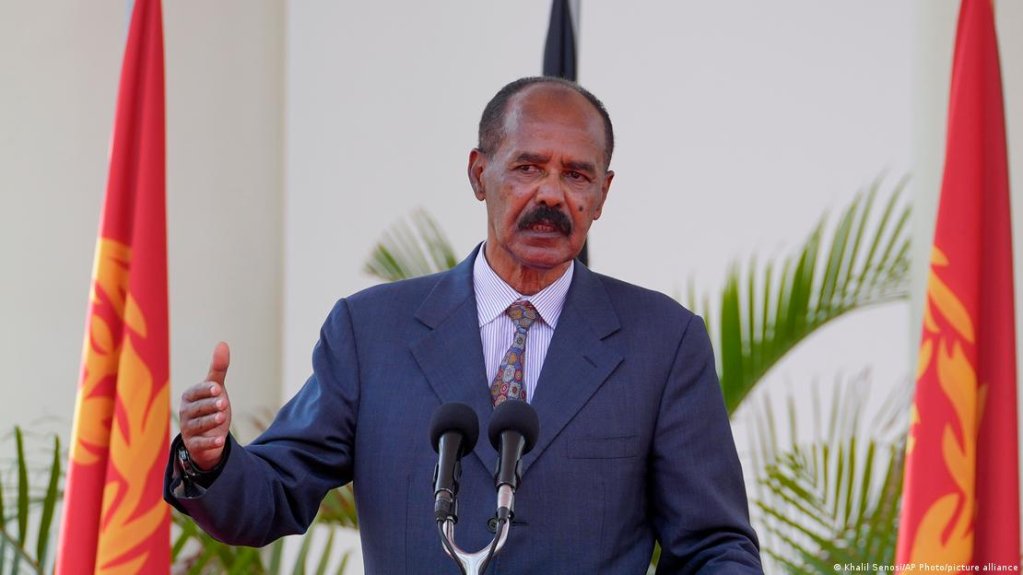
Like Zerisenay, there are countless Eritreans who continue to attempt to flee their homeland, which is run by President Isaias Afwerki and classified by the NGO Human Rights Watch as "a one-man dictatorship."
Among other human rights violations, UN reports indicate that young people in the country are mandatorily drafted into the military — without being told how long they will have to serve.
Those who prove useful to the regime are typically forced to remain in the military for life, as the government decides on everyone's career track and profession in the country.
In 2015, in a report, the UN said these kinds of practices could be considered "slavery-like."
Read AlsoEritrea: 'I just sometimes wonder who is left inside the country.'
Those who try to flee Eritrea often run into severe problems once they reach Libya — which is the main country of departure for migrants and refugees heading to Europe.
A UN report published in February said that many Eritreans get stuck in Libya, and then face "systematic and widespread human rights violations and abuses" in prison-like detention centers.
Previous reports have indicated similar conditions, with thousands of migrants believed to have died in Libya as the direct result of severe abuse.
Read AlsoLibya: Over 220 migrants freed from underground prison
Read AlsoThe cruel reality of migrant detention and deportation in Libya
Migrants for sale
Debesay* is another Eritrean who shared his experiences in Libya with AFP.
The 19-year-old is one of many who left the country to escape being drafted into the Eritrean army; in January 2025, he says he journeyed across Sudan to Libya with the help of smugglers — largely on foot.
As soon as he arrived in Libya, he was taken into a detention center and held for ransom, where he says he would be "regularly beaten and tortured."
He was only released from that facility once his family had managed to gather 9,000 dollars ( around 7,799 euros) to free him.
However, Debesay did not get to enjoy any of his new-found freedom: he was then sold to another group, who also kept him in a detention center.
This time, his family could not afford the sum to free him for a second time.
It took three months for his second captors to accept this as the truth, at which point they handed the young man over to the police.
Read AlsoEgyptian families pay ransoms for sons missing on migrant boats to Europe
Rape as a weapon
Another form of violence reported from Libyan detention centers and on the journey towards the country is the widespread use of sexual violence.
A 25-year-old Eritrean woman named Fyori* explains that she was raped by three men before even reaching Libya, when her smugglers handed her over to a tribe in Sudan.
The gang also held her for ransom, extorting a payment of 9,500 dollars (around 8,232 euros) from her family for her release.
Fyori then entered Libya in the hope of making it all the way to Europe; however, it appears that this journey remains out-of-reach: As soon as she entered Libya, officials arrested her for her irregular entry into the country.
She has now been held there for three months without any idea of what might follow next, as things have escalated from bad to worse.
She told AFP that one night at the detention center, "two armed guards took me and three Somali women out of our cell. The two guards raped me."
Fyori is now pregnant, she told AFP.
Read Also'I wish I had died,' says migrant after weeks of rape
Libyan authorities have not responded to AFP's requests for comment.
AFP contacted all interviewees by mobile phone, which detained migrants are allowed to keep to contact family members for ransom payment.
*All interviewees gave AFP a false name to protect their family members.